
If you’ve ever stood at the toaster hoping a little heat would somehow melt away the carbohydrates in your bread, you’re not alone. The idea that toasting bread reduces carbs is one of the most searched nutrition questions online — and it’s easy to understand why. For anyone watching their blood sugar, following a low-carb diet, or just trying to eat smarter, the thought that a simple kitchen habit could make bread more diet-friendly is genuinely appealing.
So let’s cut straight to it, because you deserve a clear answer rather than a vague maybe.
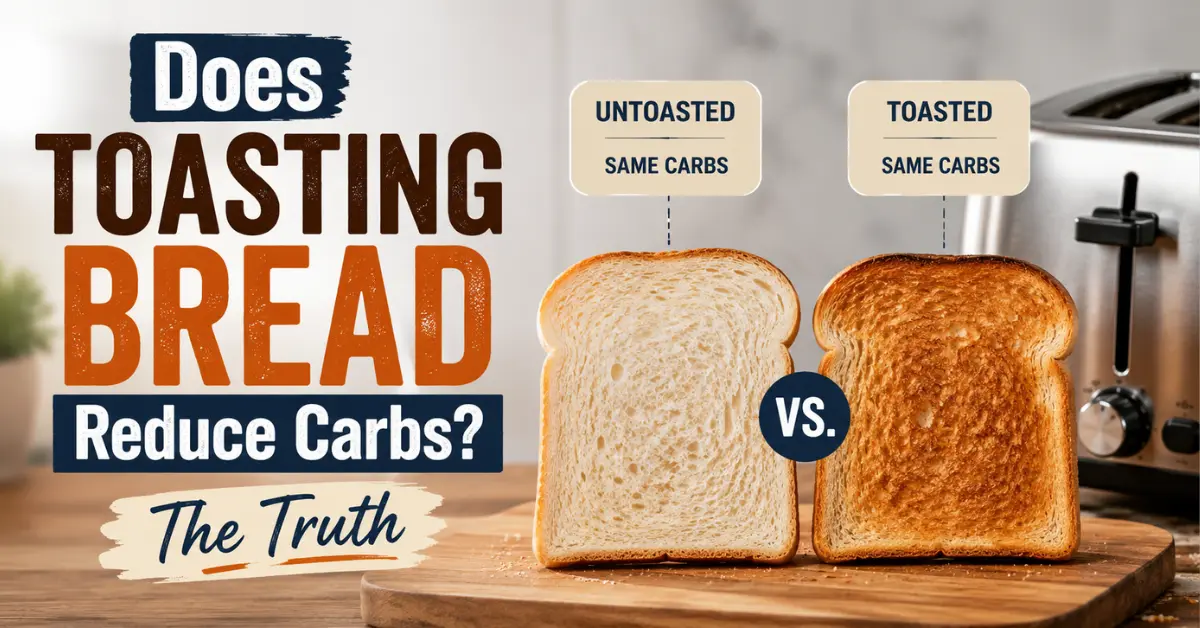
Does toasting bread reduce carbs? No — toasting bread does not meaningfully reduce its carbohydrate content. The total carbs in a slice of bread remain essentially the same whether you eat it soft or toasted. However — and this is the part most articles miss — toasting does change how your body processes those carbs, and that difference actually matters.
What Actually Happens When You Toast Bread?
To understand why toasting bread does not reduce carbs in the traditional sense, you need to know what toasting actually does at a molecular level.
When bread goes into the toaster, heat triggers a chemical reaction called the Maillard reaction. This is the same process responsible for the golden-brown colour and that slightly nutty, caramelised flavour. During this process, some of the water content in the bread evaporates, and certain starch molecules begin to break down.
Here’s the key point: the carbohydrate molecules don’t disappear. They change structure. So while the bread becomes drier and slightly denser, the carbs are still present — just arranged a little differently. A standard slice of white bread contains roughly 13–15 grams of carbohydrates whether it’s toasted or fresh. Toasting bread does not reduce carbs by any meaningful amount on a gram-for-gram basis.
Where things get more interesting is what this structural change means for your blood sugar.
The Glycemic Index: A More Useful Metric Than Total Carbs
Most people asking whether toasting bread reduces carbs are really asking the deeper question: Will toast affect my blood sugar less than regular bread? And here, the answer shifts.
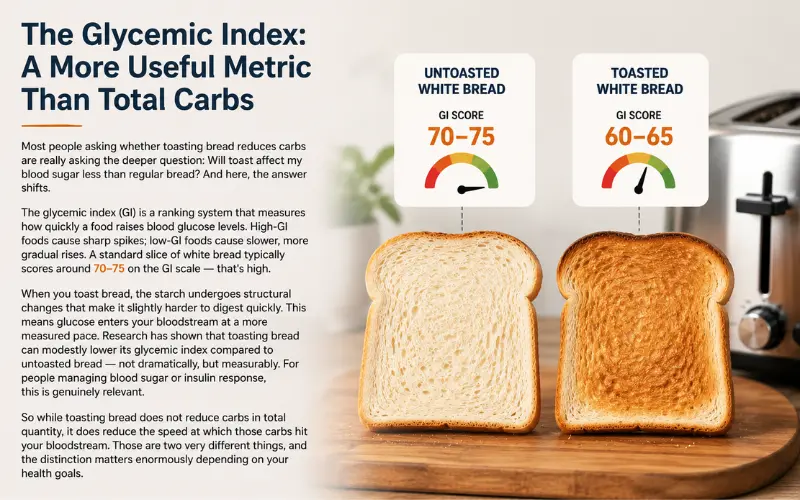
The glycemic index (GI) is a ranking system that measures how quickly a food raises blood glucose levels. High-GI foods cause sharp spikes; low-GI foods cause slower, more gradual rises. A standard slice of white bread typically scores around 70–75 on the GI scale — that’s high.
When you toast bread, the starch undergoes structural changes that make it slightly harder to digest quickly. This means glucose enters your bloodstream at a more measured pace. Research has shown that toasting bread can modestly lower its glycemic index compared to untoasted bread — not dramatically, but measurably. For people managing blood sugar or insulin response, this is genuinely relevant.
So while toasting bread does not reduce carbs in total quantity, it does reduce the speed at which those carbs hit your bloodstream. Those are two very different things, and the distinction matters enormously depending on your health goals.
The Freeze-Then-Toast Method: The Hack That Actually Works
Here’s where the science gets genuinely exciting — and where most competitor articles either gloss over the details or miss the practical angle entirely.
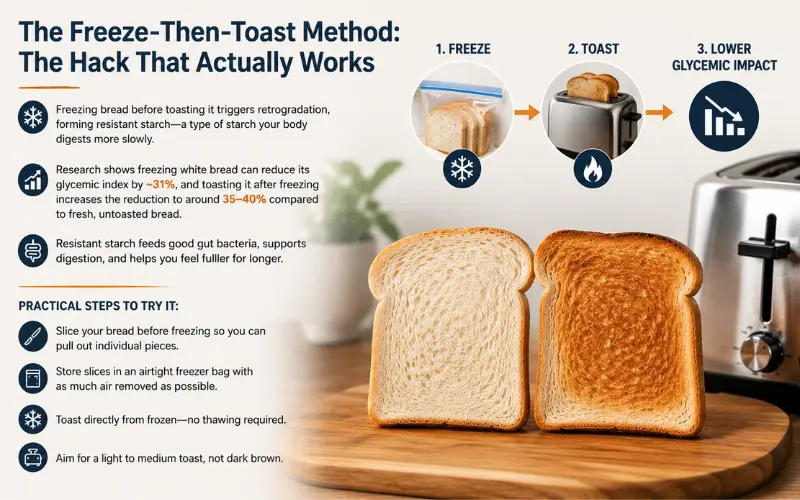
Freezing bread before toasting it produces a significantly greater reduction in glycemic impact than toasting alone. When bread is frozen, the starch molecules undergo a process called retrogradation. They reorganise into a tighter, more resistant structure that your digestive enzymes struggle to break down as quickly. This is called resistant starch — and it’s the same type of starch found in foods like cooked-and-cooled potatoes and green bananas, both known for their lower blood sugar impact.
Research published in the European Journal of Clinical Nutrition found that freezing white bread reduced its glycemic index by approximately 31%. When the frozen bread was then toasted, the glycemic reduction increased even further. The combined effect of freezing and toasting bread can lower its glycemic impact by around 35–40% compared to fresh, untoasted bread.
Resistant starch also feeds beneficial gut bacteria, supports better digestion over time, and tends to increase feelings of fullness. So while toasting bread does not reduce carbs on the label, the freeze-toast combination genuinely changes how your body metabolises those carbs.
Practical steps if you want to try this:
- Slice your bread before freezing so you can pull out individual pieces
- Store slices in an airtight freezer bag with as much air removed as possible
- Toast directly from frozen — no thawing required
- Aim for a light to medium toast, not dark brown
Does Toasted Bread Have Fewer Calories?
This is another common angle on the question of whether Does Toasting Bread Reduce Carbs. The short answer: not meaningfully. Because the main change during toasting is water loss rather than any caloric breakdown, the calorie count stays essentially the same per slice. The bread feels drier and sometimes a little lighter because moisture has evaporated, but this isn’t a reduction in calories — it’s just less water weight.
If a slice appears to weigh slightly less after toasting, that’s the evaporated water, not lost carbohydrates or calories.
Is Toasted Bread Better for Diabetics?
For people with type 2 diabetes or insulin resistance, the glycemic index conversation is far more relevant than raw carb counts. Since toasting bread — especially bread that has been frozen first — does lower the glycemic index, it’s fair to say that toasted bread is somewhat better than untoasted bread for blood sugar management.
That said, this is not a licence to eat unlimited toast. The total carbohydrate load still counts. Even at a lower GI, a large portion of bread will still raise blood glucose. Pairing toast with protein (eggs, nut butter) or healthy fats (avocado) further slows digestion and blunts the glycemic response — a combination far more effective than relying on toasting alone.
Whole grain bread is always a better base than white bread, even before toasting enters the picture. Whole grain varieties already contain more fibre, which naturally slows carbohydrate absorption.
The Acrylamide Warning: Don’t Overdo It
One thing most conversations about whether Does Toasting Bread Reduce Carbs fail to mention clearly: the darker your toast, the more you produce a compound called acrylamide. This chemical forms when starchy foods are exposed to high heat and has been classified as a probable carcinogen by several health agencies.
The practical takeaway is simple: aim for golden-yellow toast, not dark brown or black. You get the modest GI benefits without meaningfully increasing your acrylamide exposure. If your toast looks like charcoal, throw it out and start again.
What About Keto Dieters?
If you’re strictly following a ketogenic diet, the honest answer is that Does Toasting Bread Reduce Carbs does not reduce carbs enough to make standard bread keto-friendly. Even with a lower glycemic impact from freezing and toasting, a slice of white bread still contains 13–15 grams of net carbs — enough to push many keto dieters over their daily limit on its own.
For keto purposes, the better strategy is to choose genuinely low-carb bread alternatives: almond flour bread, cloud bread (made with eggs and cream cheese), or psyllium husk-based options. These start with far fewer carbs rather than trying to manage them after the fact through toasting.
Choosing the Right Bread Makes a Bigger Difference
Before worrying about whether to toast or not, consider what type of bread you’re starting with. The bread variety matters far more than the toasting method:
- Sourdough — The long fermentation process partially breaks down starches before the bread even reaches your plate, making it easier to digest and lower GI than commercial white bread.
- Whole grain or seeded bread — Higher fibre content naturally slows carbohydrate absorption.
- Sprouted grain bread — The sprouting process increases nutrient availability and lowers the glycemic index before a toaster is even involved.
- White bread — Highest GI, most quickly digested. If you’re going to eat it, freeze-then-toast is your best modification.
FAQs: Does Toasting Bread Reduce Carbs?
Q1. Does toasting bread reduce carbs?
No. Toasting bread does not meaningfully reduce its total carbohydrate content. The carbs remain essentially the same. What changes is the structural form of the starch, which affects how quickly your body digests it.
Q2. Does Toasting Bread Reduce Carbs lower the glycemic index?
Yes, modestly. Toasting causes some starch retrogradation, which slows digestion slightly and lowers the GI of the bread compared to untoasted bread.
Q3. Does freezing bread before toasting make it healthier?
Yes, more so than toasting alone. Freezing converts some digestible starch to resistant starch, which the body absorbs more slowly. Research suggests freezing bread can reduce its glycemic index by around 31%, with additional reduction when toasted.
Q4. Does toast have fewer calories than bread?
No. Toasting removes moisture, not calories. The calorie count of a toasted slice is virtually the same as the untoasted version.
Q5. Is toast better than bread for weight loss?
Marginally, due to its lower glycemic index. A lower GI food produces less of a blood sugar spike and crash, which can reduce hunger and cravings. However, the difference is small and diet quality overall matters far more.
Q6. Does toasting bread remove gluten?
No. Toasting has no effect whatsoever on the gluten content of bread. Anyone with coeliac disease or gluten sensitivity must still avoid standard wheat bread, toasted or not.
Q7. Is toasted bread good for people with IBS?
Not always. The increased resistant starch from freezing and toasting can cause bloating, gas, and digestive discomfort in people with irritable bowel syndrome. If you have IBS, proceed cautiously with the freeze-toast method.
Q8. How dark should I toast bread to get the GI benefit?
Light to medium — golden yellow is ideal. Darker toast forms more acrylamide, a chemical that may be harmful in high amounts. You get the structural starch change without the downsides by keeping the colour light.
Q9. Does toasting bread reduce carbs enough for a keto diet?
No. Even at a lower GI, toasted white bread still contains too many carbs for a strict ketogenic diet. The carb reduction from toasting bread is minimal, not enough to make standard bread keto-compatible.
Q10. What’s the healthiest bread to buy if I want lower carbs?
Sourdough, sprouted grain, or seeded whole grain breads are your best options. They have naturally lower GI scores and higher fibre content. For very low carb needs, almond flour or cloud bread are the better alternatives.
Final Thoughts
The short answer to “does toasting bread reduce carbs” is no — but that’s not the whole story. Does Toasting Bread Reduce Carbs does not strip out carbohydrates, and it won’t turn a regular slice into something keto-friendly. What it does do is change the structure of those carbs in a way that slows their digestion, producing a modest but real reduction in glycemic impact. Take that a step further with the freeze-then-toast method, and you can meaningfully lower the glycemic index of your bread without changing a single ingredient. For people focused on blood sugar management, steady energy, or simply getting a little more from the food already in their freezer, that’s a worthwhile habit. Just remember: start with the best bread you can — sourdough, whole grain, or sprouted — and keep the toast golden, not burnt.
