
If you’re on a ketogenic diet, you already know that every gram of carbohydrate counts. So when you spot a bag of bean sprouts at the grocery store, the first question that pops into your head is probably: are bean sprouts keto?
The short answer is yes — bean sprouts are keto-friendly. But there’s more to the story, and knowing the details will help you use them confidently in your low-carb meal plan. This guide covers everything from net carbs and nutrition facts to keto-friendly recipes and practical tips.
What Are Bean Sprouts?
Bean sprouts are the young, tender shoots that grow from germinated beans. The most common types you’ll find in grocery stores and Asian restaurants are:
- Mung bean sprouts (the thin, white, crunchy ones you see in Chinese takeout)
- Soybean sprouts (slightly thicker and yellower, popular in Korean cuisine)
When a bean sprouts, something remarkable happens. The sprouting process breaks down phytic acid — a compound that blocks your body from absorbing minerals — and releases more vitamins, enzymes, and nutrients than the original unsprouted bean contains. This means bean sprouts are actually nutritionally superior to the beans they come from, and far lower in carbs too.
Are Bean Sprouts Keto? The Net Carb Breakdown
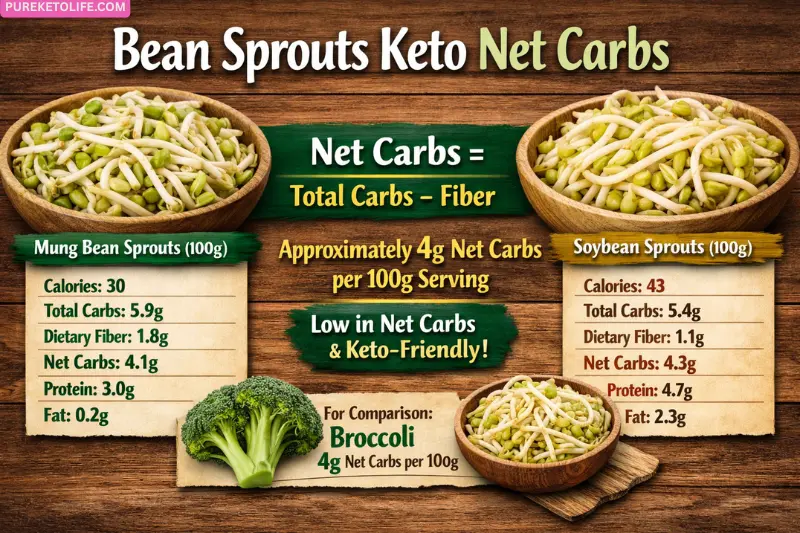
Yes, Are Bean Sprouts Keto are keto-friendly, but let’s look at the exact numbers so you can plan confidently.
Net carbs are what matters on a ketogenic diet. You calculate them like this:
Net Carbs = Total Carbohydrates − Dietary Fiber
Here’s what USDA data shows for a 100g serving (about 1.5 cups) of raw bean sprouts:
Mung Bean Sprouts (raw, 100g):
- Calories: 30
- Total Carbs: 5.9g
- Dietary Fiber: 1.8g
- Net Carbs: 4.1g
- Protein: 3.0g
- Fat: 0.2g
- Water: ~90%
Soybean Sprouts (raw, 100g):
- Calories: 43
- Total Carbs: 5.4g
- Dietary Fiber: 1.1g
- Net Carbs: 4.3g
- Protein: 4.7g
- Fat: 2.3g
Both types sit comfortably within the low-carb range. For comparison, broccoli has about 4.0g net carbs per 100g and is widely accepted on keto — Are Bean Sprouts Keto are right in the same neighborhood.
A standard real-world serving is around 85–100g raw, or about 50–60g when cooked (they shrink with heat). Either way, you’re looking at under 5g net carbs per serving, which is very manageable within a 20–50g daily carb budget.
How Bean Sprouts Compare to Other Keto Vegetables
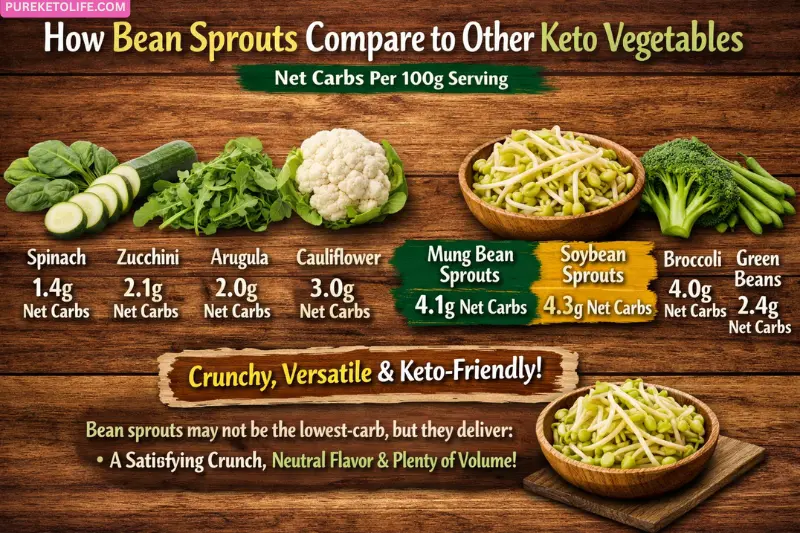
Here’s how Are Bean Sprouts Keto stack up against common keto-approved vegetables per 100g:
- Spinach: 1.4g net carbs
- Zucchini: 2.1g net carbs
- Arugula: 2.0g net carbs
- Cauliflower: 3.0g net carbs
- Broccoli: 4.0g net carbs
- Mung Bean Sprouts: 4.1g net carbs
- Soybean Sprouts: 4.3g net carbs
- Green Beans: 2.4g net carbs
Bean sprouts are not the absolute lowest-carb vegetable on this list, but they offer something most leafy greens can’t match: a satisfying crunch, a neutral flavor that works in dozens of dishes, and a volume that fills your plate without loading you up on carbs.
What Competitors Don’t Tell You: The Sprouting Advantage
Most articles just tell you the net carb number and call it a day. But here’s something worth knowing that most guides skip entirely.
When you buy unsprouted mung beans, they contain around 20g of net carbs per 100g — five times more than sprouts. The sprouting process converts stored starches into energy for the growing plant, which dramatically reduces the carb content. This is why Are Bean Sprouts Keto earn their keto badge, even though the parent bean does not.
This also means you should never assume that a bean and its sprouts are nutritionally similar. They are not. Always account for sprouts separately in your carb tracking app.
Glycemic Index: Will Bean Sprouts Spike Your Blood Sugar?
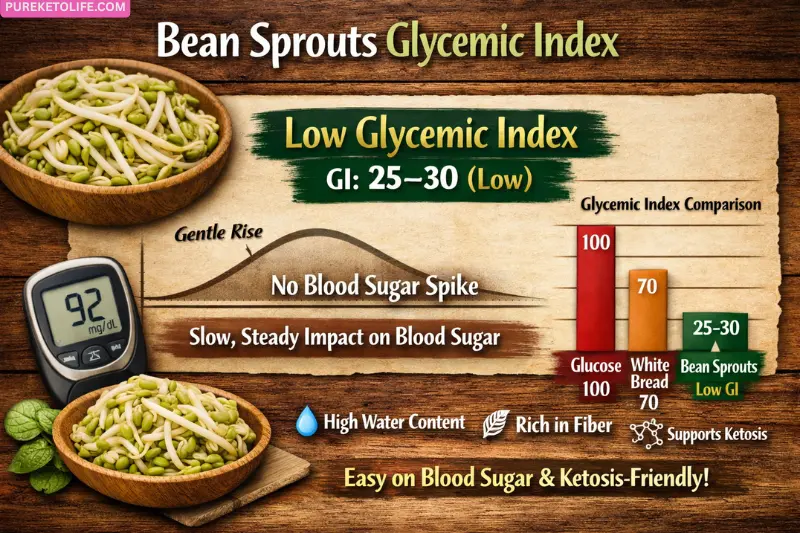
The glycemic index (GI) of mung bean sprouts is estimated between 25 and 30, which is considered low. For reference, pure glucose scores 100, white bread scores around 70, and most keto-approved vegetables fall below 35.
A low GI means bean sprouts digest slowly and cause only a gentle, gradual rise in blood sugar — not the spike that kicks you out of ketosis. Their high water content (over 90%) and fiber content both contribute to this slow digestion.
This is especially good news if you’re monitoring your insulin response, not just your carb count.
Vitamins and Minerals You’re Also Getting
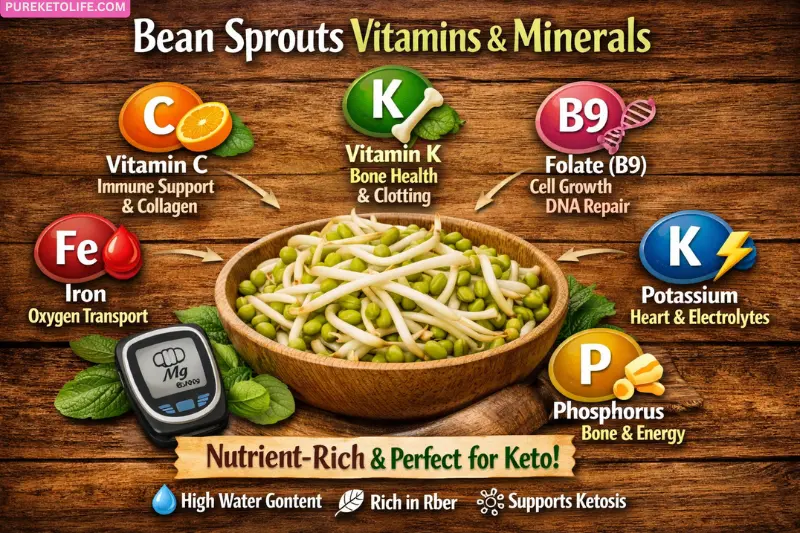
Bean sprouts don’t just score well on carbs — they also deliver a solid range of micronutrients that support your overall health on keto:
- Vitamin C: Supports immune function and collagen production
- Vitamin K: Important for blood clotting and bone health
- Folate (B9): Supports cell function and DNA repair
- Iron: Helps carry oxygen in the blood
- Magnesium: Often depleted during keto, helps with muscle function and sleep
- Potassium: Supports heart health and electrolyte balance
- Phosphorus: Needed for bone strength and energy production
Many keto dieters worry about electrolyte loss — especially magnesium and potassium. Are Bean Sprouts Keto contribute small but useful amounts of both, making them a smart vegetable choice on a ketogenic plan.
How Many Bean Sprouts Can You Eat on Keto?
The safe zone is 85–150g per serving, which gives you roughly 3.5–6g net carbs. Here’s a practical breakdown:
- 50g serving: ~2g net carbs (very strict keto, no problem)
- 100g serving: ~4g net carbs (standard keto, perfectly fine)
- 150g serving: ~6g net carbs (still fits most daily budgets, use with awareness)
- 200g serving: ~8g net carbs (use caution if you’re near your daily limit)
The key is tracking. If you’ve already had other carb sources throughout the day, stick to a smaller portion. If bean sprouts are the main vegetable in your meal, a generous 100–150g portion is absolutely fine for most people.
Are Cooked Bean Sprouts Different from Raw?
Yes — and this is something most articles completely ignore. Cooking changes both the texture and the net carb count in a practical sense.
When you stir-fry or blanch Are Bean Sprouts Keto, they lose water and shrink significantly. A 200g raw serving might cook down to around 100g. The net carbs per gram stay roughly the same, but the volume changes dramatically.
This is actually great news for portion control: a big pile of raw bean sprouts in a stir-fry will reduce to a much smaller amount on your plate, making it easier to eat a satisfying meal without overdoing the carbs.
One caution: if you cook Are Bean Sprouts Keto in a sauce (like teriyaki, hoisin, or sweet chili), check the sauce for added sugar. The sprouts themselves are keto — hidden sugars in sauces are what can quietly push you over your carb limit.
Keto Meal Ideas Using Bean Sprouts
Bean sprouts are incredibly versatile. Here are practical ways to work them into your keto diet:
- As a noodle replacement: Bean sprouts have a mild flavor and satisfying crunch that makes them a surprisingly good stand-in for noodles in Asian dishes. Try them in keto pad thai, pho, or ramen bowls in place of rice noodles.
- In stir-fries: Toss bean sprouts with your choice of protein (ground pork, shrimp, chicken, or beef), garlic, ginger, sesame oil, and tamari soy sauce. Ready in under 10 minutes.
- Raw in salads: Add a handful of raw mung bean sprouts to a salad for extra crunch, texture, and nutrition without meaningfully changing the carb count.
- As a topping: Pile Are Bean Sprouts Keto on top of keto burgers, lettuce wraps, or grilled meats for a fresh, crunchy element.
- In soups: Drop them into bone broth or keto miso soup right before serving. They soften slightly while keeping their texture.
- In egg dishes: Add bean sprouts to scrambled eggs, omelets, or egg foo young for an easy, filling keto breakfast.
Tips for Buying and Storing Bean Sprouts
- Buy fresh: Look for firm, white sprouts with no brown spots or mushy ends. Avoid any that smell sour or slimy.
- Store properly: Keep them refrigerated in a container of cold water, changing the water daily. They stay fresh for 3–5 days.
- Don’t freeze: Freezing turns bean sprouts mushy and watery. Use them fresh.
- Rinse before use: Always rinse well under cold water before eating or cooking.
- Grow your own: Mung beans sprout easily at home in just 3–5 days using a mason jar and some cheesecloth — no special equipment needed. Fresh homegrown sprouts are exceptionally crisp and nutritious.
Who Should Be Cautious with Bean Sprouts?
Bean sprouts are safe for most people, but a few groups should take note:
- Pregnant women: Raw sprouts carry a small risk of bacterial contamination (Salmonella, E. coli, Listeria). Pregnant women are advised to eat only cooked sprouts.
- People with very strict keto (under 20g net carbs/day): Bean sprouts are fine but need to be tracked carefully alongside other vegetables.
- People with soy allergies: Stick to mung bean sprouts and avoid soybean sprouts.
For the vast majority of healthy adults on a standard ketogenic diet, Are Bean Sprouts Keto are a completely safe and beneficial food.
Frequently Asked Questions
Q: Are bean sprouts keto-friendly?
A: Yes. Mung bean sprouts contain only about 4.1g of net carbs per 100g, making them an excellent low-carb vegetable for a ketogenic diet. They are crunchy, nutritious, and very versatile in keto cooking.
Q: Will eating bean sprouts kick me out of ketosis?
A: Not if you eat a normal serving size. A 100g serving contains around 4g net carbs, which is easy to fit into a typical daily keto budget of 20–50g. Just track your total carb intake across all foods you eat that day.
Q: Are regular beans keto? What’s the difference?
A: No — regular unsprouted beans like chickpeas, kidney beans, and black beans contain 15–25g net carbs per 100g, which is far too high for keto. Bean sprouts are the sprouted form, and the sprouting process consumes most of the starch, slashing the net carb content dramatically.
Q: Can I eat bean sprouts every day on keto?
A: Yes, in moderate portions (around 100g per day). They’re low in carbs, rich in micronutrients, and add great texture to meals. Just make sure to account for them in your daily carb tracking.
Q: Are mung bean sprouts or soybean sprouts better for keto?
A: Both are keto-friendly and very similar in net carbs. Mung bean sprouts are slightly lower in carbs and calories. Soybean sprouts have more protein and fat. Either works well — choose based on taste preference and the dish you’re making.
Q: Do bean sprouts count as a vegetable or a legume on keto?
A: For practical keto purposes, treat bean sprouts like a vegetable, not a legume. Their carb content is comparable to other keto vegetables, and they behave very differently from the beans they come from.
Q: Are canned bean sprouts keto?
A: Check the label, but plain canned bean sprouts (in water, no added salt or sugar) are generally keto-friendly with similar net carbs to fresh. Avoid any canned sprouts in sauce or brine with added sugars.
Q: Can I use bean sprouts as a noodle substitute on keto?
A: Absolutely. Bean sprouts make a great low-carb noodle alternative in Asian dishes. They have a neutral flavor, satisfying crunch, and hold up well in stir-fries and soups. Many keto cooks use them in place of glass noodles or rice noodles.
Q: What’s the best way to cook bean sprouts on keto?
A: Stir-frying is the most popular method — just 2–3 minutes in a hot wok with oil, garlic, and your choice of seasoning. Keep the heat high and the cooking time short so they stay crisp. You can also blanch them briefly or eat them raw in salads.
Q: Are sprouted mung beans the same as mung bean sprouts?
A: Yes, they refer to the same thing. When a mung bean germinates and the white shoot appears, that’s a mung bean sprout (also called a sprouted mung bean). At this stage, the carb content is much lower than the original bean.
The Bottom Line
Are bean sprouts keto? Absolutely yes. With just 4g of net carbs per 100g serving, a low glycemic index, a rich supply of vitamins and minerals, and virtually zero fat, bean sprouts are one of the most underrated vegetables in the keto kitchen.
They’re crunchy, filling, quick to cook, inexpensive, and adaptable to dozens of dishes — from stir-fries and soups to salads and noodle replacements. The sprouting process that makes them so low in carbs also makes them more nutritious than the beans they come from.
If you’ve been avoiding bean sprouts on keto because you assumed all bean products were off-limits, it’s time to add them back to your grocery list. Just track your portions, watch out for sugary sauces, and enjoy one of the most versatile low-carb vegetables available.
