
Keto pastries have quickly become one of the most loved treats for people following a low-carb lifestyle. They offer the comfort of traditional baked goods without the heavy carbs and sugar that usually come with them. If you’ve ever missed fresh bakery-style snacks, keto pastries can bring that experience back in a smarter way.
What makes keto pastries so interesting is how they transform simple ingredients into something surprisingly delicious. Instead of regular flour and sugar, they use alternatives like almond flour, coconut flour, and natural sweeteners. The result is soft, flavorful baked goods that still support your keto goals without feeling restrictive.
Many people are surprised by how close keto pastries can taste to the real thing when made correctly. From flaky textures to sweet fillings, there’s a lot you can achieve with the right techniques. In this guide, you’ll discover how keto pastries work, what makes them successful, and how you can easily make them at home.
Keto Pastries: A Complete Easy Guide for Beginners
Keto pastries are one of the most satisfying ways to enjoy baked treats while staying low-carb. They give you the comfort of traditional bakery items without the sugar spikes or flour overload. Whether you love croissants, cinnamon rolls, or soft puff-style bites, keto baking makes it possible to enjoy them again.
What makes keto pastries so special is how they use smart ingredient swaps. Instead of wheat flour and sugar, they rely on almond flour, coconut flour, mozzarella dough, and natural sweeteners. The result is delicious pastries that support a ketogenic lifestyle while still feeling indulgent.
In this guide, you’ll learn everything about keto pastries—from ingredients and techniques to baking tips that actually work. You’ll also discover mistakes most beginners make and how to avoid them for perfect results every time.
What Are Keto Pastries?
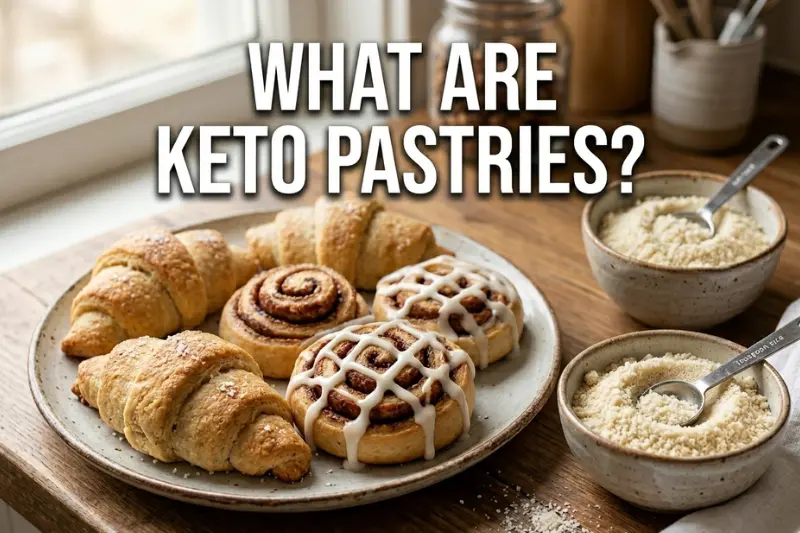
Keto pastries are low-carb baked goods designed to fit a ketogenic diet. They replace traditional high-carb ingredients with keto-friendly alternatives.
Common keto pastry swaps:
Wheat flour → Almond flour or coconut flour
Sugar → Stevia, erythritol, monk fruit
Butter alternatives → Grass-fed butter or ghee
Milk → Heavy cream or unsweetened almond milk
These swaps help reduce net carbs while keeping texture and flavor enjoyable.
Why Keto Pastries Are Different from Regular Pastries
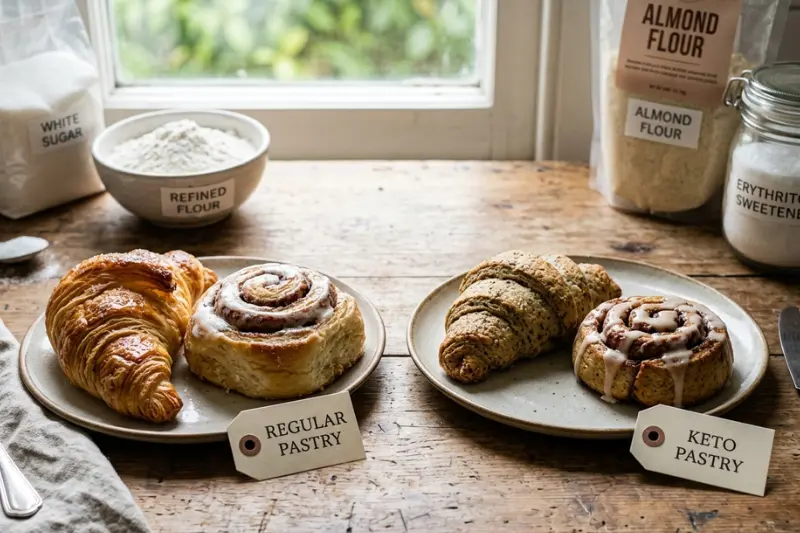
Traditional pastries rely on gluten for structure and sugar for texture and browning. Keto pastries do not use gluten or sugar in the same way, so the baking process changes significantly.
Key differences:
No gluten → requires binding agents like eggs or cheese dough
Lower moisture → needs careful fat balance
Different rise behavior → baking powder or yeast substitutes used
Less browning → sometimes needs egg wash for color
Understanding these differences is the key to success.
Best Ingredients for Keto Pastries
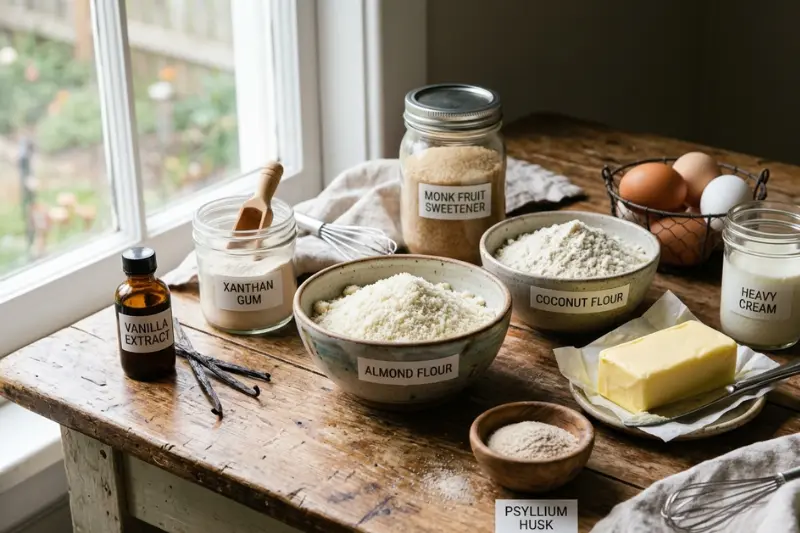
Choosing the right ingredients is the foundation of great keto baking.
Low-Carb Flours
- Almond flour (most common, soft texture)
- Coconut flour (absorbs moisture, use small amounts)
- Psyllium husk (adds elasticity)
Keto Sweeteners
- Erythritol (clean taste, no aftertaste)
- Monk fruit (natural sweetness)
- Allulose (closest to sugar texture)
Healthy Fats
- Butter (best flavor and structure)
- Cream cheese (adds softness)
- Coconut oil (for dairy-free options)
Binding Agents
- Eggs (structure and moisture)
- Mozzarella (fathead dough base)
- Xanthan gum (optional for elasticity)
Popular Types of Keto Pastries
Keto baking is surprisingly versatile. You can recreate almost any classic pastry.
1. Keto Cinnamon Rolls
Soft, sweet, and made with almond flour dough and cinnamon filling.
2. Keto Croissants
Flaky layers created using butter and almond flour laminating techniques.
3. Keto Bagels
Chewy texture using mozzarella-based dough or almond flour blends.
4. Keto Cookies & Danish Pastries
Great for quick snacks and dessert-style baking.
5. Keto Puff Pastry Alternatives
Made using layered fathead dough or cheese-based dough.
Step-by-Step Keto Pastry Baking Tips
Most beginners fail not because of ingredients—but because of technique.
Tip 1: Don’t Overwork the Dough
Keto doughs become sticky or oily if handled too much.
Tip 2: Chill When Needed
Cold dough is easier to shape and holds structure better.
Tip 3: Measure Accurately
Even small changes in almond or coconut flour can change texture.
Tip 4: Use Silicone Mats
Prevents sticking and makes rolling easier.
Tip 5: Balance Moisture
If dough is too dry, add egg or butter slowly.
Common Keto Pastry Mistakes (And Fixes)
Mistake 1: Using too much coconut flour
Fix: Coconut flour absorbs liquid—use only small amounts.
Mistake 2: Skipping binding agents
Fix: Always use eggs or cheese-based dough.
Mistake 3: Overbaking
Fix: Keto pastries cook faster than regular ones.
Mistake 4: Not letting pastries cool
Fix: Cooling improves structure and texture.
Expert Secret: The Fathead Dough Advantage
One of the biggest breakthroughs in keto baking is fathead dough. It uses mozzarella cheese, almond flour, eggs, and butter to create a stretchy, workable dough.
Why it works:
- Cheese creates elasticity
- Almond flour adds structure
- Eggs bind everything together
- Butter improves flavor and softness
This dough is used for pizza crusts, cinnamon rolls, and even savory pastries.
Storage and Reheating Tips
Keto pastries behave differently after baking.
Storage:
- Refrigerate for up to 5 days
- Freeze for up to 2 months
Reheating:
- Microwave for 10–15 seconds
- Oven at low heat for 5–7 minutes
This restores softness and freshness.
Are Keto Pastries Healthy?
Keto pastries are lower in carbs and sugar compared to traditional pastries. However, they are still calorie-dense due to fats like butter and cheese.
Benefits:
- Supports ketosis
- Reduces sugar cravings
- Gluten-free alternative
- Better blood sugar control
Things to remember:
- Portion control is important
- Balance with whole foods
FAQs About Keto Pastries
What are keto pastries made of?
Keto pastries are made using low-carb ingredients like almond flour, coconut flour, eggs, butter, cream cheese, and sugar-free sweeteners such as erythritol or monk fruit.
Are keto pastries actually healthy?
Yes, they are healthier than regular pastries in terms of lower carbs and sugar. However, they are still calorie-dense, so portion control is important.
Can I eat keto pastries every day?
You can, but it depends on your goals. Eating them in moderation works best, especially if you are trying to lose weight or stay in ketosis.
What flour is best for keto pastries?
Almond flour is the most commonly used because it gives a soft texture. Coconut flour is also used but in very small amounts because it absorbs a lot of moisture.
Why do keto pastries sometimes taste different?
Keto pastries don’t use sugar or wheat flour, so the texture and sweetness can feel slightly different. Using the right sweeteners and fats improves the taste significantly.
Can I replace sugar with regular sweeteners?
No, regular sugar is not keto-friendly. Instead, use keto-approved sweeteners like erythritol, stevia, monk fruit, or allulose.
What is fathead dough in keto baking?
Fathead dough is a popular keto dough made from mozzarella cheese, almond flour, eggs, and butter. It is used for pastries, pizza crusts, and bread alternatives.
Why do my keto pastries turn out dry?
This usually happens when too much coconut flour is used or not enough fat or eggs are added. Adjusting moisture balance fixes this issue.
Can keto pastries be frozen?
Yes, keto pastries freeze very well. Store them in an airtight container and freeze for up to 2 months for best quality.
Do keto pastries kick you out of ketosis?
If made correctly with low-carb ingredients and eaten in moderation, keto pastries should not kick you out of ketosis. However, overconsumption can affect your carb limit.
Final Thoughts
Keto pastries are a game-changer for anyone following a low-carb lifestyle. With the right ingredients and techniques, you can enjoy bakery-style treats without breaking your diet. The key is understanding how keto baking works differently and practicing simple methods that deliver consistent results.
Once you master the basics, you can turn almost any traditional pastry into a keto-friendly version that tastes just as satisfying.
