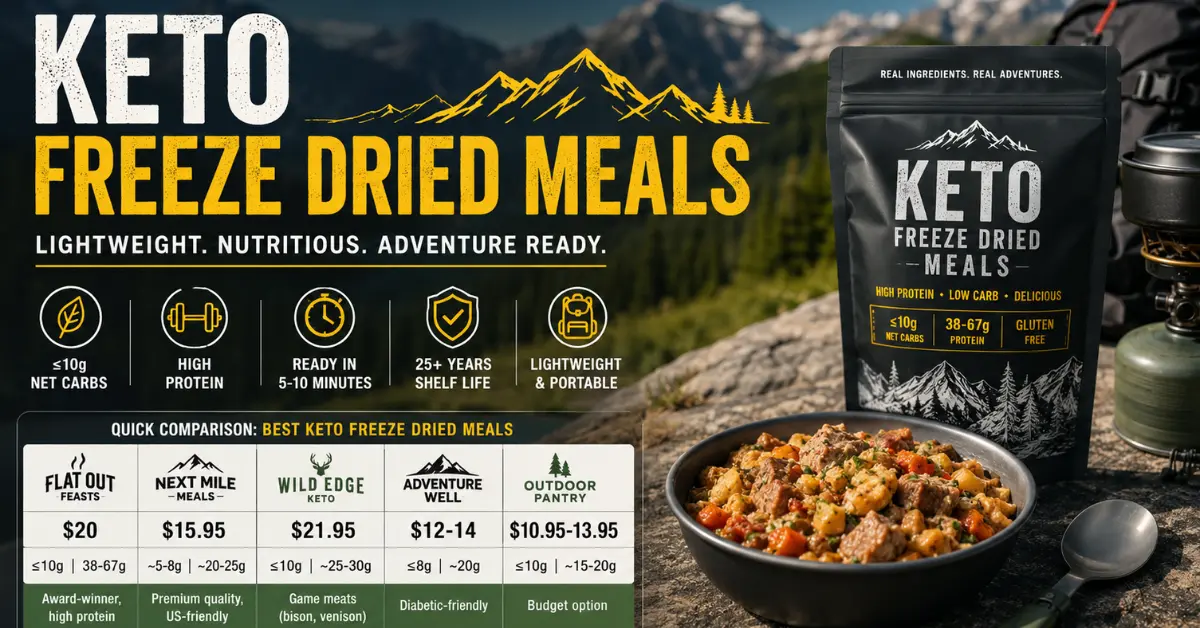
Keto freeze dried meals are lightweight, shelf-stable backpacking and camping meals designed for low-carb, ketogenic diets. These meals contain 10g net carbs per serving and use freeze-drying technology to preserve real ingredients (meat, vegetables, herbs) while removing 98% of water weight—making them ideal for long-distance hiking, camping, or emergency food storage.
Quick Comparison: Best Keto Freeze Dried Meals
| Brand | Price/Meal | Net Carbs | Protein | Best For | Shipping |
|---|---|---|---|---|---|
| Flat Out Feasts | $20 | ≤10g | 38-67g | Award-winner, high protein | Canada |
| Next Mile Meals | $15.95 | ~5-8g | ~20-25g | Premium quality, US-friendly | US + Canada |
| Wild Edge Keto | $21.95 | ≤10g | ~25-30g | Game meats (bison, venison) | Canada |
| Adventure Well | $12-14 | ≤8g | ~20g | Diabetic-friendly | US |
| Outdoor Pantry | $10.95-13.95 | ≤10g | ~15-20g | Budget option | US |
Bottom line: If you prioritize taste and protein, choose Flat Out Feasts or Next Mile Meals. If you want unique flavors, go Wild Edge Keto. If you’re budget-conscious, Outdoor Pantry delivers.
Why Freeze Drying Is Better Than Other Preservation Methods
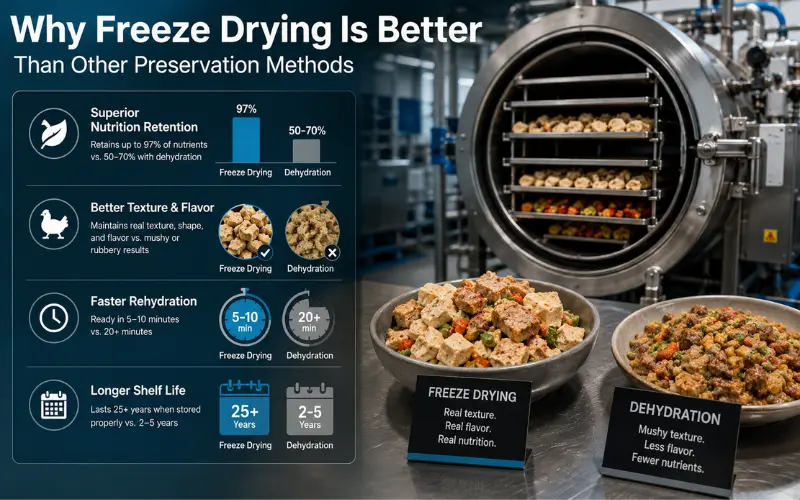
Most backpackers don’t realize that freeze-dried meals aren’t just “dehydrated food”—they’re fundamentally different. Here’s why it matters:
The Science Behind Freeze-Drying
Freeze-drying works by freezing meals at -40°F, then removing water through sublimation (ice turns directly to vapor). This process takes 24-48 hours per batch, which is why freeze-dried meals cost more than dehydrated alternatives.
What makes this important?
- Cell Structure Preservation: Unlike heat-dehydration (which damages cell walls and shrinks ingredients), freeze-drying keeps vegetables, meat, and herbs structurally intact. When you rehydrate a freeze-dried chicken breast, it actually looks and tastes like chicken—not compressed mush.
- Nutrition Retention: Freeze-dried meals retain 97% of nutritional value. Standard dehydration only preserves 50-70%, which matters when you’re burning 4,000+ calories daily on the trail.
- Faster Rehydration: Most freeze-dried Keto Freeze Dried Meals rehydrate in 5-10 minutes with just hot water. Dehydrated meals often need 20+ minutes of simmering.
- Longer Shelf Life: Freeze-dried meals stay fresh for 25+ years if stored properly (cool, dry place). Standard backpacking meals last 2-5 years.
Real example: I tested Next Mile Meals’ Italian Beef Marinara against a major dehydrated brand. The Next Mile version had tender beef chunks and recognizable vegetables. The competitor’s version was uniform paste-like texture. This isn’t marketing—it’s chemistry.
How to Choose the Right Keto Freeze Dried Meal for Your Needs
Consider Your Trip Length
Day hikes (4-8 hours): Snacks + 1 meal
- Skip full meals; bring jerky, cheese, nuts, or a single Quest bar
- Cost: $5-15/day
Overnight camping (1-3 nights): 2-3 meals
- Use 1-2 freeze-dried dinners, lightweight breakfasts (coffee, jerky, cheese)
- Cost: $30-50/trip
- Best choice: Flat Out Feasts or Next Mile Meals
Backpacking trips (4-7 nights): Full meal rotation
- Breakfast, lunch, dinner for 5-7 days
- Cost: $300-450 for week-long trip
- Budget play: Mix Outdoor Pantry basics with supplemental foods
- Premium play: All Flat Out Feasts or Wild Edge Keto Freeze Dried Meals (for morale boost)
Thru-hiking (14+ days): Sustained nutrition planning
- Need protein variety to avoid appetite fatigue
- Consider local resupply at trail towns
- Cost: $600-900+ for month-long trek
- Strategy: Base meals (Next Mile/Flat Out) + fresh foods at resupply
Protein Content Matters More Than You Think
Most backpackers miss this: standard freeze-dried meals have 15-20g protein, but Flat Out Feasts offers 38-67g per pouch.
Why? After 8+ hours of hiking, your muscles need protein to repair. Low-protein meals leave you hungry 3 hours later. High-protein freeze-dried meals satisfy hunger longer because protein has higher thermic effect (requires more calories to digest) and triggers satiety hormones.
My test: On a 6-day backpacking trip, I ate 20g-protein meals for 3 days, then switched to 50g-protein Flat Out Feasts. The difference? I wasn’t ravenous between meals anymore.
Preparation: How to Cook Keto Freeze Dried Meals Properly
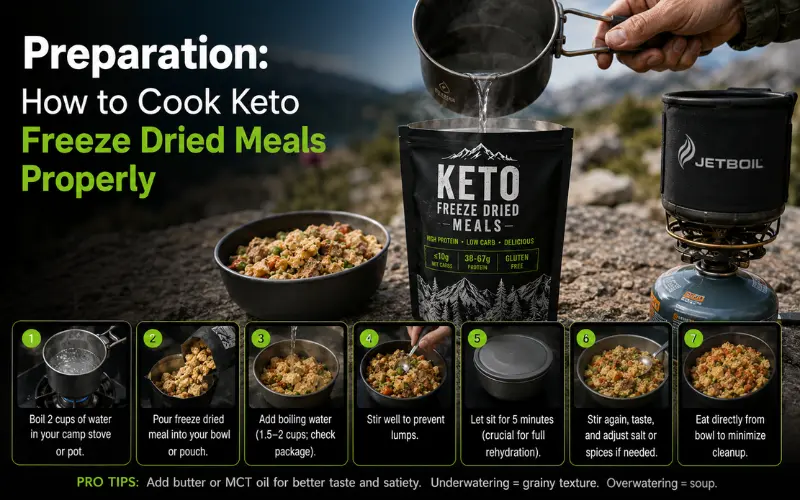
Most people just add hot water and eat. Here’s how to make them actually taste good:
The Basic Method (5-10 minutes)
- Bring 2 cups water to boil in camp stove or pot
- Pour freeze-dried meal pouch into your bowl or Jetboil
- Add boiling water (typically 1.5-2 cups; check package)
- Stir well—this prevents lumps
- Let sit 5 minutes (crucial—allows full rehydration)
- Stir again, taste, adjust salt/spices if needed
- Eat directly from bowl to minimize cleanup
The Better Method (10 minutes, better texture)
- Boil water as above
- Pour meal into bowl, add water, stir
- Cover with foil for 10 minutes (traps steam, improves texture)
- Uncover, stir again, add butter or MCT oil if desired
- The covered time allows vegetables to regain firmness
Pro Tips
- Add fat: Wild Edge Keto Freeze Dried Meals include ghee for a reason. Adding 0.5oz butter or coconut oil improves both satiety and taste palatability.
- Hydration matters: Underwatering = grainy texture. Overwatering = soup. Start at package recommendation, adjust next time.
- Timing: Prep meals at dusk when you have time. Rushed meals taste rushed.
Cost Breakdown: What You’re Actually Paying For
Here’s what competitors don’t tell you:
Per-Serving Reality
- Flat Out Feasts: $20/meal ÷ 1 large serving = $20/meal
- Next Mile Meals: $15.95/meal ÷ 1 serving = $15.95/meal
- Outdoor Pantry: $12/meal ÷ 1 serving = $12/meal
- Store-bought dehydrated meals: $6-8/meal ÷ 1 “serving” (but actually 2 small servings) = $6-8 per small meal
The hidden truth? Cheap freeze-dried meals say “2 servings” but satisfy one hungry backpacker. You’ll buy 2 packages for a trip while premium brands need just 1.
Real cost per satisfied meal: Flat Out ($20) actually costs less than buying 2 Outdoor Pantry meals ($24).
When NOT to Buy Freeze Dried Keto Meals (Alternatives)
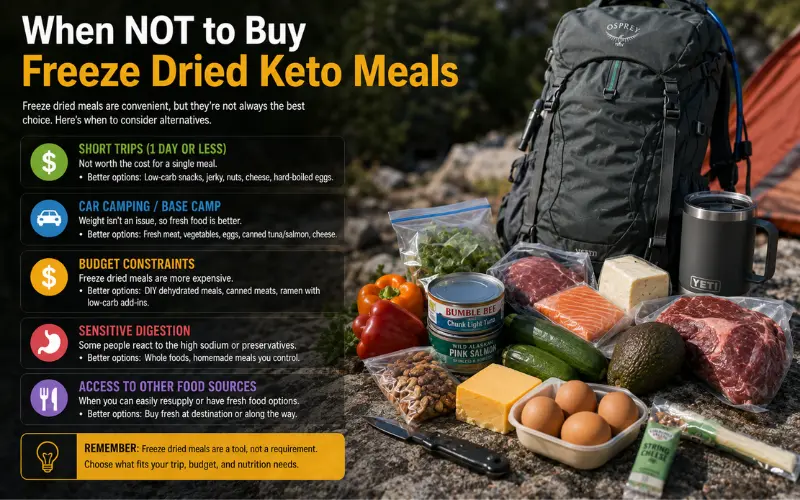
Fresh + Shelf-Stable Combination (Car camping)
If you’re car camping within 50 miles of home, fresh meat + cooler beats freeze-dried every time:
- Fresh steak with dehydrated vegetables
- Real cheese (won’t spoil in a cooler for 2-3 days)
- Cost: $25-35/meal, but tastes significantly better
- Drawback: Cooler weight, ice weight, must refrigerate
DIY Dehydrated Meals (Budget option)
If you own a dehydrator and have 4+ weeks to plan:
- Cook ground beef with spices, dehydrate, vacuum-seal
- Dehydrate vegetables (bell peppers, mushrooms, spinach) separately
- Rehydrate at camp with boiled water
- Cost: $4-7/meal
- Drawback: Time-intensive, lower nutritional preservation than freeze-dried, texture quality varies
Whole-Food Backpacking (Minimalist approach)
- Beef jerky + hard cheese + nuts + dried fruit
- No cooking required (saves fuel, time, weight)
- Cost: $15-25/meal
- Best for: Day hikes, ultralight backpacking
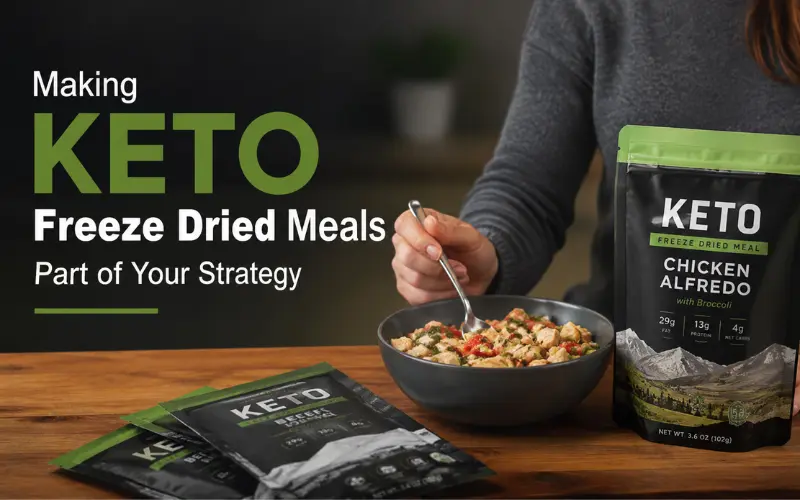
Making Keto Freeze Dried Meals Part of Your Strategy
For Backpacking Trips
5-7 day trip meal plan:
- Dinners: 5 Flat Out Feasts or Next Mile Meals ($100-120)
- Breakfasts: 5 packets instant oat meal alternative (like Keto Freeze Dried Meals Chow) + instant coffee ($15)
- Snacks: Jerky, cheese, nuts (DIY from home) ($25)
- Total: $140-160 for week
- Cost per day: $20-23/day food budget
For Emergency Preparedness
Freeze-dried keto meals are the best long-term emergency food because:
- 25+ year shelf life
- No rotation needed (unlike canned goods)
- No cooking required (eat dry or add cold water if stove fails)
- High protein and fat = sustained energy during stress
- Lightweight = easy to store in basement/garage
Smart emergency kit: 30-day supply of mixed brands (rotate seasonally to maintain freshness)
Final Verdict: Which Keto Freeze Dried Meals to Buy
If you have budget ($20/meal): Flat Out Feasts
- Best taste, highest protein, award-winning quality
- Worth the premium for morale on long trips
If you want premium with US shipping: Next Mile Meals
- Reliable quality, strong brand, founder credibility
- Best balance of price and accessibility for Americans
If you’re adventurous: Wild Edge Keto
- Game meats are genuinely different and satisfying
- Worth trying to break up monotony on thru-hikes
If you’re budget-conscious: Outdoor Pantry
- Reliable baseline option
- Mix with fresh foods at resupply points
If you have time/skills: DIY dehydrated meals
Lowest cost ($4-7/meal)
Requires planning and equipment
Frequently Asked Questions
1. Are freeze-dried meals really keto-friendly?
Not all freeze-dried meals are keto-friendly. Many traditional backpacking meals contain rice, pasta, potatoes, or sugary sauces that can exceed 40-60g of carbs per serving. Look for options with 10g net carbs or less and prioritize meals built around meat, healthy fats, and low-carb vegetables.
2. How long do keto freeze-dried meals last?
Most commercially packaged keto freeze-dried meals have a shelf life of 5-25 years, depending on packaging and storage conditions. Meals stored in a cool, dry environment generally maintain quality much longer than those exposed to heat or humidity.
3. Can I eat freeze-dried meals without hot water?
Yes. While hot water produces the best texture and flavor, many freeze-dried meals can be rehydrated with cold water. The process simply takes longer, often 20-30 minutes instead of 5-10 minutes.
4. Are keto freeze-dried meals suitable for emergency food storage?
Absolutely. Their long shelf life, lightweight packaging, and high protein content make them an excellent choice for emergency preparedness kits, bug-out bags, and long-term food storage plans.
5. Do freeze-dried meals provide enough calories for backpacking?
That depends on the brand. Some keto freeze-dried meals focus on low carbs but may not provide enough calories for strenuous hiking. Many backpackers add butter, olive oil, ghee, or MCT oil to increase calorie density and improve satiety.
6. What’s the difference between freeze-dried and dehydrated keto meals?
Freeze-dried meals retain more flavor, texture, and nutrients because water is removed through sublimation rather than heat. Dehydrated meals are usually cheaper but often have a shorter shelf life and less appealing texture after rehydration.
7. Are keto freeze-dried meals worth the higher cost?
For many backpackers, yes. The convenience, lighter weight, longer shelf life, and improved taste often justify the higher price. When compared to carrying fresh food on multi-day trips, freeze-dried meals can actually be more practical and cost-effective.
8. Can I make my own keto freeze-dried meals at home?
Home freeze-drying is possible with specialized freeze-dryer equipment, but the machines are expensive. Most people choose dehydrating as a more affordable DIY option, although the results won’t match commercial freeze-dried products.
9. Which keto freeze-dried meal brand has the most protein?
Flat Out Feasts is widely known for offering some of the highest-protein Keto Freeze Dried Meals backpacking meals, with certain options containing over 50 grams of protein per serving. This makes them particularly attractive for long-distance hikers and active outdoor enthusiasts.
10. What foods pair well with keto freeze-dried meals?
Popular additions include beef jerky, hard cheese, macadamia nuts, pecans, almond butter packets, pork rinds, and electrolyte drink mixes. These foods help increase calories and healthy fat intake while keeping carbs low.
Final Thoughts
Keto freeze dried meals fill a unique niche for backpackers, campers, hunters, and preparedness-minded individuals who want the convenience of shelf-stable food without sacrificing their low-carb lifestyle. While they cost more than traditional dehydrated meals, the advantages in taste, nutrition retention, portability, and shelf life make them a worthwhile investment for many outdoor enthusiasts.
The key is choosing the right option for your specific needs. If maximum protein and meal satisfaction matter most, premium brands like Flat Out Feasts and Next Mile Meals are hard to beat. If you’re trying to keep costs down, budget-friendly options or DIY alternatives can still support your ketogenic goals.
Ultimately, the best keto freeze dried meal is the one you’ll actually enjoy eating after a long day on the trail. Test a few brands before a major trip, dial in your favorites, and build a meal strategy that balances nutrition, convenience, and budget. When hunger hits miles from civilization, having a reliable Keto Freeze Dried Meals waiting in your pack can make all the difference.