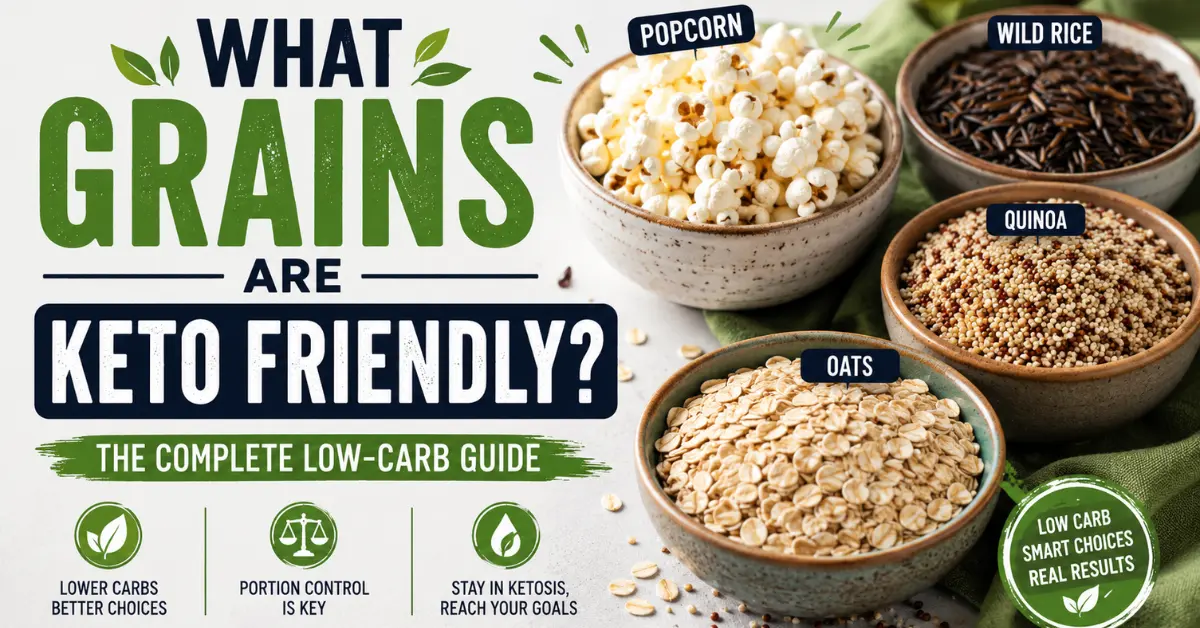
If you’ve just started keto, you’ve probably been told to ditch all grains. That’s mostly true — but not entirely. A small group of grains are low enough in net carbs that they can fit into a ketogenic diet without pushing you out of ketosis.
The short answer:
The most keto-friendly grains are popcorn (~4g net carbs per cup), wild rice (~9.8g per 50g serving), quinoa (~9.3g per 50g serving), and oats in very small amounts. These work within a keto framework only when portion-controlled and tracked carefully, since the standard keto daily carb limit is 20–50g net carbs.
The table below gives you an at-a-glance comparison of the lowest-carb grain options:
| Grain | Net Carbs (per 50g cooked) | Glycemic Index | Keto-Friendly? |
|---|---|---|---|
| Popcorn (air-popped, 1 cup) | ~4g | 65 | ✅ In small amounts |
| Oats (rolled, cooked) | ~10g | 55 | ⚠️ Strict limit |
| Quinoa | ~9.3g | 53 | ⚠️ Strict limit |
| Wild Rice | ~9.8g | 57 | ⚠️ Strict limit |
| Buckwheat | ~13g | 49 | ❌ Hard to fit |
| Barley | ~14g | 28 | ❌ Hard to fit |
| Brown Rice | ~18g | 68 | ❌ Avoid |
| White Rice | ~19g | 73 | ❌ Avoid |
| White Bread | ~27g | 75 | ❌ Avoid |
Why Most Grains Don’t Work on a Keto Diet
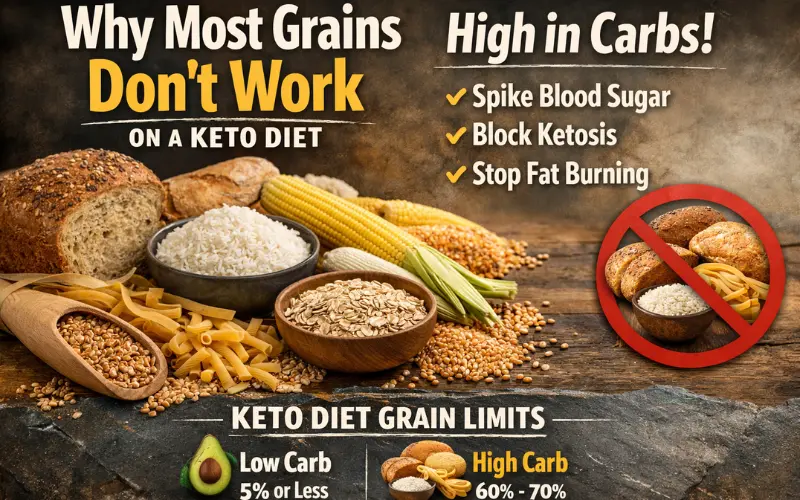
To understand what grains are keto friendly, you first need to understand how the ketogenic diet works at a metabolic level. The diet forces your body into a state called ketosis, where it burns fat for fuel instead of glucose. To reach and maintain ketosis, most people need to keep net carbohydrate intake below 20–50 grams per day.
What Grains Are Keto diabetics Net carbs are calculated by subtracting fiber from total carbs. This matters because fiber isn’t digested and doesn’t raise blood sugar, so it doesn’t count toward your carb limit.
Most grains are starchy by nature. Their primary job in nature is to store energy as starch — the same starch your body rapidly converts to glucose. A single cup of cooked white rice contains about 43 grams of net carbs, which would blow through your entire daily keto carb budget in one serving. This is why grains as a category get lumped into the “avoid” column.
But the story doesn’t end there. Some what grains are keto friendly are significantly lower in starch, higher in fiber, or consumed in small enough quantities that they genuinely can fit within a keto framework. The key is knowing which ones and how much.
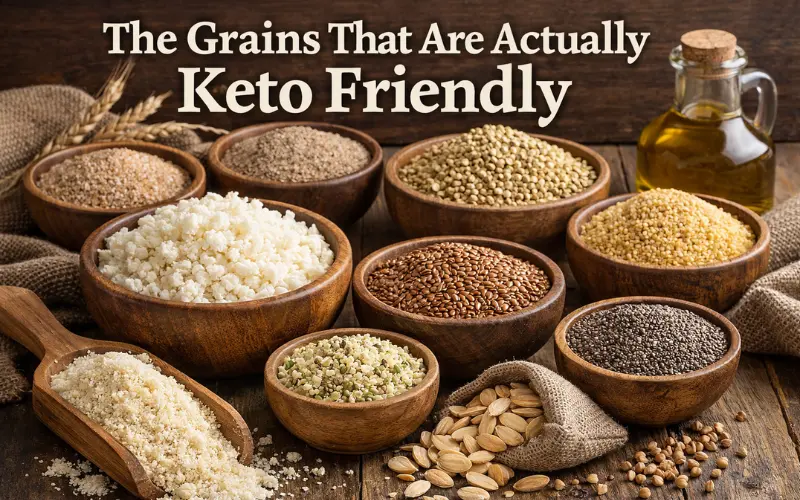
The Grains That Are Actually Keto Friendly
Popcorn — The Most Surprisingly Keto-Friendly Grain
Air-popped popcorn contains only about 4 grams of net carbs per cup, making it one of the most keto-compatible grain-based snacks available. It’s high in volume, what grains are keto friendly which means a small serving feels substantial. The catch is portion control — the moment you add butter-flavored coatings, cheese powders, or caramel, the carbs climb fast.
Stick to air-popped and season with salt, smoked paprika, or nutritional yeast. One to two cups can fit comfortably within most people’s keto carb allowance.
Wild Rice — Technically a Grass, Not a Grain
Despite its name, wild rice is actually the seed of an aquatic grass — not true rice. That distinction matters nutritionally. With roughly 9.8 grams of net carbs per 50-gram cooked serving, what grains are keto friendly it fits within a moderate keto framework, particularly for those practicing cyclical or targeted keto.
Wild rice also delivers an impressive nutritional profile: what grains are keto friendly it contains all nine essential amino acids, which makes it a complete protein — rare among plant foods. It’s also rich in zinc, magnesium, potassium, and antioxidants. Use it in small portions as a base for soups or grain bowls rather than as a healthy side dishes on its own.
Quinoa — High Protein, Moderate Carbs
Technically a seed masquerading as a grain, quinoa contains about 9.3 grams of net carbs per 50-gram cooked serving. For strict keto practitioners on a 20g daily limit, quinoa is difficult to include. But for those on a flexible low-carb plan or liberal keto (50g limit), a measured portion works well.
What Grains Are Keto Friendly makes quinoa worth considering is its fiber and protein density. It contains around 2.2 grams of protein per 50g cooked, and its fiber slows digestion, reducing the blood sugar spike you’d get from refined grains. People following a plant-based keto diet often rely on quinoa as one of the few grain-like options that contributes meaningful protein.
Oats — Only in Very Small, Calculated Amounts
Oats are controversial in keto circles. A half-cup of dry rolled oats has about 27 grams of total carbs, but the net carbs drop to around 10–12 grams once you account for fiber. On a strict 20g keto limit, that leaves almost no room for anything else. On a more flexible plan, a small portion of oats — ideally prepared as overnight oats to lower the glycemic impact through resistant starch formation — can fit.
It help on dirty keto diet to enhance fitness.
Steel-cut oats are preferable to instant varieties because they’re less processed and digest more slowly. If you do include oats, treat them as a once-or-twice-a-week option, not a daily staple.
A Technique Competitors Won’t Tell You: Preparation Changes Everything

Here’s something almost no other guide covers: how you cook a grain significantly changes its net carb impact on your body.
Cooling cooked grains causes resistant starch to form. Resistant starch behaves like fiber — it passes through the digestive system without being absorbed as glucose. Cooking rice, quinoa, or oats and then refrigerating them overnight before eating increases their resistant starch content by 50–100%, which meaningfully lowers their glycemic impact even if the lab-measured carb count stays the same.
Soaking and sprouting grains before cooking reduces their phytic acid content and pre-digests some of the starch. Sprouted grain products generally have a lower glycemic index than their unsprouted counterparts. If you’re buying packaged grains, look for “sprouted” on the label.
Cooking al dente, rather than fully soft, also preserves more resistant starch. This applies especially to oats — lightly cooked oats raise blood sugar more slowly than overcooked ones.
None of these techniques make a high-carb grain keto-safe on its own, but when you’re working with borderline grains like wild rice or quinoa, they can genuinely make a difference.
Grains to Avoid on Keto
Understanding what grains are keto friendly means knowing what to leave off your plate entirely. White rice, white bread, regular pasta, couscous, and cornmeal are all extremely dense in starch with little fiber to offset the carb count. Brown rice is slightly better than white in terms of fiber, but still clocks in at roughly 18 grams of net carbs per 50-gram cooked serving — too high for most keto budgets.
Refined What Grains Are Keto Friendly are particularly problematic because the milling process strips away the bran and germ, removing fiber and leaving mostly starch. Refined grain products also tend to have a very high glycemic index, meaning they cause a sharp, rapid blood glucose spike — exactly the opposite of what you want when trying to maintain ketosis.
Alternative Low-Carb Grain Substitutes Worth Knowing
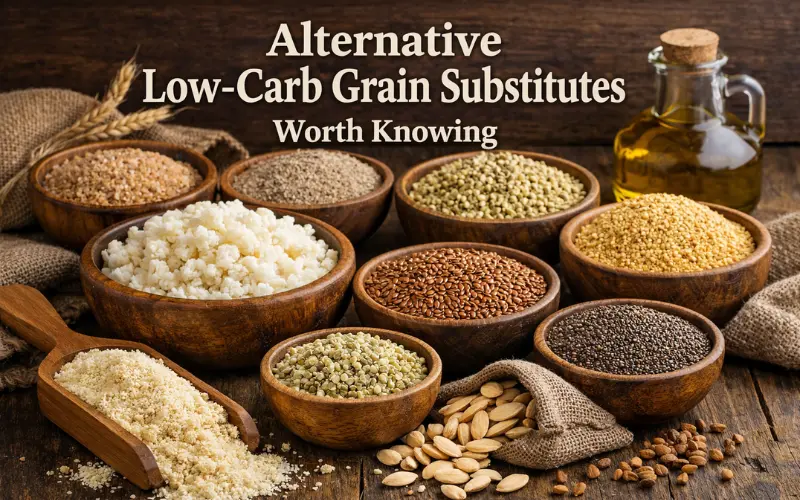
When you want the texture or satisfaction of grains without the carb cost, a few substitutes do the job remarkably well.
Cauliflower rice has become the gold standard for rice replacement, containing only about 0.9 grams of net carbs per 50-gram cooked serving. Riced broccoli, cabbage rice, and mushroom rice work similarly. Shirataki rice — made from konjac root — contains virtually zero net carbs and is especially useful in Asian-inspired recipes.
It contain cassava flour to increase taste of rice.
For pasta, zucchini noodles (zoodles), hearts of palm pasta, and konjac noodles give you the noodle experience without the carb load. None of these are grains technically, but they fill the same role on your plate.
Frequently Asked Questions
1. What grains are keto friendly for beginners?
The easiest starting points are popcorn (air-popped, 1–2 cups) and wild rice in very small portions. Both offer flavor and satisfaction without blowing your carb budget, as long as you track the serving size.
2. Can I eat oatmeal on a keto diet?
Only in very small amounts on a flexible low-carb plan. One-quarter cup of dry rolled oats cooked provides roughly 6–8 grams of net carbs. Prepare it as overnight oats and refrigerate before eating to increase resistant starch content and lower its glycemic impact.
3. Is quinoa keto friendly?
Quinoa sits in the gray zone. At about 9.3g net carbs per 50g cooked, it can fit into a liberal keto diet (up to 50g daily) but is difficult to include on strict keto (20g daily limit). Portion control is essential.
4. Is wild rice better than brown rice on keto?
Yes. Wild rice has fewer net carbs per serving than brown rice and delivers more protein and nutrients. It’s also technically a different plant — a water grass seed rather than true rice.
5. Does cooking method affect how keto-friendly a grain is?
Yes, meaningfully so. Cooling cooked grains overnight increases resistant starch, which lowers glycemic impact. Soaking and sprouting grains before cooking also reduces their starch digestibility.
6. What is resistant starch and why does it matter on keto?
Resistant starch acts like fiber — it passes through digestion without being converted to glucose. This means it doesn’t raise blood sugar or disrupt ketosis. Cooling cooked grains (and reheating gently) increases their resistant starch content significantly.
7. Can I eat popcorn on a ketogenic diet?
Air-popped popcorn is one of the most keto-compatible grain snacks at about 4g net carbs per cup. Stick to 1–2 cups and avoid flavored varieties with added sugar, cheese powder, or caramel.
8. What grains should I completely avoid on keto?
White rice, white bread, regular pasta, cornmeal, couscous, and instant oats. These are all high in rapidly-digested starch with minimal fiber, which will spike blood sugar and disrupt ketosis quickly.
9. Is buckwheat keto friendly?
Buckwheat is lower on the glycemic index than most grains, but at around 13 grams of net carbs per 50g cooked, it’s difficult to include on keto without using up most of your daily carb allowance. It’s better suited to a general low-carb diet than strict keto.
10. Can I eat grain substitutes like cauliflower rice on keto?
Absolutely. Cauliflower rice contains less than 1 gram of net carbs per 50g cooked serving and is one of the best keto-friendly alternatives to rice. Shirataki rice, broccoli rice, and mushroom rice are equally low-carb options worth adding to your rotation.
Final Thought
What grains are keto friendly comes down to a simple framework: look at net carbs per realistic serving, consider the fiber content, and factor in how you’re preparing them. Popcorn, wild rice, and quinoa can work — but only in controlled portions, and only when they fit within your total daily carb budget.
The bigger insight is this: a strict keto dieter will likely want to skip grains almost entirely, while someone on a flexible low-carb plan has more room to experiment. Neither approach is wrong What Grains Are Keto Friendly matters is understanding your personal carb threshold and making grain choices that support it rather than sabotage it.