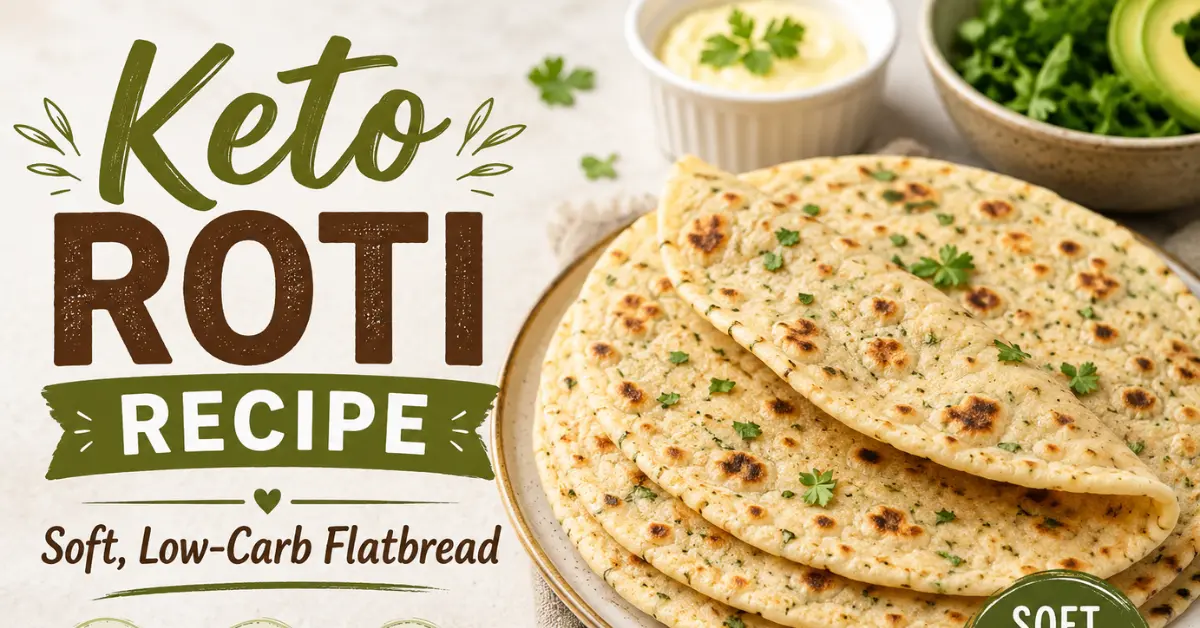
If you love roti but you’re watching your carbs, this keto roti recipe is exactly what you’ve been looking for. It’s soft, pliable, and tears just like the real thing — without the wheat. With only 4 grams of net carbs per piece, this low-carb flatbread fits beautifully into a keto, gluten-free, or low-carb lifestyle.
The best part? You only need five simple ingredients and about 20 minutes. No fancy equipment, no complicated steps. Whether you’re serving it alongside a rich curry, using it as a wrap, or scooping up dal, this keto roti does everything the traditional version does — just without the carb hit.
What Is Keto Roti?
Keto roti is a low-carb version of the traditional Indian flatbread made from whole wheat flour (atta). Traditional roti contains around 12–15 grams of net carbs per piece. This keto roti replaces the wheat flour with blanched almond flour and uses psyllium husk to mimic the soft, bendy texture that makes roti so satisfying.
The result is a gluten-free, grain-free flatbread that folds, tears, and scoops just like the original — without kicking you out of ketosis.
Why You’ll Love This Keto Roti Recipe
- Only 4g net carbs per piece
- Ready in under 20 minutes
- Soft, flexible, and foldable — not stiff or crumbly
- Just 5 ingredients
- Gluten-free, grain-free, and vegan
- Works with curries, wraps, dips, and more
- No eggs required
- Freezer-friendly for meal prep
Ingredients
Here’s what you need to make 6–8 keto rotis:
- 2 cups blanched superfine almond flour
- 6 tablespoons whole psyllium husk (not powder)
- ½ teaspoon salt
- 3 teaspoons olive oil (or avocado oil, or melted ghee)
- 1 cup lukewarm water
Ingredient Notes:
Almond flour: Always use blanched, superfine almond flour — not almond meal. Almond meal is coarser and produces harder, drier rotis. Brands like Bob’s Red Mill or Kirkland work great.
Whole psyllium husk: This is the most important ingredient for getting that soft, pliable texture. It acts like gluten — absorbing moisture, binding the dough, and giving the roti its characteristic stretch. Do not substitute psyllium husk powder here; it absorbs too much liquid and makes the dough stiff.
Olive oil: Any neutral oil works well. Avocado oil is a great keto-friendly swap. You can also use melted ghee for a more traditional buttery flavor.
Lukewarm water: Warm water helps the psyllium husk activate and absorb properly. Cold water will work but requires a longer resting time. Microwave regular water for 15–20 seconds if needed.
How to Make Keto Roti – Step by Step
Step 1: Mix the Dough
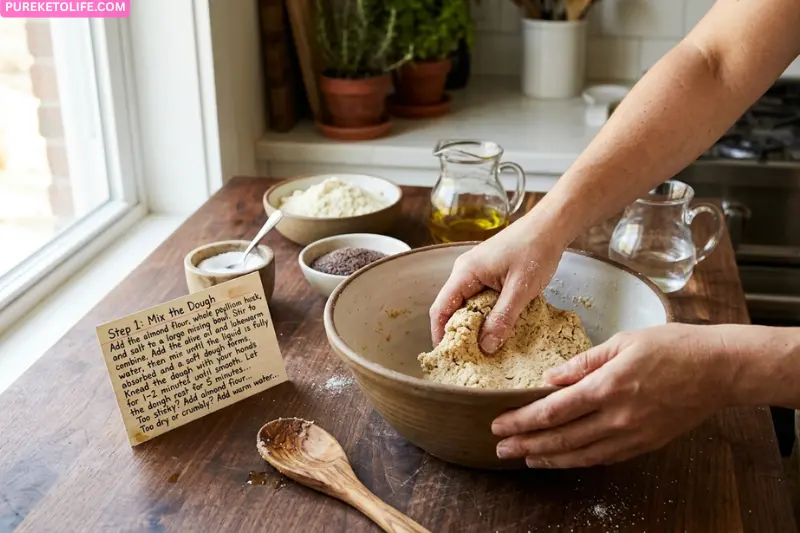
Add the almond flour, whole psyllium husk, and salt to a large mixing bowl. Stir to combine. Add the olive oil and lukewarm water, then mix until the liquid is fully absorbed and a soft dough forms. Knead the dough with your hands for 1–2 minutes until smooth.
Let the dough rest for 5 minutes. This resting time allows the psyllium husk to fully hydrate and gives the dough that stretchy, workable texture.
Dough troubleshooting:
- Too sticky? Add almond flour, one teaspoon at a time, and knead it in.
- Too dry or crumbly? Add warm water, one teaspoon at a time, and knead until soft.
Step 2: Divide and Shape
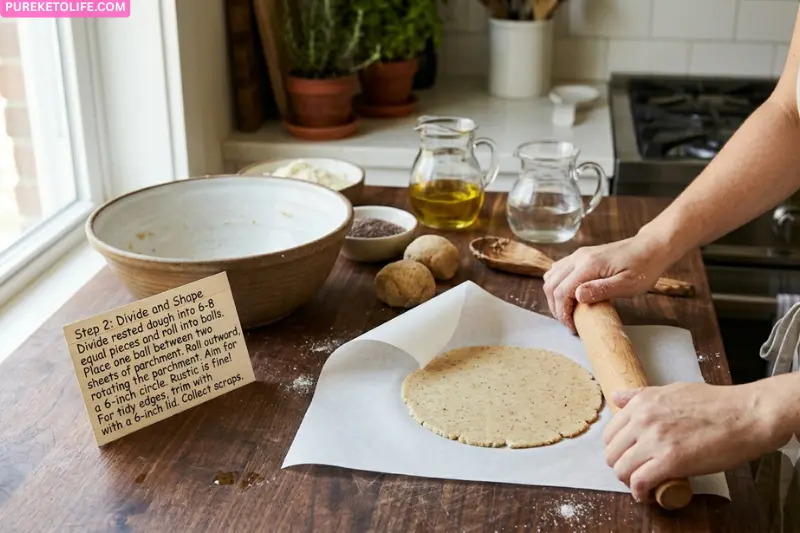
Divide the rested dough into 6–8 equal pieces and roll each one into a smooth ball between your palms.
Place one dough ball in the center of a sheet of parchment paper. Cover with a second sheet of parchment. Using a rolling pin, roll the dough outward in a back-and-forth motion, rotating the parchment slightly as you go. Aim for a circle about 6 inches in diameter and an even thickness throughout.
Don’t stress over getting a perfect circle — rustic shapes taste just as good. If you want a tidy edge, press a 6-inch lid onto the rolled dough and trim around it. Collect the scraps and add them to your next dough ball.
Step 3: Cook the Roti
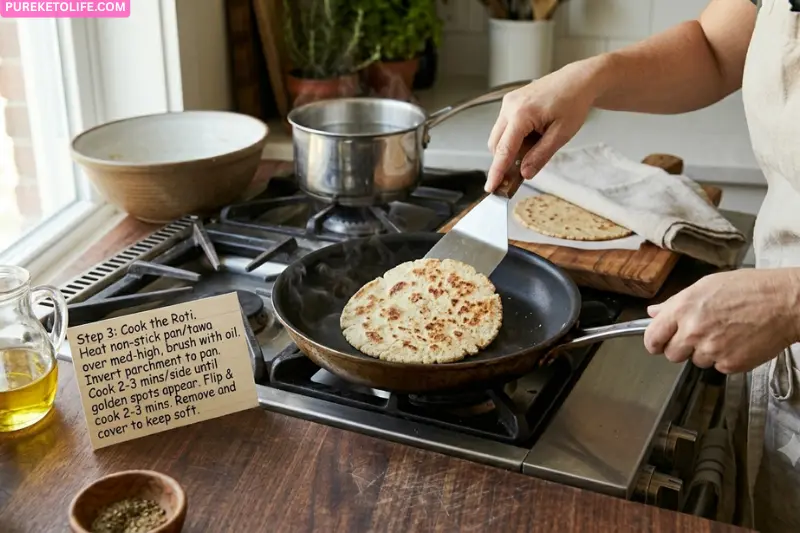
Heat a non-stick pan or tawa over medium-high heat. Lightly brush it with oil. Once hot, carefully invert the parchment paper to release the roti directly into the pan.
Cook for 2–3 minutes on the first side until light golden spots appear. Flip and cook for another 2–3 minutes on the second side. Remove from heat and cover with a clean kitchen towel to keep soft while you cook the rest.
Repeat with the remaining dough balls.
Flavor Variations to Try
One thing most keto roti recipes skip is how easy it is to customize the flavor. Try these simple additions to your dough:
- Garlic roti: Add ¼ teaspoon garlic powder or a small minced clove to the dough.
- Cumin roti: Mix in ¼ teaspoon cumin seeds (jeera) for a warm, earthy flavor common in Indian cooking.
- Ajwain roti: Carom seeds add that classic chapati flavor many people miss when going low-carb.
- Chili herb roti: A pinch of red chili flakes and dried fenugreek leaves (kasoori methi) give it a bold, restaurant-style taste.
- Onion roti: Add 1 teaspoon onion powder and a pinch of dried coriander for a savory twist.
These small additions cost almost no extra carbs and completely transform the eating experience.
What to Serve With Keto Roti
Keto roti is incredibly versatile. Use it as a side dish, a wrap, or a scoop — here are some delicious pairings:
Indian pairings:
- Dal tadka or dal makhani
- Butter chicken or chicken tikka masala
- Saag paneer or palak chicken
- Egg bhurji (Indian scrambled eggs)
- Any dry vegetable sabzi like aloo gobi or bhindi
As a wrap or roll:
- Fill with grilled chicken, sliced veggies, and a spoon of raita for a keto kathi roll
- Use as a low-carb burrito wrap with cauliflower rice and beans
- Spread with hummus and top with roasted vegetables for a Mediterranean-style wrap
Breakfast ideas:
- Serve alongside a spiced omelette or paneer scramble
- Use as a base for a keto egg and cheese roll-up
International pairings:
- Chicken shawarma wrap with tzatziki
- Scooped alongside any thick stew or soup
How to Store and Reheat
At room temperature: Stack the cooled keto rotis and wrap them in a clean kitchen towel. Store in an airtight container for up to 2–3 days. The towel absorbs steam and keeps them soft.
In the refrigerator: Store in an airtight container or zip-lock bag for up to 5 days. Place a small piece of parchment between each piece to prevent sticking.
Freezer: Let the keto rotis cool completely. Layer them with parchment paper between each one and transfer to a freezer-safe bag. Freeze for up to 3 months. Thaw at room temperature for about 20–30 minutes before reheating.
Reheating: Place in a lightly greased hot skillet for 10–15 seconds per side, or wrap in a damp paper towel and microwave for 10–15 seconds. Avoid overheating as this can make them tough.
Make-ahead tip: You can also prep the raw dough up to 3 days ahead. Wrap the dough ball in parchment paper, then place it in a sealed bag and refrigerate. Roll and cook when ready.
Keto Roti vs. Traditional Roti – Nutrition Comparison
| Traditional Roti (per piece) | Keto Roti (per piece) | |
|---|---|---|
| Calories | ~120 kcal | ~200 kcal |
| Total Carbs | ~22g | ~13g |
| Fiber | ~2g | ~9g |
| Net Carbs | ~20g | ~4g |
| Protein | ~3g | ~6g |
| Fat | ~2g | ~15g |
While keto roti is higher in calories due to the almond flour, the net carbs are dramatically lower — and it packs significantly more protein, healthy fat, and fiber. That fiber content means you feel fuller for longer, which is a real advantage on a low-carb diet.
Pro Tips for Perfect Keto Roti
- Use whole psyllium husk, not powder. This is the single most important tip. Powder makes the dough too dry and the rotis crack.
- Let the dough rest. Even 5 minutes makes a noticeable difference in pliability. If you have time, 10 minutes is even better.
- Roll between parchment paper. Keto dough doesn’t behave like wheat dough — it will stick to surfaces. Parchment paper is your best friend here.
- Preheat the pan properly. A cold pan causes sticking. Medium-high heat with a light brush of oil gives you those perfect golden spots without burning.
- Don’t overcook. Keto roti dries out faster than regular roti. Watch for light brown spots and pull it off the heat — it continues cooking slightly from the residual heat.
- Keep them covered. Stack cooked rotis inside a clean kitchen towel or a roti box. The steam keeps them soft for hours.
- Try a tortilla press. If you want perfectly uniform, thin rotis every time, a tortilla press or chapati press works beautifully with this dough.
Frequently Asked Questions
Is roti allowed on a keto diet?
Traditional roti made with wheat flour is not keto-friendly because it contains around 20g of net carbs per piece. However, this keto roti made with almond flour and psyllium husk has only 4g of net carbs per piece, making it a great option for anyone following a ketogenic or low-carb diet.
Can I use coconut flour instead of almond flour?
Yes, but the recipe changes significantly. Coconut flour is far more absorbent than almond flour, so you need much less of it (about ¼ the amount) and much more liquid. The texture will also be slightly different. It’s best to follow a recipe specifically designed for coconut flour rather than swapping them directly.
Can I skip the psyllium husk?
No — the psyllium husk is essential. It acts as a gluten substitute, giving the dough its elasticity and the finished roti its soft, foldable texture. Without it, the roti will be stiff, crumbly, and won’t bend without breaking.
Why did my keto roti turn purple?
This is a harmless reaction that sometimes happens when psyllium husk interacts with baking powder or acidic ingredients. The roti is completely safe to eat — it just looks a little unusual. To avoid it, skip any baking powder or check your brand of psyllium husk.
Will keto roti puff up like regular roti?
Not as dramatically. Keto roti will form some small air pockets on the second side, especially if you cook it over an open gas flame after the pan. But it won’t puff up into a full balloon like traditional phulka. That’s completely normal.
Can I make this recipe vegan?
Yes, this recipe is already vegan as written. Just use olive oil or avocado oil instead of ghee, and skip any butter when serving.
How do I keep keto roti soft?
Stack the rotis as soon as they come off the pan and wrap them in a clean kitchen towel. The steam from the stack keeps them soft. A roti box or insulated tortilla warmer also works very well for keeping them pliable for hours.
How many keto rotis can I eat per day?
This depends on your daily carb target. Each keto roti contains about 4g of net carbs. Most people on a standard ketogenic diet stay under 20–25g net carbs per day, so 2–3 rotis per meal is manageable depending on what else you eat during the day.
Can I make a bigger batch and freeze it?
Absolutely. This recipe freezes very well. Cool completely, separate the pieces with parchment paper, and freeze in a zip-lock bag for up to 3 months. Reheat directly in a hot pan — no need to thaw first.
What is the best almond flour brand for keto roti?
Use blanched, superfine almond flour for the softest results. Bob’s Red Mill Super-Fine Almond Flour and Kirkland Signature Almond Flour are both reliable and widely available. Avoid almond meal (the unbleached, coarser version) as it produces denser, harder rotis.
Final Thoughts
Keto roti proves that going low-carb doesn’t mean giving up the foods you love. With just five ingredients and a bit of practice, you get a soft, warm flatbread that works with everything from dal to chicken curry to a quick breakfast wrap. The first one or two might not be perfectly round — and that’s completely fine. By the third, you’ll have the feel for the dough, and by the fifth, it’ll feel like second nature.
Make a big batch, freeze half, and enjoy fresh keto roti any night of the week. Serve it warm, fold it, tear it, scoop with it — it’s as close to the real thing as low-carb baking gets.