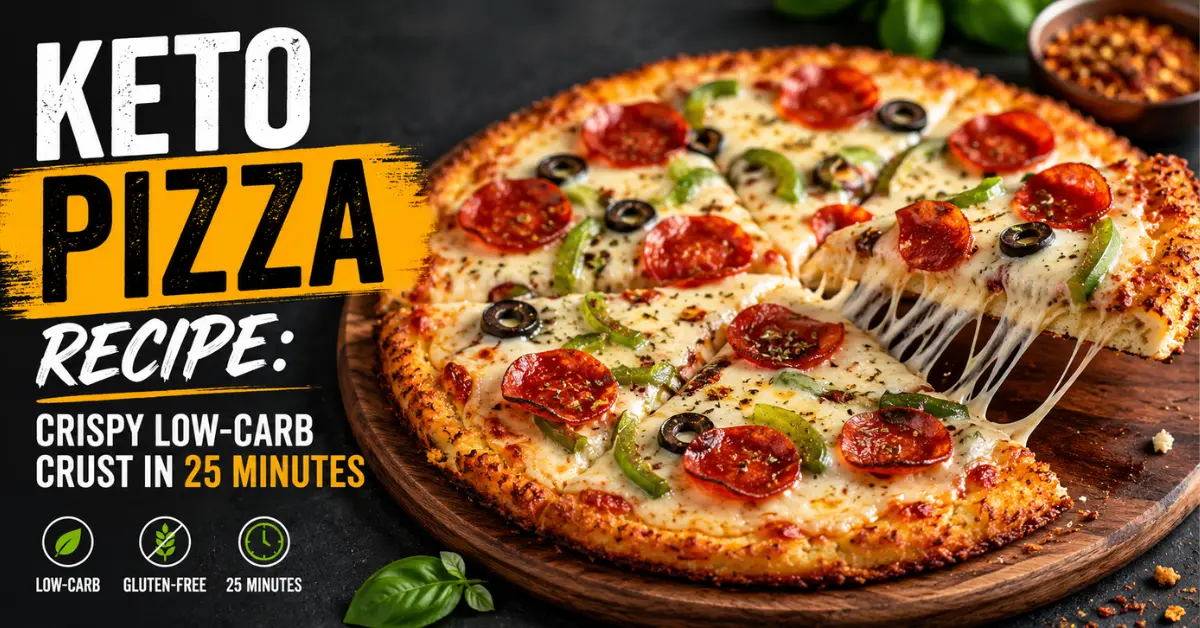
Let’s be honest — pizza is one of the hardest foods to give up when you go low-carb. The good news? This keto pizza recipe is so satisfying, so crispy, and so loaded with real pizza flavor that most people who try it stop missing the original altogether. With just 3 net carbs per slice and a total cook time under 30 minutes, this keto pizza has earned a permanent spot on weekly dinner rotations in thousands of households — and it’s about to earn one in yours too.
This isn’t a sad, soggy substitute. This is a genuinely delicious keto pizza that holds its toppings, has a real crust with a proper chew, and comes out of the oven smelling exactly like the pizza you remember.
What Makes This Keto Pizza Different?
Most keto pizza recipes follow the same fathead dough base — and for good reason, it works. But what separates a mediocre keto pizza from a great one comes down to a few key details that competitors often gloss over: dough temperature management, double-baking technique, oven calibration, and topping strategy.
This guide covers all of it.
What Is Fathead Dough?
Fathead dough is the foundation of the best keto pizza crust. It gets its name from the documentary Fat Head and has become the gold standard for low-carb baking. It replaces wheat flour with almond flour and uses melted mozzarella and cream cheese to create a stretchy, workable dough that bakes up golden and crisp.
The result is a keto pizza crust that’s gluten-free, grain-free, and low enough in carbs to fit comfortably within your daily macros — without sacrificing the experience of eating real pizza.
Ingredients for Keto Pizza
For the crust:
- 2 cups shredded mozzarella cheese (pre-shredded bagged, not fresh)
- 2 oz cream cheese (brick-style, softened)
- 1 cup almond flour (blanched, finely ground)
- 1 tsp baking powder
- ¼ tsp salt
- 2 large eggs, beaten
- 1 tsp Italian seasoning (optional but recommended)
- ½ tsp garlic powder (optional)
For the toppings:
- ½ cup low-carb, sugar-free pizza sauce (Rao’s is a popular choice)
- 1 cup shredded mozzarella
- Your choice of protein and vegetables (see topping ideas below)
Why these ingredients matter:
Almond flour gives the keto pizza crust its structure without spiking carbs. Don’t substitute coconut flour 1:1 — coconut flour is far more absorbent and will create a dense, dry, almost bread-like texture. If you need a nut-free option, use only ⅓ cup coconut flour and add an extra egg.
The mozzarella isn’t just a topping — it IS the dough. The higher the quality, the better your crust.
How to Make Keto Pizza Step by Step
Step 1: Preheat and prep
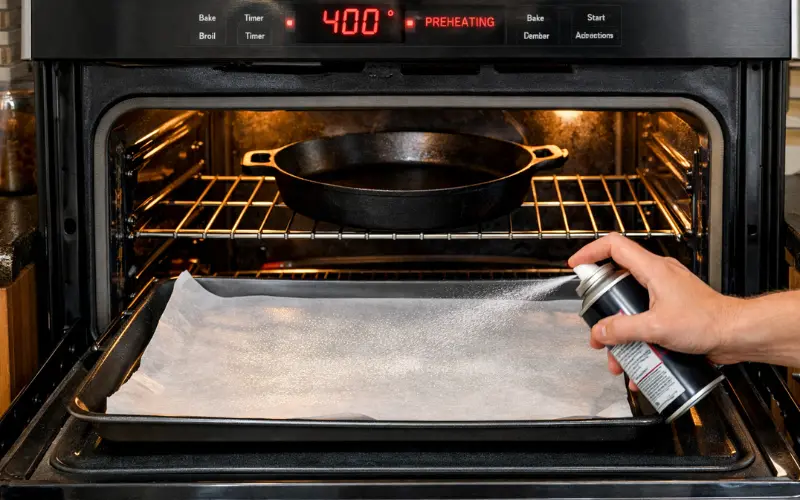
Preheat your oven to 400°F (205°C). Line a baking sheet or pizza pan with parchment paper and give it a light spray of cooking oil. If you have a pizza stone or cast iron pan, place it in the oven now to preheat — this dramatically improves crust crispiness.
Step 2: Make the fathead dough
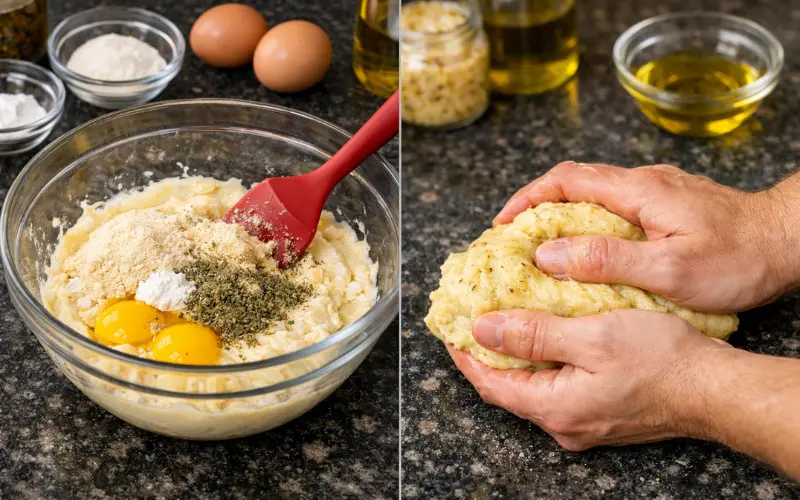
In a large microwave-safe bowl, combine the shredded mozzarella and cream cheese. Microwave in 30-second intervals, stirring between each, until fully melted and smooth — usually 60 to 90 seconds total. Don’t rush this step. Under-melted cheese won’t incorporate properly.
Important: Let the melted cheese cool for 2 to 3 minutes before adding the eggs. If the mixture is too hot, the eggs will scramble and your keto pizza dough will be ruined.
Once cooled slightly, add the beaten eggs, almond flour, baking powder, salt, Italian seasoning, and garlic powder. Stir with a silicone spatula until a rough dough forms. It will look lumpy and sticky at first — that’s normal. Finish by kneading with clean, lightly oiled hands for 3 to 5 minutes until the dough is smooth and uniform.
Step 3: Shape the crust
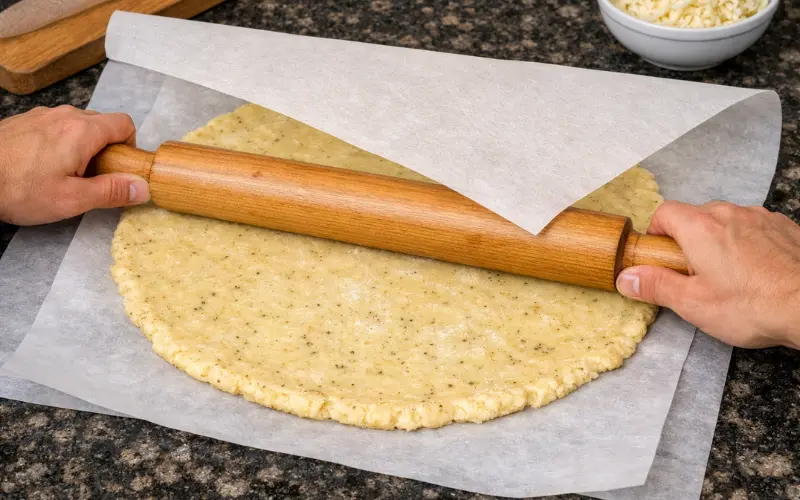
Place the dough onto a sheet of parchment paper. Cover with a second sheet of parchment and use a rolling pin to flatten it to about ¼ inch thick. The thinner you go, the crispier your keto pizza crust will be. Aim for a 12 to 14-inch round. Leave slightly more thickness around the edges for a proper crust border.
If the dough is too sticky to work with, refrigerate it for 10 to 15 minutes. Cold dough is dramatically easier to handle.
Step 4: Pre-bake the crust
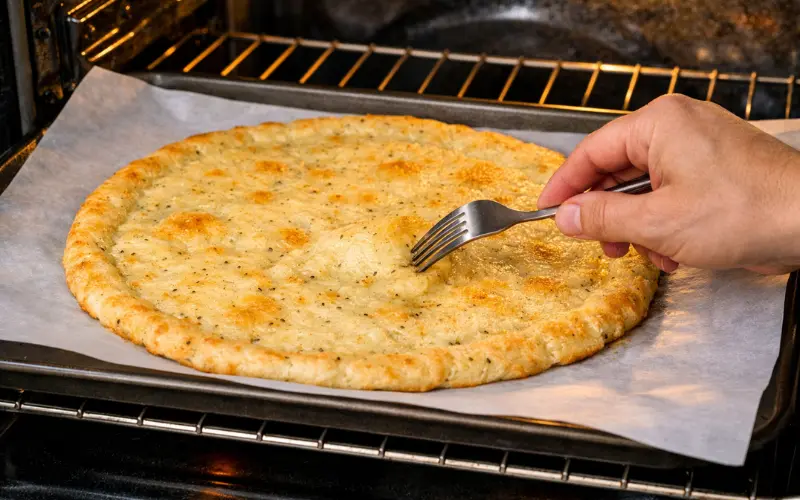
This is the step many home cooks skip — and it’s the reason their keto pizza comes out soggy. Bake the plain crust for 7 to 10 minutes, until it starts to turn light golden in places. If it puffs up (it will), poke it with a fork to release the air bubbles.
Pre-baking the crust without toppings ensures the center cooks through. The toppings only need a few more minutes, and if you add them to an unbaked crust, the center never properly sets.
Step 5: Add toppings and finish baking
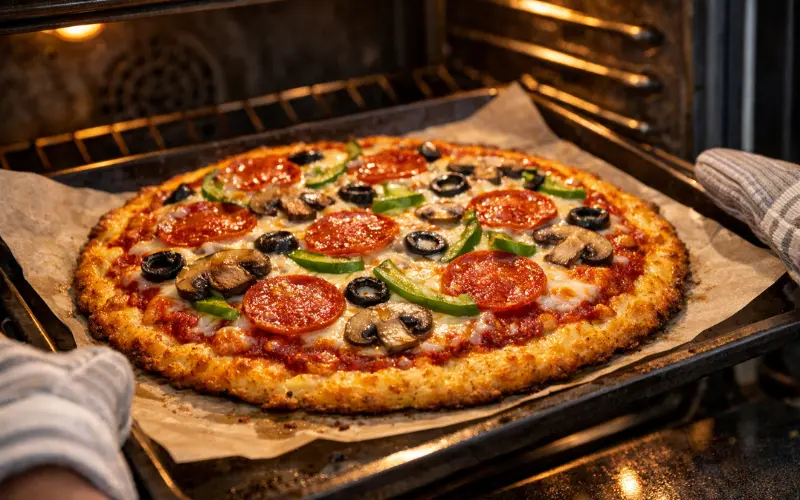
Pull the crust from the oven. Add your sauce, cheese, and toppings. Return to the oven and bake for another 10 to 15 minutes, until the cheese is bubbling and the edges are deep golden brown.
Let the keto pizza rest for 3 to 5 minutes before slicing — this helps the cheese set so toppings don’t slide off.
The Secret to a Crispier Keto Pizza Crust
One tip competitors rarely mention: flip the crust after the first bake. Before adding your sauce and toppings, carefully flip the pre-baked crust upside down and return it to the oven for 2 to 3 additional minutes. This crisps the bottom surface that was touching the pan and results in a much sturdier, crunchier keto pizza base.
Additionally, a pinch of dried yeast added to the dough (it won’t cause rise, but it does enhance flavor) gives the crust a more authentic pizza dough taste. It’s a small trick that makes a noticeable difference.
Keto Pizza Sauce Guide
The sauce is where hidden carbs love to sneak in. Most commercial pizza sauces add refined sugar — some contain 15+ grams of sugar per serving. For your keto pizza, always read labels and choose:
- No-sugar-added tomato or marinara sauce — Rao’s Homemade is the go-to recommendation. Aim for 3 to 4g net carbs per ¼ cup serving.
- Pesto — Basil pesto is naturally low in carbs and rich in healthy fats. It pairs beautifully with chicken, sun-dried tomatoes, and fresh mozzarella.
- Olive oil and garlic — The simplest option. Brush the crust with olive oil, top with minced garlic and fresh herbs, and finish with cheese.
- Alfredo or white sauce — Look for versions made with real cream and butter, no starches.
- Buffalo sauce — Perfect for a spicy chicken keto pizza variation.
Keto Pizza Topping Ideas
One of the best parts of keto pizza is that almost every classic topping is low-carb friendly. The one exception? Pineapple. Everything else is fair game.
Proteins: Pepperoni, Italian sausage, bacon, grilled chicken, ground beef, salami, anchovies, ham, shrimp
Vegetables: Mushrooms, bell peppers, onion, black olives, spinach, jalapeños, sun-dried tomatoes, roasted garlic, artichoke hearts, zucchini
Cheeses: Mozzarella, parmesan, feta, provolone, gouda, sharp cheddar, ricotta dollops
Tip: Sauté mushrooms, onions, and bell peppers before adding them to your keto pizza. Because the topping bake is short, raw dense vegetables may not fully cook through.
Topping combo ideas:
- Classic: Tomato sauce, mozzarella, pepperoni, Italian sausage
- White: Alfredo sauce, grilled chicken, spinach, garlic, parmesan
- BBQ Chicken: BBQ-style sauce (sugar-free), shredded rotisserie chicken, red onion, cheddar
- Vegetarian: Pesto, roasted red peppers, artichokes, feta, olives
- Meat Lovers: Tomato sauce, mozzarella, bacon, sausage, salami, pepperoni
Nutrition Facts (Per Slice, 1/8 of a 14″ Pizza, Crust Only)
- Calories: ~260
- Fat: 19g
- Protein: 15g
- Total Carbs: 4g
- Fiber: 0.6g
- Net Carbs: ~3.4g
Toppings will add additional macros. A slice with sauce and standard cheese toppings typically comes in around 4 to 5g net carbs — still well within most daily keto targets of 20 to 50g.
Storage and Reheating
Refrigerator: Store leftover keto pizza in an airtight container for up to 4 days.
Freezer: The best method is to par-bake the crust, add toppings, then freeze before the final bake. Freeze flat for 2 to 3 hours, then wrap tightly in plastic wrap. Stores well for up to 2 to 3 months. Bake straight from frozen — just add a few extra minutes.
Reheating: Skip the microwave if you want a crispy crust. Reheat slices in a 350°F oven for 5 to 8 minutes, or in the air fryer at 350°F for 2 to 4 minutes. The air fryer is hands-down the best way to bring leftover keto pizza back to life.
Frequently Asked Questions
1. Is keto pizza actually keto-friendly?
Yes — when made with a fathead dough crust instead of traditional flour-based dough, keto pizza contains only 3 to 5 net carbs per slice, compared to 30+ grams in regular pizza. Just make sure your sauce is sugar-free.
2. Can I use coconut flour instead of almond flour?
Yes, but the ratio changes significantly. Use only ⅓ cup of coconut flour in place of 1 cup almond flour, and add one extra egg. Coconut flour is far more absorbent and creates a denser, slightly coconut-flavored crust. Almond flour produces a superior result for keto pizza.
3. Why is my keto pizza crust soggy?
The most common culprit is skipping the pre-bake. Always bake the crust alone for 7 to 10 minutes before adding toppings. Also make sure your sauce isn’t too watery — drain excess liquid from toppings like mushrooms before using them.
4. Can I make the dough ahead of time?
Absolutely. You can store the raw dough ball wrapped in plastic in the fridge for 1 to 2 days, or freeze par-baked crusts for up to 3 months. Having pre-baked crusts in the freezer makes keto pizza a 10-minute weeknight dinner.
5. What’s the best cheese for the crust?
Pre-shredded part-skim mozzarella works best. Fresh mozzarella has too much moisture and will make the dough too wet. Avoid fancy cheeses for the dough itself — save those for the topping.
6. My dough is too sticky to work with. What do I do?
Refrigerate the dough for 10 to 20 minutes. Cold fathead dough is dramatically easier to shape. You can also oil your hands lightly with olive oil or use two sheets of greased parchment paper and a rolling pin.
7. Can I make individual keto pizzas?
Yes — this is actually one of the best approaches for families. Divide the dough into 4 to 6 portions and let everyone build their own personal keto pizza with their preferred toppings.
8. How do I get the bottom of the crust crispier?
Pre-heat a pizza stone or cast iron pan in the oven before placing your crust on it. You can also flip the crust after the first bake and crisp the bottom directly. Baking at a slightly higher temperature (425°F) also helps.
9. Is keto pizza good for weight loss?
Keto pizza, made with a fathead crust, is high in protein and fat with minimal carbohydrates — which can support ketosis and satiety. It’s a much better choice than standard pizza for anyone managing carb intake.
10. Can kids eat keto pizza?
Yes. The flavor is remarkably close to traditional pizza, and many families report that kids don’t notice the difference — especially with classic pepperoni and cheese toppings.
Final Thoughts
Keto pizza is proof that eating low-carb doesn’t mean eating joylessly. With a crispy fathead crust, a sugar-free sauce, and your favorite toppings piled high, this keto pizza delivers everything you loved about pizza night — without the carb crash that follows. Once you nail the double-bake technique and learn how to handle the dough, this recipe takes less than 30 minutes start to finish. Make a batch of par-baked crusts on the weekend and you’ll have the fastest, most satisfying low-carb dinner in your arsenal ready to go any night of the week. Try it once and you’ll wonder why you ever ordered delivery.