

Staying in ketosis sounds simple until snack time hits. You open the pantry, you’re hungry, and every convenient option seems to hide a carb trap behind a “low carb” label. That gap between craving something quick and staying in ketosis is exactly where most people fall off track, not at dinner, but at 3 p.m. when a bag of chips is calling your name.
The good news is that keto packaged snacks have come a long way. You no longer have to choose between convenience and staying in ketosis. This guide walks you through what actually makes keto packaged snacks keto-friendly, which categories are worth stocking up on, and a few things almost every other article on this topic leaves out. By the end, you’ll know which keto packaged snacks are genuinely worth buying and which ones are best left on the shelf.
What Actually Makes a Snack Keto-Friendly
A snack does not become keto-friendly just because the word “keto” appears on the front of the bag. Manufacturers know that word sells, and the FDA does not regulate it, so plenty of products stretch the truth.
The real test comes down to net carbs, the number that affects your blood sugar and your ability to stay in ketosis. You calculate it like this:
Total carbohydrates minus fiber minus most sugar alcohols equals net carbs.
So if a bar lists 18g of total carbs, 9g of fiber, and 5g of erythritol, the math looks like this: 18 minus 9 minus 5 equals 4g of net carbs. That is a very different snack than the front label might suggest.
A genuinely good keto snack usually checks three boxes:
- Net carbs under 5g per serving
- A meaningful amount of healthy fat or protein, not just carb-cutting tricks
- A short ingredient list you can actually recognize
If a snack fails even one of these, it is worth a second look before it becomes a regular part of your routine.
How to Read a Keto Snack Label in Ten Seconds
You do not need a nutrition degree to shop smart for keto packaged snacks. Flip the package over and scan for these red flags before you look at anything else.
Watch for maltodextrin, dextrose, and corn syrup solids, since these are sugar wearing a disguise. Watch for maltitol too, because despite being marketed as sugar-free, it has a glycemic index close to real sugar and often causes digestive discomfort. Watch for potato starch, tapioca starch, and modified food starch, since these add carbs without adding much nutrition. Finally, watch for a long list of unpronounceable additives, because the best keto packaged snacks rarely need fifteen ingredients to taste good.
On the flip side, ingredients like almond flour, coconut flour, MCT oil, monk fruit, allulose, and erythritol are generally safe bets and appear in many high-quality keto packaged snacks. Learning to recognize these ingredients makes it much easier to choose keto packaged snacks that support your goals instead of working against them.
The Best Keto Packaged Snack Categories
Not every keto snack fits into the same craving, so it helps to think in categories rather than chasing a single “best” product.
Crunchy and salty
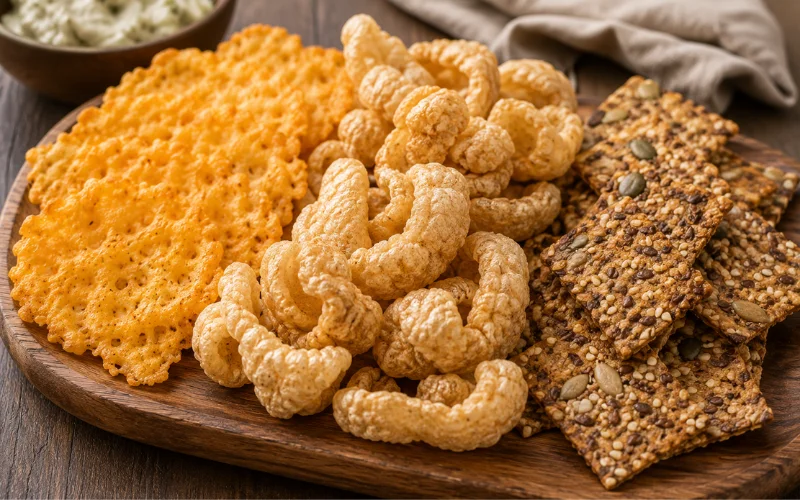
snacks solve the chip craving without the carb load. Cheese crisps, pork rinds, and seed-based crackers all deliver that satisfying crunch, and most land under 2g net carbs per serving. Cheese crisps in particular are essentially baked cheese, so the ingredient list could not be simpler.
Sweet and satisfying
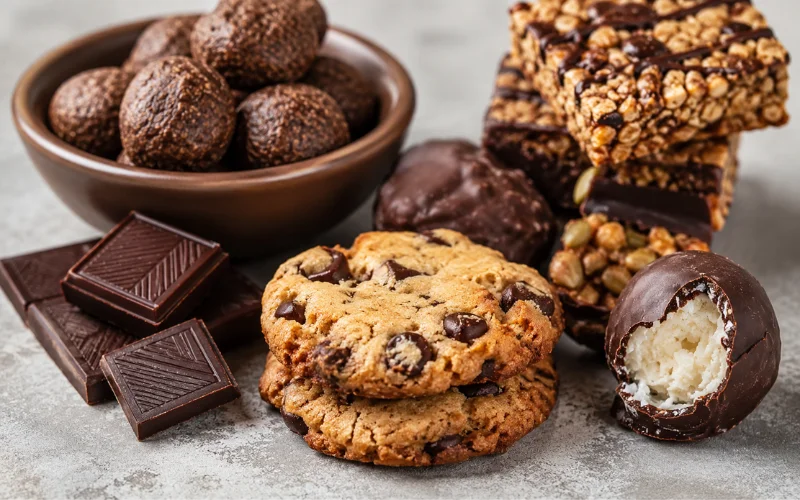
snacks handle dessert cravings. Look for keto cookies made with almond or coconut flour, dark chocolate at 85 percent cacao or higher, and bars sweetened with monk fruit or allulose rather than sugar alcohols that can upset your stomach.
Protein-forward
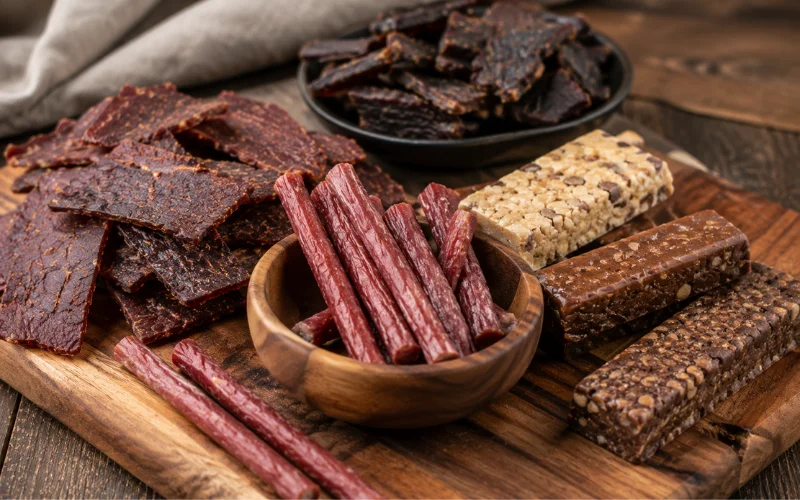
snacks work best when you need something more substantial than a nibble. Jerky, meat sticks, and protein bars with clean ingredient lists fall here. Just double check the sauce or marinade, since teriyaki and honey glazed versions often sneak in real sugar.
Creamy and rich
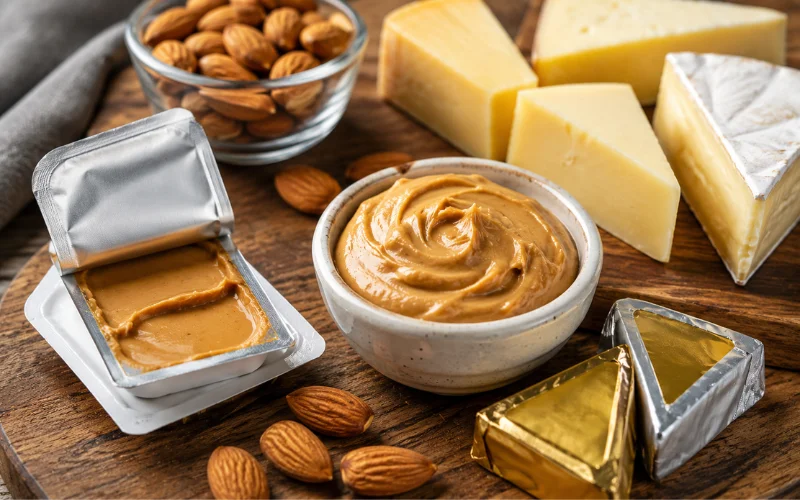
options like nut butter packets or full-fat cheese wedges keep you full longer because fat digests slowly. These travel well and do not need refrigeration for a few hours, which makes them useful for road trips or long workdays.
The Cost Comparison Nobody Talks About
Most keto snack guides stop at nutrition, but price matters too, and this is where a lot of people overspend without realizing it. Two snacks can both hit “under 3g net carbs,” yet one costs twice as much per serving for no real nutritional benefit.
Before you commit to a brand, work out the cost per serving, not just the price on the shelf. A $12 box of eight bars costs $1.50 per bar, while a $9 bag that yields six servings costs $1.50 per serving too, even though the sticker price looks cheaper. Buying in bulk almost always drops the per-serving price further, and subscribing to a brand’s auto-ship program often knocks another 10 to 15 percent off. If you are building a weekly snack budget, this simple math saves real money over a year of steady snacking.
Keto Snacking If You Take GLP-1 Medications
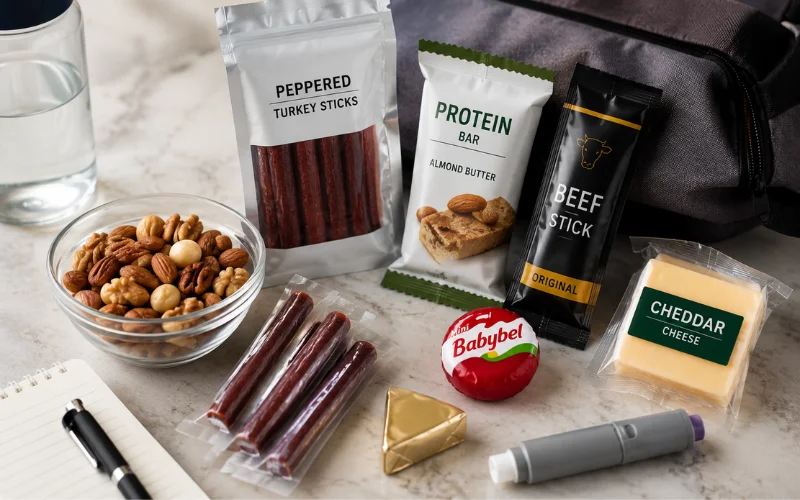
This is a detail most keto content skips entirely, yet it affects a growing number of readers. If you take a GLP-1 medication like semaglutide or tirzepatide, your appetite and portion tolerance change significantly. Large snacks can feel uncomfortable, so smaller, protein-dense portions tend to work better than a full-size bar or bag.
Look for snacks sold in smaller portion sizes, such as single cheese wedges or mini jerky sticks, rather than family-size bags you will not finish anyway. Protein should take priority over fat volume in this case, since appetite is already reduced and getting enough protein becomes the harder goal. As always, check with your doctor before making changes to your diet while on these medications, since individual needs vary.
Storage and Travel Tips That Actually Help
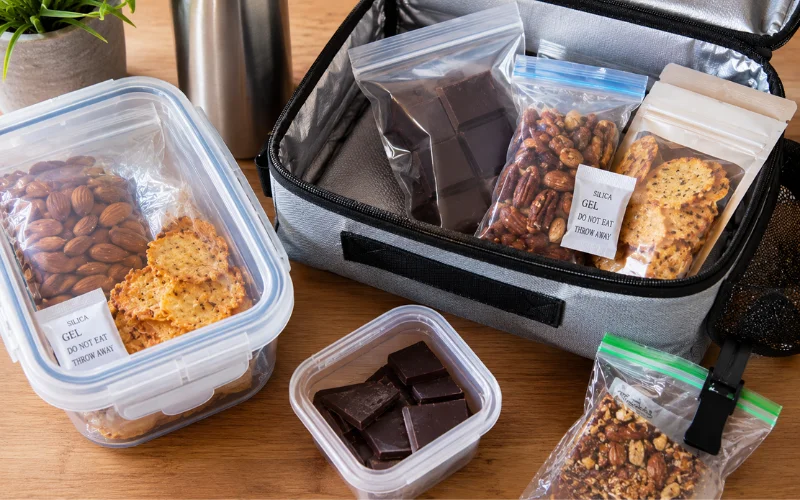
Keto packaged snacks behave differently than regular snacks because of their fat content, and that changes how you should store them.
Chocolate-based snacks melt faster than standard candy bars because they often skip the stabilizers found in mass-market chocolate, so keep them out of a hot car in summer. Nut-based bars can turn rancid faster than grain-based snacks once opened, so reseal the bag tightly and use a clip rather than folding the top over. Cheese crisps lose their crunch in humid conditions, so a small silica packet or an airtight container makes a real difference if you are packing them for a hike or a flight.
Common Mistakes to Avoid
A few habits quietly derail people who are otherwise doing everything right.
Trusting front-of-package claims without flipping the bag over is the most common one, since “keto certified” badges are not standardized across brands. Eating an entire multi-serving bag in one sitting is another, because even a clean snack adds up fast when the serving size is actually a third of the bag. Ignoring sugar alcohols in the total carb count also trips people up, since not all of them subtract cleanly from net carbs the way erythritol does. Finally, relying only on packaged snacks instead of mixing in whole foods like cheese, olives, or nuts can leave you missing nutrients that processed snacks do not fully replace.
FAQs
What is the best keto packaged snack for beginners?
Cheese crisps and pork rinds are a great starting point because they are naturally low in carbs, require no special sweeteners, and taste familiar to anyone coming from a regular chip-and-cracker habit.
Can keto snacks really have zero net carbs?
Yes, some snacks like plain cheese crisps or pork rinds have close to zero net carbs since they contain no significant carbohydrates to begin with, unlike processed bars that rely on fiber and sugar alcohols to lower their count.
Are keto packaged snacks healthy, or just low carb?
Not always the same thing. A snack can be low in net carbs and still be highly processed with little nutritional value, so check for real ingredients like nuts, cheese, or meat rather than assuming low carb automatically means healthy.
How many keto snacks can I eat in a day?
Most people do well with one or two snacks daily between meals, since keto is naturally more filling due to the fat content, and overdoing packaged snacks can still add up in calories even when carbs stay low.
Do sugar alcohols in keto snacks affect ketosis?
Erythritol and monk fruit generally have little to no effect on blood sugar or ketosis, but maltitol and sorbitol can raise blood sugar more than expected and may knock sensitive individuals out of ketosis.
Are keto snacks safe for people with diabetes?
Many keto snacks work well for blood sugar management since they are low in net carbs, but anyone with diabetes should still check labels carefully and consult their doctor before making significant dietary changes.
Why do some keto snacks upset my stomach?
Sugar alcohols like maltitol and sorbitol are common culprits, since they are not fully absorbed by the digestive system and can cause bloating or discomfort, especially in larger servings.
Where can I buy keto packaged snacks?
Most major grocery stores now carry a dedicated keto or low-carb section, and specialty retailers along with direct-to-brand websites often offer a wider selection plus subscription discounts.
Final Thoughts
Keto packaged snacks are not a shortcut around good judgment, but they do make staying in ketosis realistic on busy days when cooking is not an option. The key is learning to read past the front label, understanding what net carbs actually measure, and choosing snacks with ingredients you recognize. Once you know what to look for, snack time stops being the moment that derails your progress and becomes just another normal part of a day that stays on track.

1 comment
[…] you’d rather not gamble on airport shelves at all, it helps to know which keto packaged snacks actually hold up to label scrutiny before you leave […]