Packing a suitcase is easy. Packing your entire keto lifestyle into it? That is where most people panic.
You know the feeling. Your flight is in three hours, your fridge is empty, and every airport food stall seems to sell nothing but bagels, pretzels, and regret. Keto travel does not have to feel like a survival test. With a little planning, you can land, road trip, or check into a hotel without falling out of ketosis or losing your progress.
This guide walks you through everything your favorite keto blogs left out: budget-friendly snack swaps, country-specific packing rules, airline meal hacks, and a realistic plan for the days when nothing goes as planned. No fluff, no guilt trips, just practical keto travel advice that actually works.
Why Keto Travel Feels So Hard
Travel disrupts routine, and routine is what keeps most people in ketosis. Three things usually go wrong at once:
Limited food access.
Airports, gas stations, and hotel lobbies are built for carb-heavy convenience food.
Unpredictable schedules.
Delayed flights and long layovers mean you eat later, or earlier, than planned.
Social pressure.
Group meals, buffets, and “just try one bite” moments make it harder to say no.
Once you understand these three triggers, you can plan around them instead of reacting to them mid-trip.
Plan Before You Pack: The 48-Hour Prep Window
Start prepping two days before departure, not the night before. This gives you time to shop, cook, and portion food without rushing.
- Check your destination’s food culture. A quick search for “keto-friendly restaurants in [city]” before you leave saves you from scrambling once you land.
- Look up customs rules if flying internationally. Many countries restrict bringing in fresh meat, dairy, or eggs. Pack shelf-stable items instead, and eat perishables on the plane before landing.
- Pre-order a low-carb airline meal. Most major airlines let you request a diabetic or low-carb meal up to 24 hours before departure. It is one of the least-known keto travel tricks, and it works.
- Screenshot your grocery list. Once you land, you will want to restock at a local supermarket. Having a saved list of keto staples in your notes app saves time and confusion in a foreign store.
Keto Travel Snacks That Actually Survive a Suitcase
Most snack lists online repeat the same five items. Here is a wider, more practical range, organized by how well they hold up.
Shelf-Stable Favorites (Last 5 to 10 Days, No Fridge Needed)
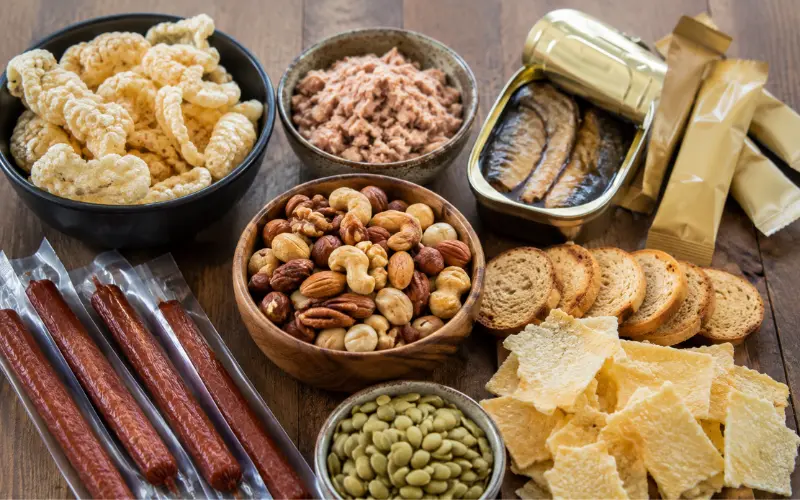
- Meat sticks or jerky, unsweetened varieties only
- Individually wrapped nut butter packets
- Pork rinds
- Roasted, unsalted or lightly salted nuts and seeds
- Canned tuna or salmon pouches
- Keto crackers or hard-baked biscotti
- Parmesan or cheese crisps
Cooler Bag Essentials (Good for 1 to 2 Days)
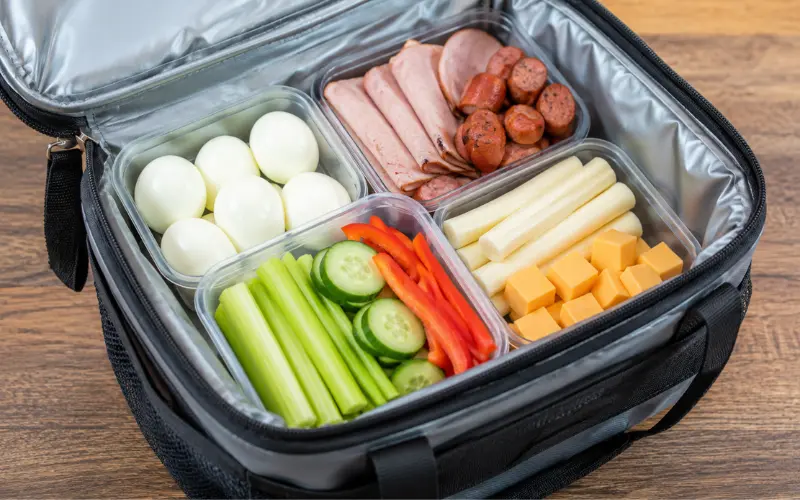
- Hard-boiled eggs, peeled and stored in a sealed container
- Sliced deli meat or cooked sausage
- Cut vegetables like celery, cucumber, and bell pepper
- String cheese or cheese cubes
Budget-Friendly Keto Travel Snacks (Often Missed by Bloggers)
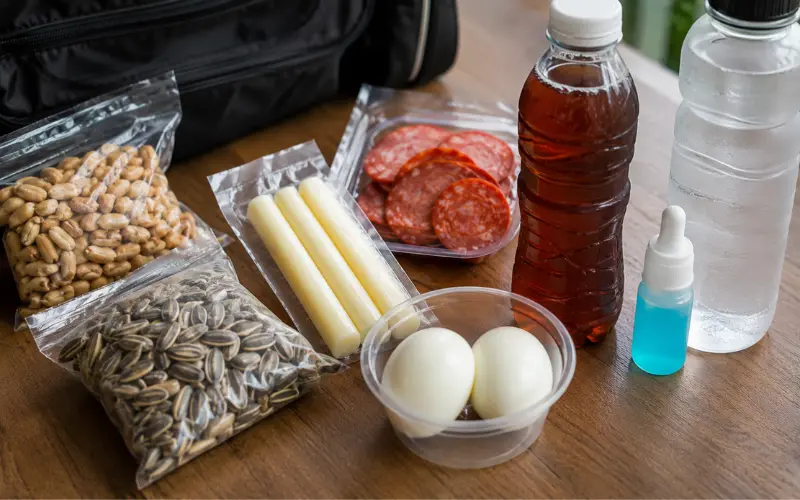
Most keto travel articles push premium branded snacks, but you do not need a specialty store to eat well on the road. Gas stations and regular grocery chains carry:
- Plain roasted peanuts or sunflower seeds
- Individual string cheese packs
- Pepperoni packs from the deli section
- Unsweetened iced tea or sparkling water with electrolyte drops
- Hard-boiled eggs from a convenience store cooler
These cost a fraction of specialty keto snack brands and are available almost everywhere, which matters when you are stuck at a rest stop at midnight.
Don’t Forget Electrolytes
Long flights and hot climates increase fluid loss, and keto already flushes sodium and potassium faster than a standard diet. Pack electrolyte powder packets or tablets. Skipping this step is one of the most common reasons people feel foggy, tired, or crampy mid-trip, and it has nothing to do with willpower.
Surviving the Airport Without Losing Your Cool
Airports are not designed for low-carb eating, but you have more options than you think.
- Order a salad with grilled chicken and skip the croutons and sweet dressing.
- Ask for a burger or breakfast sandwich without the bun.
- Choose black coffee or a plain latte with heavy cream instead of flavored syrups.
- Buy a bag of nuts or a protein pack from any newsstand as a backup.
If your flight gets delayed, your packed snacks become your safety net, not your plan B.
Road Trips: A Different Kind of Keto Travel Challenge
Road trips give you more control than flying, but gas station food courts can wreck a good streak fast.
- Pack a small cooler with ice packs for perishable snacks.
- Stop at grocery stores instead of gas stations when possible. Prices are lower and options are better.
- Keep a stash of napkins, disposable utensils, and wet wipes so eating in the car stays simple.
- Plan meal stops around sit-down restaurants with customizable menus, like steakhouses or grill-style chains, rather than fast food.
Staying Keto in a Hotel or Rental
- Book accommodations with a mini fridge or kitchenette whenever your budget allows.
- Visit a local grocery store on arrival day to stock up on eggs, cheese, and vegetables.
- Pack a travel-size container of your favorite low-carb sweetener or flour if you plan to cook.
- Silicone muffin liners and a small cutting board pack flat and make cooking in an unfamiliar kitchen much easier.
Eating Out Without Falling Off Track
- Tell your travel companions about your eating style early. Most people are far more accommodating than you expect.
- Ask for a lettuce wrap instead of a bun, or a side salad instead of fries.
- Check the menu online before you arrive so you are not deciding under pressure.
- Remember that one imperfect meal will not undo your progress. Keep the next meal on track and move forward.
How to Know You’re Staying in Ketosis While Traveling
You do not need to test constantly, but a few simple checks help:
- Ketone strips or a blood meter give a quick reading if you want reassurance.
- Energy levels are a practical clue. Feeling clear-headed and steady usually means you are on track.
- Hunger patterns matter too. Staying satisfied between meals, rather than snacking constantly, is a good sign.
If you slip up, do not spiral into an all-or-nothing mindset. One off-plan meal does not erase your ketosis; it just means your next choice matters more.
Common Keto Travel Mistakes to Avoid
- Assuming you will find keto food easily once you land, without checking ahead
- Packing only sweet snacks and no savory, protein-based options
- Forgetting electrolytes and blaming travel fatigue on the diet
- Skipping meals entirely to “save carbs,” which often backfires into overeating later
- Not telling travel companions about dietary needs until you are already at the restaurant
My Experience
After researching common travel challenges and practical low-carb strategies, it’s clear that successful keto travel depends more on preparation than perfection. Planning meals ahead, packing reliable snacks, staying hydrated, and knowing your options at airports, hotels, and restaurants can make it much easier to stay consistent. Even when travel plans change unexpectedly, having a flexible approach helps you maintain your progress without unnecessary stress.
Frequently Asked Questions
1. What is the 2-2-2-2 rule on keto?
The 2-2-2-2 rule is an informal, community-created starter framework, not an official medical guideline. A common version suggests two tablespoons of MCT oil, two tablespoons of a long-chain healthy fat, two servings of non-starchy vegetables, and two weeks of adaptation time. It is meant as a simple habit cue during the early stage of keto, not a strict rule, so treat it as a rough guide rather than a guarantee of results.
2. How do you stay in ketosis while traveling?
Pack shelf-stable, protein-rich snacks, stay hydrated with electrolytes, choose grilled or roasted proteins with vegetables when eating out, and avoid skipping meals. Planning your food options before you arrive at your destination is the single biggest factor in staying consistent during keto travel.
3. Can you do 5 days on, 2 days off keto?
Yes, this approach is known as cyclical keto, where you follow strict low-carb eating for five days and allow more flexibility for two days. Some people use this pattern around athletic training or social events. It works better for those already fat-adapted, and it is not recommended for beginners still building a consistent keto routine.
4. Can I lose 20 pounds in one month on keto?
It is possible for some people, especially in the first weeks when water weight drops quickly, but it is not a realistic or healthy target for most. A safer, more sustainable pace is one to two pounds of fat loss per week. Rapid early loss usually includes water weight, not just fat, so do not be discouraged if your second month looks slower than your first.
5. What are the best keto travel snacks for a carry-on bag?
Meat sticks, individual nut butter packets, cheese crisps, roasted nuts, and hard-baked keto crackers travel well without refrigeration and pass through airport security without issue.
6. Is it okay to eat fast food on a keto trip?
Occasionally, yes. Order a burger without the bun, choose grilled chicken over breaded options, and skip sugary sauces. It is not ideal daily, but it works fine as a backup plan during keto travel.
7. How do I handle keto while flying internationally?
Research your destination’s customs rules for bringing in food, pack shelf-stable snacks instead of fresh items, and locate a local grocery store soon after arrival to restock on eggs, cheese, and vegetables.
8. What should I eat for breakfast while traveling on keto?
Hard-boiled eggs, cheese, and nuts make a fast, portable breakfast. If a kitchen is available, eggs with vegetables and a source of fat like avocado or butter work well too.
9. How do I avoid keto flu symptoms during a trip?
Stay ahead of dehydration and electrolyte loss by drinking water with added sodium and potassium daily, especially on flights or in hot climates. Fatigue during travel is often electrolyte-related, not diet failure.
10. What if I cannot find any keto-friendly food at all?
Fall back on your packed snacks, choose the least carb-heavy option available such as a salad or protein-based dish, and remember that one difficult meal will not undo your overall progress.
Related Keto Travel Searches
If you are researching this topic, you might also want to look into keto on the road fast food options, keto travel snack recipes you can make at home before a trip, full keto travel meals for longer stays, low carb snacks for traveling on a budget, and general keto snacks and keto meals for everyday use once you are back home.
Final Thoughts
Keto travel is not about being perfect. It is about being prepared enough that one bad airport meal or a missed grocery run does not throw off your whole trip. Pack a mix of shelf-stable and cooler snacks, plan your meals a day or two ahead, stay on top of electrolytes, and give yourself permission to adjust when plans change. Do that, and you will come home from your next trip feeling just as strong as when you left, without the stress that usually comes with eating differently on the road.