Yes, the right keto snacks for travel can keep you in ketosis, but only if you’re accounting for hidden carbs, portion drift, and the metabolic stress of travel itself, not just the ingredient list. Most people stay in ketosis while traveling not because of what’s in their bag, but because of how disciplined they are about reading labels under pressure and pairing snacks with fasting windows. A snack labeled “keto” can still knock you out of ketosis if you eat three servings instead of one, which happens more often on trips than people admit.
Why Travel Knocks People Out of Ketosis Even When the Snacks Are “Keto”
I’ve watched this happen to myself and to clients: the food is technically compliant, but ketosis slips anyway. Here’s what’s actually going on.
Stress and cortisol matter more than most guides mention. Travel raises cortisol, and elevated cortisol pushes blood sugar up through gluconeogenesis, even without eating extra carbs. This is why some people test their ketone levels after a stressful flight and see numbers lower than expected despite eating clean. It’s not the snack failing you, it’s your physiology reacting to the disruption.
Dehydration concentrates everything, including your carb tolerance perception. Cabin air and long car rides dry you out. Dehydration alone can cause temporary blood glucose fluctuations that make you feel “off Keto Snacks for Travel” even when your macros were fine. Drink more water than feels necessary, not less, when snacking on the go.
Portion control collapses under boredom and turbulence. A 1 oz serving of macadamia nuts is roughly 20-24 nuts. On a flight, with nothing else to do, most people go through 2-3x that without noticing. Nuts and cheese are the two most common culprits for accidental carb overages while traveling, not because they’re high carb per gram, but because bored hands don’t measure.
The Hidden Carb Traps Competitors Don’t Warn You About
Most Keto Snacks for Travel lists just hand you an ingredient list. Here’s what actually derails people mid-trip.
- Airport “protein boxes” almost always include crackers or dried fruit you can’t easily remove once it’s mixed into the compartment. Check the label before you buy, not after you’re seated.
- Flavored jerky and meat sticks frequently hide added sugar in the cure, sometimes 3-5g per serving, even when the front label says “low carb.” Teriyaki and honey-glazed varieties are the worst offenders.
- Pre-made trail mixes marketed as keto often include coconut flakes with added sugar or yogurt-covered nuts that aren’t actually yogurt, just sugar and oil coating. Read the ingredient panel, not the front-of-bag marketing.
- Restaurant “bunless burgers” sometimes come with a sauce that’s carb-loaded even without the bun, think honey mustard or BBQ sauce. Ask for the sauce on the side or skip it.
- Sugar-free candies and gums with sugar alcohols (maltitol especially) can spike blood sugar in sensitive individuals despite the “sugar-free” label. Erythritol and stevia are safer bets if you’re strict.
If you’d rather not gamble on airport shelves at all, it helps to know which keto packaged snacks actually hold up to label scrutiny before you leave home.
A Practical Way to Think About Keto Snacks for Travel: Categories, Not Lists
Rather than memorizing a giant Keto Snacks for Travel list, it helps to think in categories so you can improvise anywhere, even in a country where you don’t speak the language or recognize the brands.
| Category | Why It Works for Ketosis | Travel Caveat |
|---|---|---|
| Hard, aged cheeses (cheddar, parmesan, gouda) | Near-zero carbs, shelf-stable for hours unrefrigerated | Soft cheeses spoil faster; stick to hard varieties past 4-5 hours |
| Cured, unsweetened meats (salami, prosciutto, biltong) | High fat and protein, virtually no carbs | Some countries restrict bringing meat across borders |
| Nuts in pre-measured single servings | Convenient, satiating, portion-controlled | Buying bulk nuts leads to overeating; pre-portion at home |
| Olives and pickles (drained) | Electrolyte support, negligible carbs | Brine can be salty; balance with extra water |
| Avocado, whole and uncut | Healthy fat, potassium, fiber | Cut it fresh at your destination, not hours ahead, or it browns |
| Electrolyte packets (no maltodextrin) | Prevents the “keto flu” travel dip | Many powdered electrolyte mixes use maltodextrin as a filler, which is a hidden carb source |
This table is a decision framework, not a shopping list. When you land somewhere unfamiliar, you can scan a convenience store shelf and sort what you see into these buckets instead of hunting for a specific brand name you recognize. For savory options specifically, our breakdown of savory keto snacks covers why they tend to keep you fuller for longer than sweet ones on a long travel day.
What I Actually Pack Differently for Flights vs. Road Trips
A flight and a road trip are not the same challenge, and treating them identically is where a lot of travelers go wrong.
On flights,
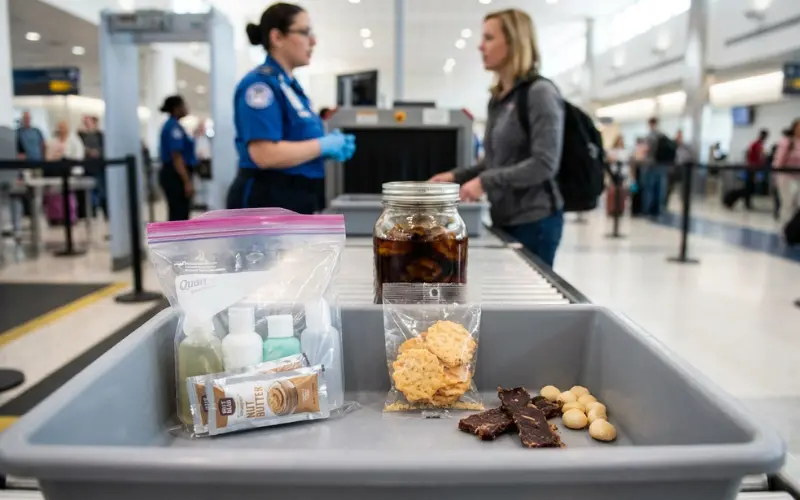
TSA liquid rules cap anything wet or spreadable at 3.4 oz per container, so single-serving nut butter packets work but a jar of homemade fat bombs in syrup won’t clear security cleanly. I pack dry, dense items: cheese crisps, biltong, macadamias in a snack-size bag I’ve already portioned at home. I also treat the flight itself as a built-in fasting window when the trip is under 6 hours; it removes the temptation entirely and I land less bloated.
On road trips,
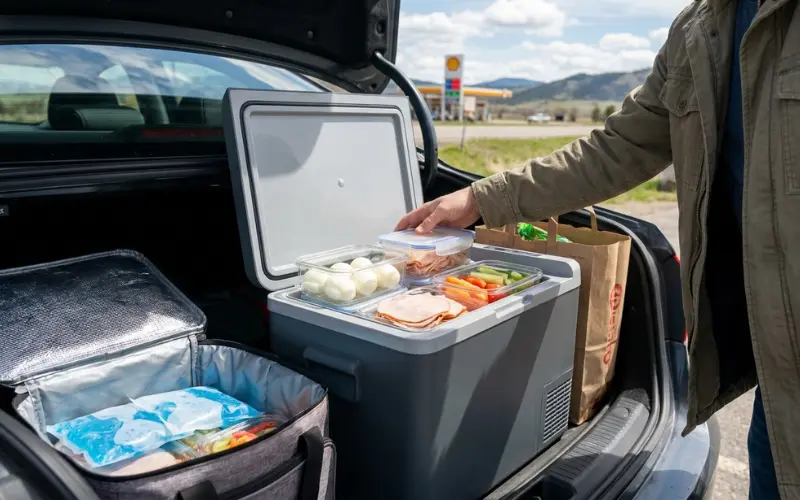
Refrigeration becomes the real lever. A basic 12V cooler or even a soft insulated bag with two frozen gel packs keeps hard-boiled eggs, sliced deli meat, and cut vegetables safe for 6-8 hours, which covers most drive days. I restock at grocery store stops rather than gas stations, since gas station “Keto Snacks for Travel” shelves are often just protein bars with 15g of carbs hiding behind clever packaging. If you’re mapping out a longer drive specifically, our keto road snacks guide breaks down cooler setups and gas-station strategy in more depth than fits here.
The One Thing Almost Nobody Tracks: Electrolytes While Snacking
This is the piece most Keto Snacks for Travel content skips entirely, and it’s arguably more important than the snack choice itself. Cutting carbs already increases sodium and water loss through a mechanism tied to insulin and kidney sodium retention. Add plane cabin pressure or hours of car AC, and electrolyte loss compounds fast.
Symptoms like headache, fatigue, and brain fog while traveling on Keto Snacks for Travel are frequently mistaken for “the snacks not working” when they’re actually a sodium or magnesium deficit. A pinch of salt in your water, a magnesium glycinate capsule, or a sugar-free electrolyte tablet solves this faster than any snack swap will. I keep a small tube of electrolyte tablets in my travel bag year-round, separate from food, because I’ve learned the hard way that hunger and electrolyte crashes feel almost identical on day two of a trip.
Quick Reference: Signs Your Snacking Is Working vs. Not
Working:
steady energy between meals, no afternoon crash, minimal cravings for sweets at the airport gate
Not working:
shaky or irritable 90 minutes after a snack (often a sign of too many net carbs or sugar alcohols), bloating after cheese-heavy snacking (possible lactose sensitivity, try aged cheese instead), headache that snacking doesn’t fix (check electrolytes first, not carbs)
FAQs
What Snacks Should I Take on a Long-Haul Flight?
Prioritize dry, non-perishable items that don’t need refrigeration for 8+ hours: hard cheese, biltong or dried salami, pre-portioned nuts, and single-serve nut butter packets under 3.4 oz for security. Pack more than you think you’ll need since flight delays happen.
What Snacks Can I Eat to Stay in Ketosis?
Any snack under roughly 5g net carbs per serving that’s genuinely eaten in that single serving works: hard cheese, olives, nuts in measured portions, hard-boiled eggs, and unsweetened jerky. The snack matters less than sticking to the actual portion size.
What Foods Are Surprisingly Keto-Friendly for Travel?
Pickles, plain roasted seaweed snacks, canned tuna or salmon pouches, and unsweetened cocoa powder mixed into hot water at a hotel are all low-carb options people overlook because they don’t look like typical “snack food.”
What Are the Best Snacks to Pack While Traveling?
For most trips, a mix of hard cheese, cured meat, pre-portioned nuts, and an electrolyte supplement covers both hunger and the energy dips that carb-cutting can cause during travel stress.
Can Jet Lag or Travel Stress Alone Break Ketosis?
Not directly through carbs, but elevated cortisol from stress and disrupted sleep can raise blood glucose slightly and reduce measured ketone levels temporarily, even with a clean diet. This usually resolves within a day or two of normal sleep and routine.
Is Fasting During a Flight Better Than Packing Snacks?
It depends on the person. Fasting removes the risk of hidden-carb mistakes entirely and works well for anyone already fat-adapted, but it’s not advisable if you’re new to keto or prone to low blood sugar symptoms. Test it on a short flight before trying it on a long-haul one.
Are Keto Protein Bars Safe for Travel?
Some are, but check the label closely. Many “keto” bars use maltitol or other sugar alcohols that can cause digestive upset or blood sugar spikes in sensitive people, and a few brands round down net carbs in ways that don’t match a strict ketogenic macro count.
How Do I Stay Keto When There Are No Keto-Labeled Options at All?
Fall back on category thinking rather than brand names: a plain omelet, a salad with oil-based dressing and no croutons, a burger without the bun, or grilled meat and non-starchy vegetable can be found in nearly any restaurant or convenience store worldwide, even without an English menu.