Cake and keto do not usually sound like they belong in the same sentence. Most people assume cutting carbs means giving up dessert for good. That is not true, and it never was. With the right ingredients and a few baking tweaks, keto friendly cakes can taste just as moist, rich, and satisfying as the traditional versions you grew up with, minus the sugar crash that follows a slice of regular cake.
This guide covers everything you need to know about keto friendly cakes: which ingredients actually work, which mistakes ruin texture, how to pick the right cake for the occasion, and how to keep your carb count low without sacrificing flavor. We will also cover something most articles on this topic skip entirely: how to adapt keto friendly cakes for diabetics, budget bakers, and anyone who wants low-carb dessert without going full strict keto.
My Experience
When I first started baking keto friendly cakes, I expected them to taste dry and crumbly because that had been my experience with early low-carb recipes. After experimenting with different flour and sweetener combinations, I found that using the right ingredients and techniques makes a huge difference. Now, I can bake cakes that satisfy my sweet tooth while staying on track with my low-carb lifestyle, and most people are surprised they’re actually keto.
What Makes a Cake Keto Friendly?
A cake earns the “keto friendly” label when it fits within the macros of a ketogenic diet, generally under 5 to 10 grams of net carbs per serving, with minimal added sugar and a higher fat content than a standard recipe. Net carbs matter more than total carbs here. You calculate net carbs by subtracting fiber (and sugar alcohols, in most cases) from total carbohydrates, since fiber does not spike blood sugar the way starch or sugar does.
Three things separate a keto friendly cake from a regular one:
- Flour replacement. Wheat flour is swapped for almond flour, coconut flour, or a blend of both.
- Sugar replacement. Sugar is swapped for a low-glycemic sweetener like erythritol, allulose, or monk fruit.
- Fat ratio. Butter, cream cheese, and eggs do more of the structural work that gluten normally provides.
Get these three right, and you have a cake that is genuinely keto, not just “lower carb than usual.”
The Best Ingredients for Keto Friendly Cakes
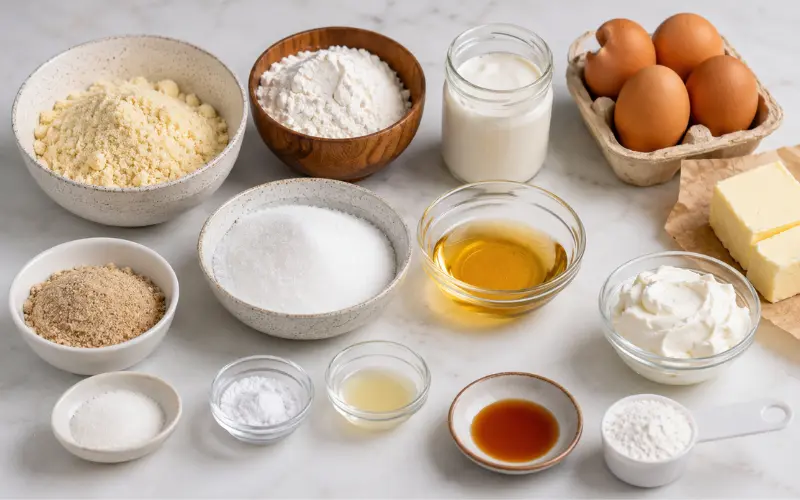
Flours That Actually Work
Not every low-carb flour behaves the same way in the oven, and this is where a lot of home bakers go wrong.
- Almond flour gives the softest, most cake-like crumb. Use blanched, finely ground almond flour, not almond meal, for the best texture.
- Coconut flour is highly absorbent and needs far more liquid and eggs than almond flour. A little goes a long way, so never substitute it one-to-one for almond flour.
- Combining both often produces the best structure. Coconut flour adds lightness while almond flour keeps the cake tender.
Sweeteners That Bake Well
Sweetener choice affects both taste and texture, and this is where many keto friendly cakes fall apart, literally.
- Erythritol is popular but can crystallize and leave a cooling aftertaste if used alone.
- Allulose browns beautifully and helps cakes stay moist, which makes it excellent for frostings and glazes.
- Monk fruit blends offer a cleaner sweetness with less aftertaste, though they can be pricier.
- Combining two sweeteners, such as erythritol and allulose, often gives the most balanced result.
Fat and Binding Ingredients
Since keto friendly cakes skip gluten, they need help holding their shape.
- Eggs provide lift and structure.
- Cream cheese and sour cream add moisture and richness.
- Gelatin can stabilize fillings and frostings, especially in layered cakes.
- Whey protein isolate or oat fiber can improve crumb texture in cakes that need to hold up to slicing and stacking.
Common Mistakes That Ruin Keto Friendly Cakes
Even experienced bakers run into trouble the first few times they try low-carb baking. Here is what usually goes wrong:
- Overbaking. Almond and coconut flour cakes dry out faster than wheat flour cakes. Check for doneness a few minutes earlier than the recipe suggests.
- Skipping the resting time. Keto batters often need a few minutes to hydrate before baking, especially with coconut flour.
- Using the wrong pan size. A pan that is too small makes the center underbaked while the edges dry out.
- Ignoring room temperature ingredients. Cold eggs and butter do not emulsify properly, which leads to a dense, greasy crumb.
- Storing cakes incorrectly. Keto friendly cakes dry out faster than regular cakes and generally need airtight storage in the refrigerator, not just on the counter.
Types of Keto Friendly Cakes for Every Occasion
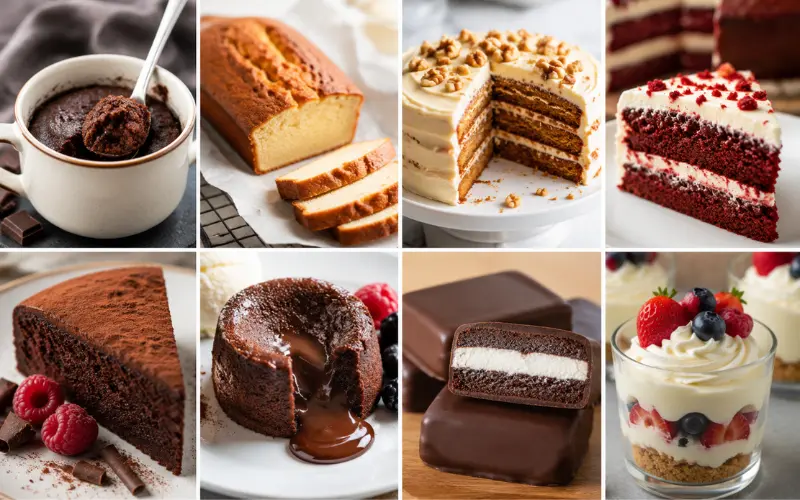
One reason keto friendly cakes have exploded in popularity is their range. There is a version for nearly every craving and occasion.
Everyday and quick options
- Mug cakes ready in two minutes, perfect for a single serving
- Simple pound cakes or loaf cakes for weekday snacking
Celebration cakes
- Layered birthday cakes with cream cheese or buttercream frosting
- Carrot cake with warm spices and a tangy cream cheese topping
- Red velvet cake for holidays and anniversaries
Chocolate lovers
- Flourless chocolate cake, which is naturally lower in carbs since it skips flour entirely
- Chocolate lava cake with a molten center
- Copycat snack cakes inspired by childhood favorites, made with sugar-free glaze and a creamy filling
No-bake and make-ahead options
- Keto cheesecake, one of the easiest desserts to keep low-carb since cheesecake is naturally light on flour
- No-bake cheesecake cups or trifles for warm weather when you do not want to turn on the oven
Keto Friendly Cakes vs. Diabetic-Friendly Cakes: What Is the Difference?
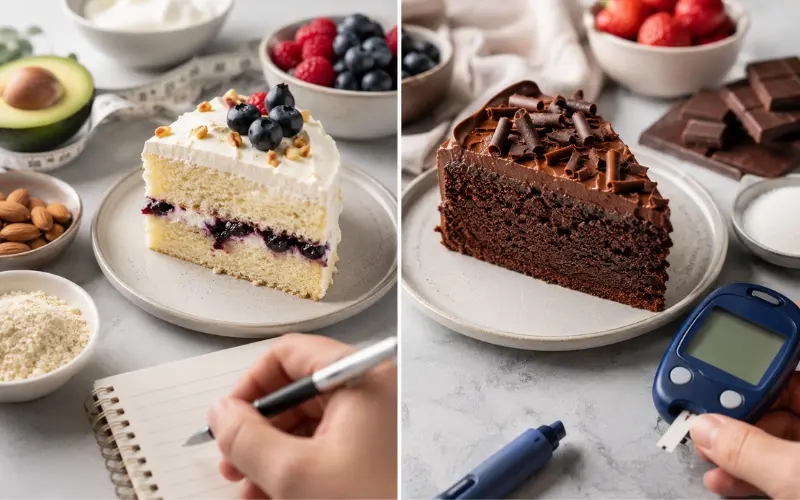
Most articles about keto friendly cakes treat “keto” and “diabetic-friendly” as the same thing, but they are not identical, and this distinction matters for a large part of the audience searching for these recipes.
A cake can be diabetic-friendly without being strictly keto. Diabetic-friendly baking focuses mainly on managing blood sugar response, which means it prioritizes low glycemic index ingredients and controlled net carbs, but it does not require the high-fat, very-low-carb ratio that true keto demands. Many people managing blood sugar, including those with type 2 diabetes, are looking for recipes that fit this broader category rather than strict keto macros.
If you are baking for someone managing blood sugar rather than following ketosis specifically, you have more flexibility with ingredients like small amounts of natural sweeteners or moderate carb counts, as long as fiber and protein help offset the impact. Always suggest checking with a healthcare provider before making dietary changes for a medical condition, since individual tolerance varies.
Budget-Friendly Tips for Keto Baking
Almond flour and specialty sweeteners cost more than regular flour and sugar, and that price gap has only grown. A few ways to keep keto friendly cakes affordable:
- Buy almond flour and sweeteners in bulk online, where prices per pound are usually lower than grocery store prices.
- Use coconut flour more often since it is cheaper and you need far less of it per recipe.
- Make mug cakes or mini cakes for everyday cravings and save the full-size layer cakes for special occasions.
- Batch bake and freeze slices individually, wrapped tightly, so you always have a portion ready without repeating the ingredient cost every time.
How to Store and Freeze Keto Friendly Cakes
Because keto friendly cakes lack the preservatives and sugar that help regular cakes stay fresh, storage matters more here than with traditional baking.
- Store frosted cakes in the refrigerator in an airtight container for up to five to seven days.
- Wrap unfrosted cake layers tightly in plastic wrap before refrigerating or freezing.
- Freeze individual slices for up to two months. Wrap each slice in plastic, then foil, to prevent freezer burn.
- Thaw frozen cake in the refrigerator overnight, or let it sit at room temperature for thirty to sixty minutes before serving.
Frequently Asked Questions
1. Can you actually eat cake on a keto diet?
Yes. A properly made keto friendly cake uses almond or coconut flour and a low-glycemic sweetener, which keeps net carbs low enough to fit within daily keto macros.
2. How many carbs are in a typical keto friendly cake?
Most keto friendly cakes range from 2 to 6 grams of net carbs per slice, though this depends heavily on the recipe, portion size, and frosting used.
3. What is the best flour for keto friendly cakes?
Almond flour generally produces the softest, most traditional cake texture. Coconut flour works well too, but it needs significantly more liquid and eggs to avoid a dry result.
4. Why does my keto cake taste bitter or have an aftertaste?
This usually comes from using too much of a single sweetener, especially erythritol. Blending two sweeteners, such as erythritol and allulose, often solves the problem.
5. Can I substitute regular sugar for a keto sweetener in any cake recipe?
Not directly. Sweeteners behave differently in volume, sweetness level, and moisture content, so a straight swap usually throws off the texture. It is safer to follow a recipe specifically developed for keto sweeteners.
6. Are keto friendly cakes safe for people with diabetes?
Many keto friendly cakes work well for blood sugar management since they are low in net carbs, but individual needs vary. Always check with a healthcare provider before making dietary changes for a medical condition.
7. Why does my keto cake sink in the middle?
This is often caused by underbaking, opening the oven door too early, or using too much leavening agent. Test doneness with a toothpick before removing the cake from the oven.
8. How do you keep a keto friendly cake moist?
Avoid overbaking, use full-fat dairy like sour cream or cream cheese, and store the finished cake in an airtight container in the refrigerator rather than leaving it uncovered.
9. Can keto friendly cakes be made dairy-free?
Yes. Coconut cream, coconut oil, and dairy-free cream cheese alternatives can replace butter and cream cheese in most recipes, though the texture may be slightly different.
10. Is it cheaper to make keto friendly cakes at home or buy them?
Homemade is usually more cost-effective, especially if you buy almond flour and sweeteners in bulk. Store-bought keto cakes and bakery options are convenient but typically cost significantly more per serving.
Final Thoughts
Keto friendly cakes prove that cutting carbs does not mean cutting joy out of dessert. Once you understand how almond flour, coconut flour, and low-glycemic sweeteners behave in the oven, baking a moist, satisfying cake becomes second nature rather than a guessing game. Whether you need a two-minute mug cake on a random weeknight or a full layered birthday cake for a celebration, there is a keto friendly cake recipe that fits the moment.
Start simple, learn how your ingredients behave, and build confidence one cake at a time. Before long, keto friendly cakes will not feel like a compromise. They will just feel like cake, the way dessert is supposed to feel.