
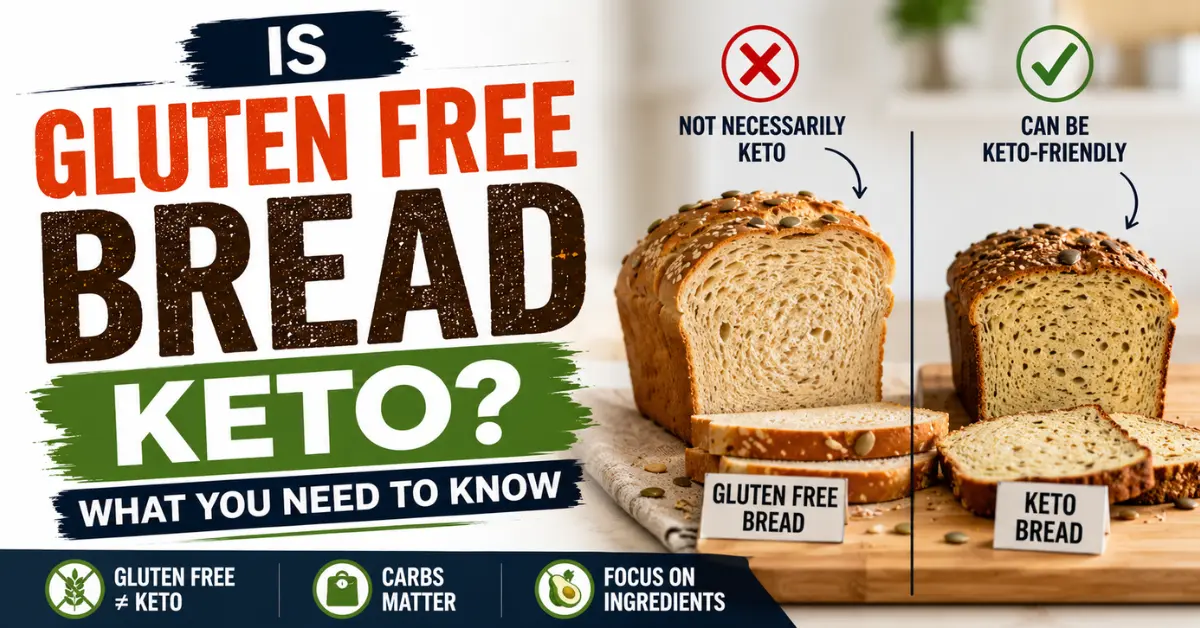
Is Gluten Free Bread Keto — at least not in most cases. The two labels mean completely different things, and confusing them is one of the most common mistakes people make when starting a keto or low-carb diet.
Gluten free simply means a product contains no wheat, barley, or rye. It says nothing about carbohydrate content. In fact, most gluten free breads replace wheat flour with high-carb alternatives like rice flour, tapioca starch, or potato starch — ingredients that spike blood sugar just as fast (sometimes faster) than regular wheat bread.
A standard gluten free bread slice contains 14–20g of carbohydrates. For someone on a strict keto diet targeting 20g of net carbs per day, one sandwich could consume your entire daily carb budget — before you’ve added any filling.
That said, there IS gluten free bread that is keto. But you need to know exactly what to look for. This article explains everything.
What Is the Keto Diet, and Why Do Carbs in Bread Matter?
The ketogenic diet (keto) is a high-fat, moderate-protein, very low-carbohydrate diet. The goal is to push your body into a metabolic state called ketosis, where it burns fat for fuel instead of glucose.
To stay in ketosis, most people need to keep their net carb intake under 20–50g per day, depending on their metabolism and activity level. Net carbs are calculated as:
Net Carbs = Total Carbohydrates − Dietary Fiber − Sugar Alcohols
This is the number that matters for keto — not total carbs. A bread with 15g total carbs but 13g of fiber has just 2g net carbs, making it genuinely keto-friendly.
Bread is traditionally one of the highest-carb foods you can eat. Regular white bread has 13–15g of net carbs per slice. Whole wheat has a similar range. These will knock most people out of ketosis within a single meal.
Why Gluten Free and Keto Are Not the Same Thing
This is the critical misconception this article exists to clear up.
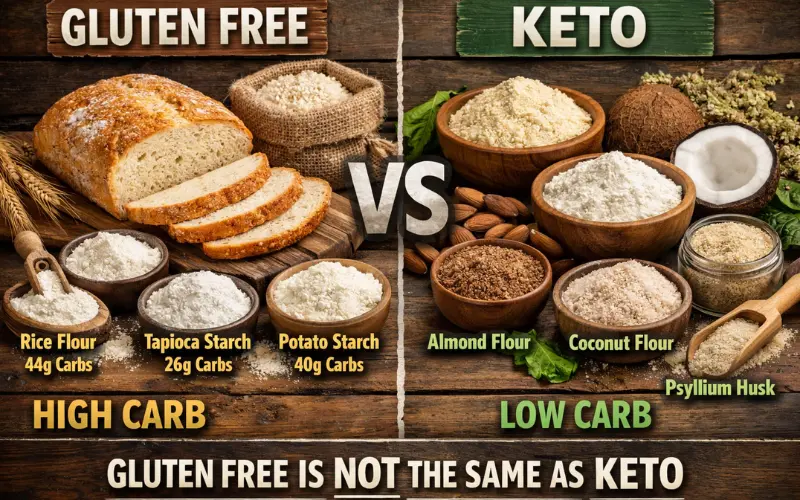
Gluten is a protein found in wheat, barley, and rye. When you remove gluten from bread, you remove the structural protein that gives bread its elasticity and chew. To replace it — and still produce something that resembles bread — gluten free bakers typically reach for:
- Rice flour — ~44g carbs per ¼ cup
- Tapioca starch — ~26g carbs per ¼ cup
- Potato starch — ~40g carbs per ¼ cup
- Cornstarch — ~29g carbs per ¼ cup
These are all high-glycemic ingredients. They raise blood sugar rapidly and are not compatible with a keto diet. Gluten free bread made with these flours has essentially the same carb profile as regular bread — just without the gluten protein.
Removing gluten does not remove carbohydrates.
There is only one situation where gluten free bread IS keto: when it is made with low-carb, naturally gluten free flours like almond flour, coconut flour, flaxseed meal, or psyllium husk. These ingredients are low in net carbs, high in fiber, and naturally free of gluten.
Gluten Free Bread vs. Keto Bread: Carb Comparison
| Bread Type | Typical Carbs/Slice | Net Carbs/Slice | Keto-Friendly? |
|---|---|---|---|
| Regular white bread | 13–15g | 12–14g | ❌ No |
| Regular whole wheat | 12–15g | 10–13g | ❌ No |
| Standard gluten free bread | 14–20g | 13–19g | ❌ No |
| Keto bread with wheat gluten | 8–14g | 1–3g | ✅ Yes (but NOT gluten free) |
| Keto + gluten free bread | 6–12g | 1–4g | ✅ Yes |
| Almond flour homemade bread | 4–6g | 1–3g | ✅ Yes |
The table above makes the issue clear. Standard gluten free bread and regular bread sit in the same carb range. Only specially formulated low-carb breads — whether gluten-containing or gluten free — belong on a keto diet.
The Gluten Free Bread Trap: What’s Really in That Loaf?
Most people pick up gluten free bread at the grocery store thinking they’re making a healthier or lower-carb choice. The marketing makes it feel that way. Words like “free from,” “natural,” and “simple ingredients” create a health halo that has nothing to do with carbohydrate content.
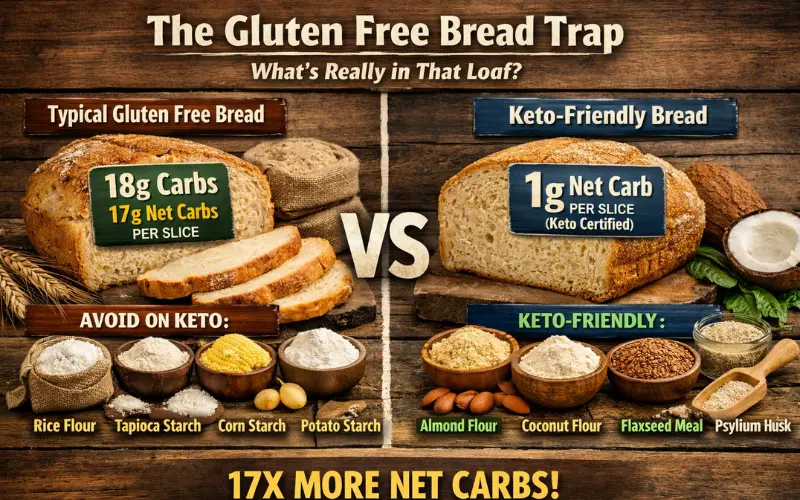
Here’s a real-world label example from a popular gluten free sandwich bread:
- Total carbohydrates: 18g per slice
- Dietary fiber: 1g
- Net carbs: 17g
Compare that to a keto-certified, gluten free option like Carbonaut Gluten Free Seeded Bread:
- Total carbohydrates: 12g per slice
- Dietary fiber: 11g
- Net carbs: 1g
The difference isn’t subtle — it’s 17x more net carbs. The gluten free label is simply not a reliable signal for keto compatibility.
Ingredients to avoid on keto (common in gluten free bread):
- Rice flour
- Tapioca starch
- Corn starch
- Potato starch or potato flour
- Brown rice flour
- Sorghum flour
Ingredients that signal keto compatibility:
- Almond flour
- Coconut flour
- Flaxseed meal
- Psyllium husk powder
- Sunflower seed meal
- Lupin flour
- Oat fiber (not oat flour — fiber only)
- Modified wheat starch (low-glycemic, often used in keto bread — note: contains gluten)
Who Needs Both Gluten Free AND Keto?
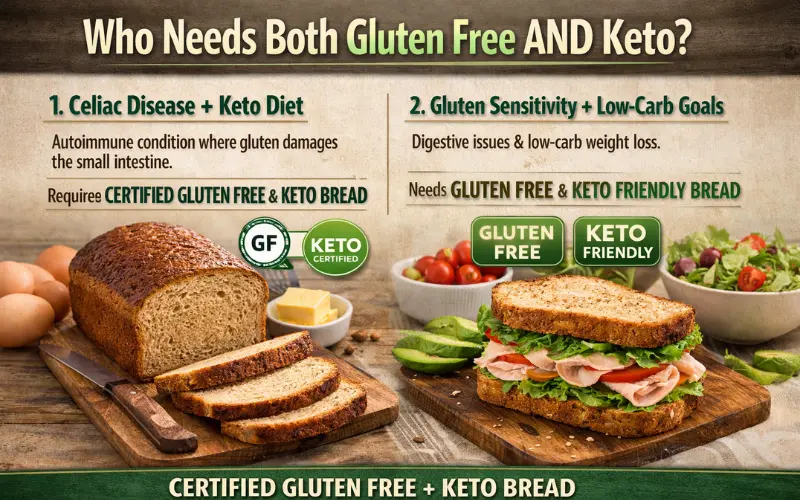
There are two main reasons someone might need bread that is both gluten free and keto simultaneously:
1. Celiac Disease + Keto Diet
Celiac disease is an autoimmune condition where gluten damages the small intestine. People with celiac must strictly avoid all gluten — even trace amounts. If you have celiac and you’re also following a keto diet, you need bread that meets both criteria with certified gluten free labeling, not just gluten free ingredients.
Many keto breads use vital wheat gluten to improve texture. These breads are keto-friendly but completely off-limits for celiac patients. Sola Sweet Oat Bread, for example, is a popular keto bread — but it contains wheat gluten, making it unsuitable for celiac disease.
2. Gluten Sensitivity or Intolerance + Low-Carb Goals
Non-celiac gluten sensitivity (NCGS) is less severe but still real. People with NCGS experience digestive discomfort, bloating, brain fog, and fatigue from gluten consumption without the intestinal damage seen in celiac disease. These individuals benefit from gluten free eating and may also want to combine it with keto for weight loss or blood sugar management.
If you’re in this category, always look for explicitly labeled certified Is Gluten Free Bread Keto keto breads — not just products made with almond flour that happen to be gluten free.
How to Read a Label: Is This Gluten Free Bread Keto?
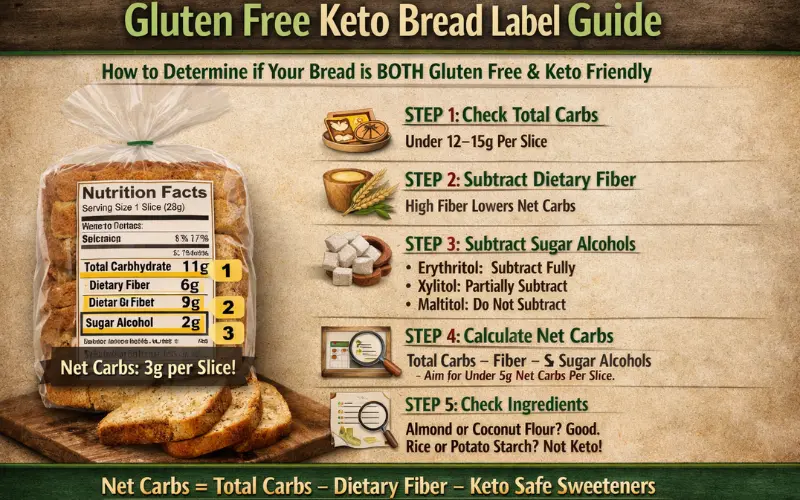
Most articles on this topic tell you to “check the label” but don’t explain what that actually means. Here’s a step-by-step label-reading guide:
Step 1: Look at Total Carbohydrates per serving This is your starting point. For a single-slice bread to be keto-friendly, total carbs should ideally be under 12–15g per slice.
Step 2: Find Dietary Fiber Subtract this from total carbs. High fiber is your friend — it lowers the net carb count significantly.
Step 3: Check Sugar Alcohols (if listed) These can also be subtracted. However, not all sugar alcohols are created equal:
- Erythritol: Subtract fully — minimal blood sugar impact
- Xylitol: Can partially subtract
- Maltitol: Do NOT subtract — it has significant glycemic impact despite being a “sugar alcohol”
Step 4: Calculate Net Carbs Net Carbs = Total Carbs − Fiber − (Keto-safe sugar alcohols)
For keto, aim for under 5g net carbs per slice. Under 3g is ideal for strict keto.
Step 5: Scan the Ingredient List The first three ingredients tell you most of what you need to know. If rice flour, tapioca starch, or potato starch appear near the top, this gluten free bread is not keto. If almond flour, coconut flour, or flaxseed lead the list, you may have a winner.
The Best Gluten Free Keto Bread Options in 2025
These brands produce bread that is both genuinely Is Gluten Free Bread Keto:
Carbonaut Gluten Free Seeded Bread Net carbs: 1g per slice | Certified gluten free | Non-GMO, vegan One of the most popular gluten free keto breads on the market. Dense and seeded with a nutty flavor. The texture improves significantly when toasted.
Base Culture Original Keto Bread Net carbs: 3g per slice | Grain free, gluten free | Clean ingredients Made with almond butter, almond flour, flaxseed, and eggs. Every ingredient is recognizable and whole-food. Strong nutty flavor. Great for clean eating keto dieters.
ThinSlim Foods Love-the-Taste Bread (Gluten Free) Net carbs: 0g per slice | Very low calorie (~45 cal) | High fiber Formulated with wheat protein isolate-free version for their GF line. Mild flavor that pairs well with strong toppings.
Homemade Almond Flour Bread Net carbs: 2–3g per slice | 100% gluten free | Full ingredient control The most cost-effective option long-term. A basic almond flour loaf made with almond flour, eggs, psyllium husk, olive oil, and baking powder delivers 2–3g net carbs per slice and costs a fraction of specialty store bread.
Can You Bake Your Own Gluten Free Keto Bread?
Yes Is Gluten Free Bread Keto — and for many people, this is the best option. Store-bought gluten free keto bread is often expensive ($8–12 per loaf) and may contain additives you’d rather avoid. Homemade is cheaper, cleaner, and surprisingly straightforward.
The two best gluten free keto flour bases:
Almond flour is the gold standard. It’s low in carbs (~2g net carbs per ¼ cup), high in healthy fats, and produces a moist, slightly dense loaf. Use finely blanched almond flour for the best texture — not almond meal, which is coarser.
Coconut flour absorbs far more liquid than other flours. Use about ¼ the amount you’d use of almond flour and increase eggs significantly. It produces a lighter, slightly sweeter loaf.
Psyllium husk is the binding agent that replaces gluten’s structural function. It creates the elasticity and chew that keto gluten free bread would otherwise lack. A teaspoon or two per loaf makes a significant textural difference.
A simple ratio for almond flour keto bread:
- 2 cups almond flour
- 4 eggs
- ¼ cup melted butter or olive oil
- 1 tsp baking powder
- ½ tsp psyllium husk
- Pinch of salt
This basic formula yields approximately 10–12 slices at around 2–3g net carbs each, with no rice flour, no tapioca starch, and no gluten.
Common Myths About Gluten Free and Keto — Debunked
Myth 1: “Is Gluten Free Bread Keto is always healthier.” False. Gluten free processed foods are often higher in sugar and starch than their conventional counterparts. Removing gluten does not make food nutritious. Gluten free bread is only “healthier” for people who have a specific medical reason to avoid gluten.
Myth 2: “Is Gluten Free Bread Keto is automatically gluten free.” False. Many popular keto breads — including Sola and Dave’s Killer Bread Thin-Sliced low-carb options — contain vital wheat gluten to improve texture and add protein. These breads are keto-friendly but not gluten free. Always read the label if you have celiac disease or gluten sensitivity.
Myth 3: “If a bread is gluten free, it won’t spike my blood sugar.” False and potentially dangerous. Standard gluten free breads made with rice flour and tapioca starch can spike blood sugar as quickly as white bread. The glycemic index of many gluten free flours is very high.
Myth 4: “You can’t find good gluten free keto bread.” No longer true. Brands like Carbonaut, Base Culture, and a growing number of clean-ingredient companies now produce gluten free keto breads that taste genuinely good, hold together in sandwiches, and deliver 1–3g net carbs per slice.
Is Gluten Free Bread Keto Bread and Blood Sugar: What Diabetics Need to Know
If you’re managing type 2 diabetes or insulin resistance, this section matters to you.
Regular gluten free bread — made with rice flour, potato starch, or tapioca — has a high glycemic index (GI) and can cause significant post-meal blood sugar spikes. Some studies suggest that certain gluten free products raise blood glucose faster than the wheat bread they replaced, because highly refined starches like rice flour digest rapidly.
Keto bread — whether gluten free or not — behaves very differently. Because it’s made primarily of fat, protein, and fiber, it digests slowly and causes minimal blood sugar impact. Almond flour bread in particular has been shown to produce a much lower glycemic response than standard bread.
If you have diabetes and need to avoid gluten: choose certified gluten free keto bread made with almond or coconut flour. Don’t assume any gluten free product is safe for blood sugar management — check every label.
Frequently Asked Questions
Is all Is Gluten Free Bread Keto friendly?
No. Most gluten free bread is made with high-carb flours like rice or tapioca starch and contains 14–20g of carbohydrates per slice — similar to regular bread. Only gluten free breads made with low-carb flours like almond flour or coconut flour are keto friendly.
Is Gluten Free Bread Keto low carb?
Not usually. Gluten free bread is designed to eliminate gluten, not to reduce carbohydrates. Low-carb gluten free breads exist but are a separate category from standard gluten free products.
Can people with celiac disease eat keto bread?
Many keto breads contain vital wheat gluten, which means they are absolutely not safe for celiac disease. People with celiac must specifically seek out certified gluten free keto breads like Carbonaut Gluten Free or Base Culture.
What is the best Is Gluten Free Bread Keto brand?
Carbonaut Gluten Free Seeded Bread (1g net carb) and Base Culture Original Keto Bread (3g net carb) are the most widely available and well-reviewed gluten free keto bread brands in 2025.
Can I eat gluten free bread on a low-carb diet?
Only if you specifically choose low-carb gluten free varieties. Check the label for net carbs — under 5g per slice is ideal for keto. Avoid any product where rice flour, tapioca, or potato starch appears near the top of the ingredient list.
Does Is Gluten Free Bread Keto help with weight loss?
Gluten free bread does not inherently support weight loss. If it’s high in carbs (as most gluten free bread is), it won’t differ meaningfully from regular bread in terms of blood sugar impact or calorie density. Only low-carb, high-fiber gluten free breads support weight loss goals.
Final Thoughts
Gluten free bread is not keto. Not automatically, not usually, and not without checking the label carefully.
The gluten free label tells you one thing: there’s no wheat protein in this product. It tells you nothing about carbohydrate content. Most gluten free breads replace wheat with high-carb starches that are equally incompatible with ketosis.
For a bread to be both Is Gluten Free Bread Keto, it needs to be made with genuinely low-carb ingredients — almond flour, coconut flour, flaxseed, psyllium husk — and deliver under 5g net carbs per slice.
These products exist, they taste better than ever, and they work for both keto dieters and people with celiac disease or gluten sensitivity. But you will not find them by grabbing any loaf labeled “gluten free” off the grocery shelf.
Read the label. Calculate the net carbs. Check the ingredients. That’s how you find gluten free bread that actually supports your keto goals.

1 comment
[…] of “keto” in the US or most other countries. Unlike “organic” or “gluten-free,” any brand can slap “Keto Certified” on a box as long as they pay for a private […]