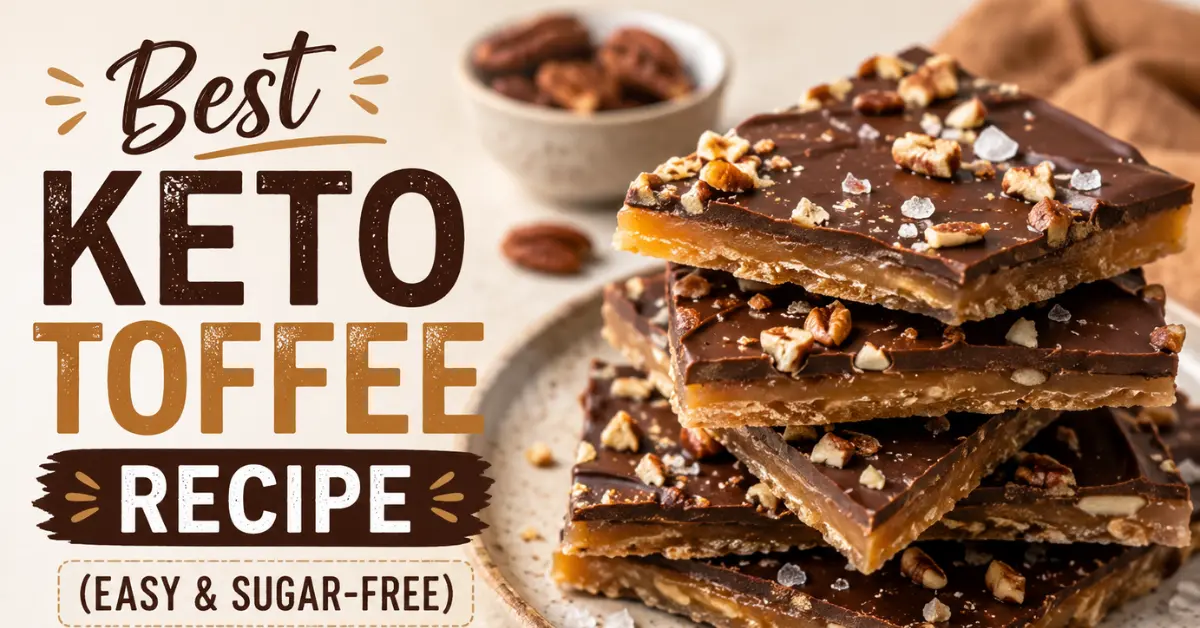
If you love the rich, buttery crunch of classic toffee but want to stay on track with your low-carb lifestyle, this keto toffee recipe is exactly what you have been waiting for. It tastes just like the real thing — deeply caramelized, snappy, and coated in chocolate — without a single gram of refined sugar. You only need 5 simple ingredients, about 20 minutes, and one saucepan.
This keto toffee is perfect for holiday gifting, Christmas candy trays, or simply satisfying a sweet tooth any day of the week.
What Is Keto Toffee?
Traditional toffee is made by cooking butter and sugar together until the mixture reaches the “hard crack” stage (around 300°F/149°C). At that temperature, it becomes brittle and snappy when it cools.
Keto toffee follows the same process, but replaces regular sugar with a keto-friendly sweetener. The result is a low-carb candy that looks, snaps, and tastes just like the classic version — without the blood sugar spike.
There are two main styles:
- English Toffee (Buttercrunch): Hard and brittle, topped with chocolate and nuts. This is the most popular keto version you will find in holiday boxes.
- Chewy Toffee: Softer and more fudge-like, usually made with a higher ratio of allulose.
This recipe focuses on the classic crunchy buttercrunch style that most people love.
Why You Will Love This Recipe
- Ready in under 30 minutes
- Only 5 main ingredients
- Around 1–2g net carbs per piece (depending on chocolate used)
- Gluten-free and grain-free
- Keeps well for up to 3 weeks
- Perfect for holiday gifting and cookie trays
- Tastes indistinguishable from real toffee
Ingredients You Need
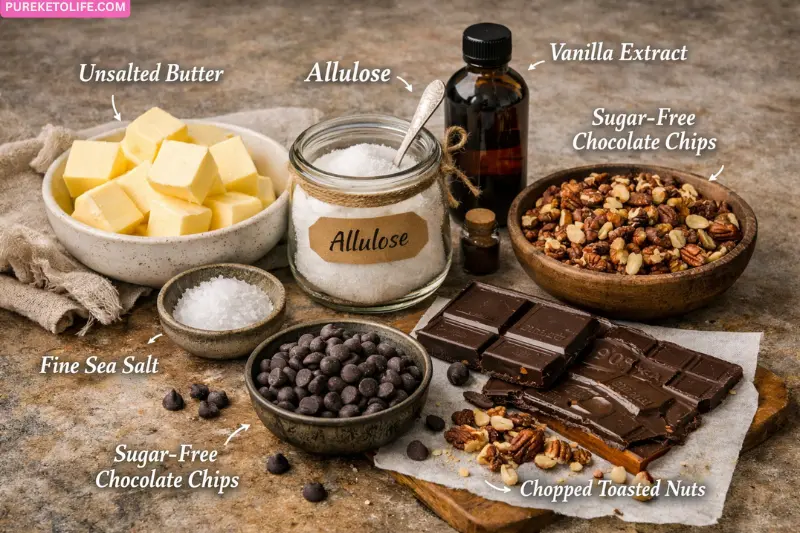
Here is exactly what goes into this keto toffee, and why each ingredient matters:
Unsalted butter (1 cup / 2 sticks) Butter is the backbone of toffee. Use unsalted so you control the salt level. Always use real butter — not margarine or a butter substitute. The fat and milk solids in real butter create that deep, nutty caramel flavor as it cooks.
Allulose (1 cup) This is the secret weapon for keto toffee. Allulose is a rare, naturally occurring sugar that your body does not absorb, so it contributes zero net carbs. More importantly, allulose is the only keto sweetener that truly caramelizes. It melts smoothly, browns like real sugar, and does not recrystallize when it cools. This gives your toffee that authentic glassy, snappy texture.
Why not erythritol? Erythritol can work, but it tends to recrystallize as it cools, giving you a gritty or grainy texture. If you use erythritol, use the powdered form and expect a slightly different result.
Fine sea salt (¼ teaspoon) Salt balances the sweetness and deepens the caramel flavor. Do not skip it. You can also add a pinch of flaky sea salt on top for a salted toffee finish — it is excellent.
Vanilla extract (1 teaspoon) Add this off the heat. Vanilla rounds out the flavor beautifully. Use pure extract, not imitation.
Sugar-free chocolate chips (1 cup) Sprinkle these on top of the hot toffee and let them melt. Good options include Lily’s, ChocZero, or any dark chocolate with 85–90% cocoa (like Lindt 90%). The darker the chocolate, the fewer the carbs.
Chopped nuts (½ cup) Toasted pecans, almonds, or walnuts are all fantastic. Nuts add crunch, flavor, and healthy fats. Toast them first for the best taste — just 5–7 minutes in a dry skillet or oven does the trick.
Equipment You Need
- Heavy-bottomed saucepan (this prevents burning)
- Candy thermometer (strongly recommended)
- Silicone spatula or wooden spoon
- 9×13 baking pan lined with parchment paper
- Aluminum foil (to tent over chocolate while it melts)
A candy thermometer takes all the guesswork out of this recipe. You can find a basic one for a few dollars, and it makes a real difference in getting the right texture every time.
How to Make Keto Toffee — Step by Step
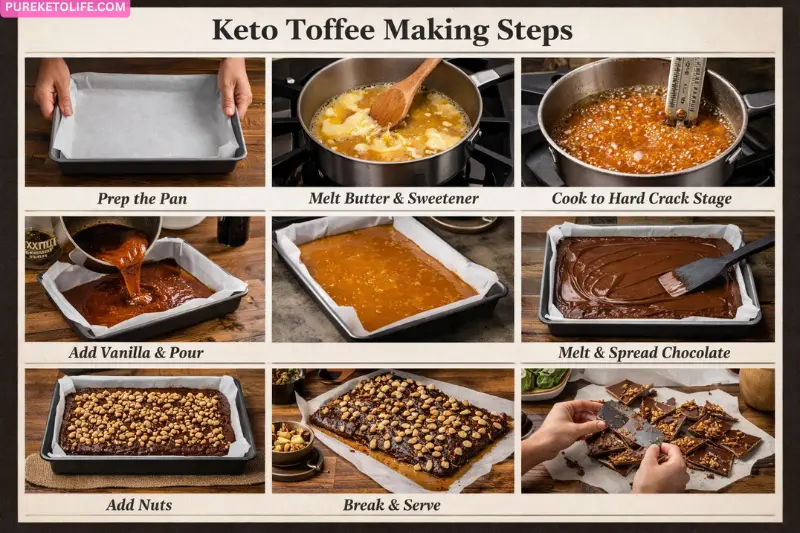
Step 1: Prep your pan Line a 9×13 baking pan with parchment paper and set it aside. If you want thicker toffee, use an 8×8 pan instead.
Step 2: Melt butter and sweetener Add butter, allulose, and salt to a heavy-bottomed saucepan over medium heat. Stir constantly until the butter melts and the allulose dissolves completely. This takes 2–3 minutes.
Step 3: Cook to the hard crack stage Once melted, continue cooking over medium heat. Stir occasionally, but not constantly. Watch the temperature carefully. You are aiming for 300–305°F (149–151°C) — this is the hard crack stage. The mixture will darken to a rich amber color. This usually takes 10–15 minutes.
Important: Allulose needs to cook to a slightly higher temperature than regular sugar to reach the hard crack stage. Do not pull it off the heat too early or you will end up with soft, sticky toffee instead of brittle candy.
Step 4: Add vanilla and pour Remove from heat immediately and stir in the vanilla extract. It will sizzle — that is normal. Quickly pour the mixture into your prepared pan. Do not scrape the bottom of the pan.
Step 5: Melt the chocolate Wait 2 minutes for the toffee to set slightly, then sprinkle the chocolate chips evenly over the top. Cover loosely with foil and let sit for 5 minutes. The residual heat will melt the chocolate. Remove the foil and spread the melted chocolate evenly with a spatula.
Step 6: Add nuts and cool Immediately scatter your toasted chopped nuts over the melted chocolate. Press them in gently so they stick. Let the toffee cool at room temperature for 30 minutes, then transfer to the refrigerator for at least 1 hour to fully set.
Step 7: Break and serve Once fully set, lift the toffee slab out of the pan using the parchment paper. Break it into irregular pieces with your hands, or use a sharp knife to cut it into neat squares.
Pro Tips for Perfect Keto Toffee Every Time
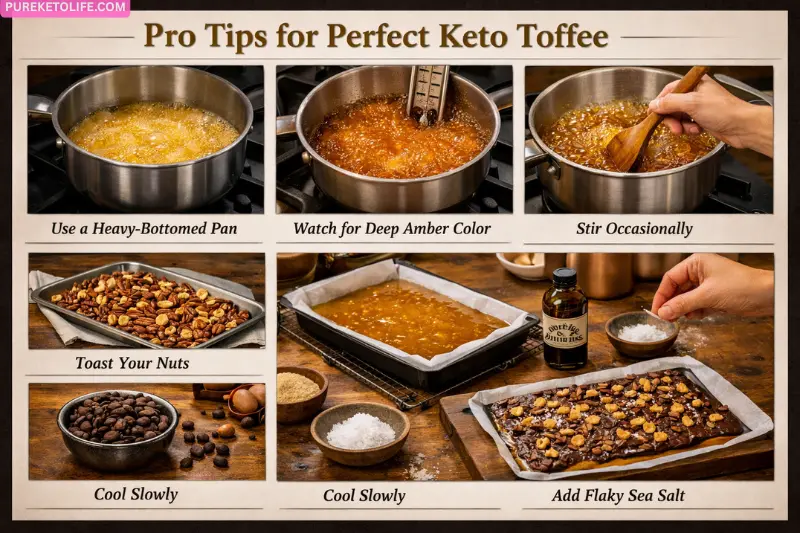
Use a heavy-bottomed pan. Thin pans cause hot spots and burning. A stainless steel or enameled cast iron saucepan works best.
Do not stir too much once it starts boiling. Stir occasionally to prevent burning on the bottom, but stirring too aggressively can cause crystallization.
Watch the color, not just the thermometer. Your toffee should turn a deep amber — similar to the color of a copper penny. If it looks pale yellow, it needs more time.
Toast your nuts. This one small step dramatically improves the flavor. Untoasted nuts taste flat by comparison.
Do not rush the cooling. Let the toffee come to room temperature before refrigerating. A sudden temperature change can cause the butter to separate, leaving a greasy layer under the chocolate.
Add flaked salt on top. Right after you spread the chocolate, add a pinch of flaky sea salt. It balances the sweetness and elevates the whole candy.
Sweetener Comparison for Keto Toffee
Not all sweeteners behave the same way when you cook them. Here is a quick guide to help you choose:
| Sweetener | Caramelizes? | Recrystallizes? | Texture Result | Best For |
|---|---|---|---|---|
| Allulose | Yes | No | Smooth, glassy, snappy | Hard toffee (best choice) |
| Erythritol (powdered) | Partially | Yes | Can be gritty | Works but less ideal |
| Swerve | Partially | Yes | Similar to erythritol | Acceptable substitute |
| Monk Fruit Blend | Partially | Varies by blend | Depends on ratio | Use a blend with allulose |
| Xylitol | Yes | Somewhat | Decent texture | Can work, toxic to dogs |
| Stevia | No | N/A | Does not set properly | Not recommended |
The clear winner is allulose. It is the only sweetener that behaves almost identically to real sugar in candy-making. You can find it at most health food stores or online.
Keto Toffee Variations to Try
Once you have the base recipe down, you can customize it in so many ways:
- Classic Almond Buttercrunch — Use toasted slivered almonds on top. This is the most traditional English toffee style.
- Walnut Toffee — Swap almonds for toasted walnuts. The slightly bitter flavor of walnuts pairs beautifully with dark chocolate.
- Pecan Toffee — Use chopped toasted pecans. This gives the candy a more Southern, praline-like character.
- White Chocolate Keto Toffee — Use sugar-free white chocolate chips instead. This looks stunning and tastes uniquely creamy.
- Double Chocolate Toffee — Press some chocolate chips into the toffee before it sets, then add more on top. Chocolate lovers rejoice.
- Salted Caramel Toffee — Add a generous pinch of flaky sea salt on top of the chocolate. Simple but incredible.
- Nut-Free Toffee — Skip the nuts entirely. Top the chocolate with toasted unsweetened coconut flakes or crushed freeze-dried raspberries instead.
- Dairy-Free Option — Use refined coconut oil in place of butter. The result is slightly different in flavor, but still delicious. Use a 1:1 swap by weight.
Nutrition Information
The exact nutrition will vary depending on the chocolate and nuts you use. Here is an approximate breakdown per piece (based on the recipe cut into 24 pieces, using Lily’s dark chocolate and almonds):
- Calories: 110
- Total Fat: 11g
- Total Carbohydrates: 3g
- Fiber: 1g
- Sugar Alcohols: 1g
- Net Carbs: approximately 1–2g
- Protein: 1g
This makes keto toffee one of the most satisfying low-carb candies you can make at home. A couple of pieces deliver real sweetness and crunch without derailing your macros.
How to Store Keto Toffee
- At room temperature: Store in an airtight container between layers of parchment paper. It keeps well for up to 2 weeks in a cool, dry place.
- In the refrigerator: Keeps for up to 3 weeks. The cold actually makes the chocolate snap even more satisfyingly.
- In the freezer: Keto toffee freezes beautifully for up to 3 months. Place pieces in a zip-lock bag with parchment between layers. Let it come to room temperature before eating — about 10 minutes on the counter.
- Gifting tip: Pack toffee pieces in a small kraft paper box or tin lined with parchment. It makes a gorgeous homemade holiday gift that no one will guess is keto.
Common Mistakes and How to Avoid Them
- The toffee is too soft or sticky. This means it did not reach the hard crack stage. Next time, cook it to a full 305°F. The allulose needs a higher temperature than regular sugar to set properly.
- The toffee is grainy or gritty. This is usually caused by erythritol recrystallizing. Switch to allulose for a smoother result.
- The butter separated and looks oily. This happens when the toffee cools too fast (like going straight from hot pan to fridge) or when the ratio of butter to sweetener is off. Make sure to cool at room temperature first, and use the exact quantities in the recipe.
- The chocolate slid off after it set. This happens when the toffee is too cool before you add the chocolate. Add the chips within 2 minutes of pouring, while the surface is still warm enough to melt them.
- The toffee burned. Medium heat is key. Do not walk away. Stir occasionally and watch the color carefully — deep amber is perfect, dark brown means it is burned.
Why Keto Toffee Is a Great Choice on a Low-Carb Diet
Regular toffee is essentially pure sugar and butter. A single piece of store-bought English toffee can contain 15–20g of sugar and spike your blood sugar significantly.
Keto toffee replaces that sugar with allulose, which passes through your body without being metabolized. You get the same flavor, the same crunch, and the same satisfying richness — but with virtually zero impact on your blood glucose or ketosis.
The butter and nuts in this recipe also provide healthy fats and a small amount of protein, making keto toffee more satiating than most candy. A couple of pieces genuinely satisfies a sweet craving.
Frequently Asked Questions
1. Can I make keto toffee without a candy thermometer?
You can, but a thermometer makes it much easier to get the right texture consistently. Without one, cook the mixture until it turns a deep amber (similar to the color of dark honey), then test a small drop in cold water — it should form hard, brittle threads. This is called the cold water test and was the standard method before thermometers were common.
2. Why is my keto toffee soft instead of crunchy?
It did not cook to a high enough temperature. Keto toffee made with allulose needs to reach 300–305°F to achieve the hard crack stage. Lower temperatures produce soft, taffy-like candy. Cook it a little longer next time and make sure your thermometer is accurate.
3. Can I use coconut sugar instead of allulose?
Coconut sugar is not keto-friendly — it has roughly the same carb count as regular sugar. For a true keto toffee, stick with allulose, erythritol, or a blend of the two.
4. Is keto toffee safe for people with diabetes?
Allulose does not raise blood sugar or insulin levels, which makes this a much better option than regular toffee for people managing their blood sugar. That said, always consult your doctor or dietitian before making significant changes to your diet, especially if you have diabetes or take medication.
5. Can I make this recipe dairy-free?
Yes. Use refined coconut oil (not virgin, as that adds a coconut flavor) in place of butter. The candy will be slightly less rich but still very good. Make sure to also use dairy-free chocolate chips.
6. Why does my toffee have a buttery layer on top after it cools?
This is butter separation, and it usually happens when the toffee cools too quickly. Always let it cool at room temperature for at least 30 minutes before placing it in the fridge. Also, do not stir the toffee aggressively during the cooking process.
7. What nuts work best in keto toffee?
Almonds, pecans, and walnuts are all excellent choices. Almonds are the most traditional for English buttercrunch. Pecans add a sweeter, more buttery note. Walnuts add a mild bitterness that balances well with dark chocolate. Macadamia nuts are another fantastic (and very keto-friendly) option.
8. Can I make keto toffee ahead of time?
Absolutely. Keto toffee actually gets better after a day in the fridge. The flavors deepen and the texture becomes even crunchier. Make it up to 2–3 weeks in advance and store it in an airtight container.
9. Can I double the recipe?
Yes, easily. Just use a larger pan (like a half-sheet pan) and expect the cooking time to increase slightly. Watch the thermometer, not the clock.
10. How do I know if the toffee is keto-friendly?
Check the labels on your chocolate chips. Brands like Lily’s and ChocZero use erythritol or other keto sweeteners and have around 1–3g net carbs per serving. The toffee base itself (butter + allulose) is essentially zero net carbs, so the chocolate is the main variable.
Final Thoughts
Keto toffee proves that eating low-carb does not mean giving up the foods you love. This recipe is simple enough for a weeknight but impressive enough to bring to a holiday party or give as a gift. The combination of buttery caramelized toffee, silky chocolate, and crunchy toasted nuts is genuinely hard to beat.
Make a batch, stash it in the fridge, and reach for a piece whenever you need a sweet fix. You will not believe it is sugar-free.