Most sugar-free Keto Energy Drinks are technically keto-compliant, since caffeine itself doesn’t affect ketosis and zero-sugar formulas won’t spike blood glucose. The real risk isn’t sugar, it’s hidden carbs from maltodextrin, dextrose, or “natural flavor” blends that some brands sneak past the 0g sugar label. Pick a drink under 5g net carbs with a caffeine source you actually tolerate, and you’re fine.
That’s the short version. The rest of this guide covers the parts most keto sites skip: how sugar alcohols get counted differently depending on who you ask, why the caffeine source matters more than the milligram count, a category of “energy drink” that isn’t even caffeine-based, and a real comparison of what’s on shelves right now.
What Actually Keeps a Drink Keto-Compliant
Checking the sugar line isn’t enough. I’ve seen plenty of people grab a “0g sugar” can and still get knocked out of ketosis because they never looked past that one number.
Here’s what actually determines it:
- Total carbs vs. net carbs. A can listing 5g total carbs but 4g of that from erythritol nets out to about 1g for most keto trackers, since sugar alcohols are mostly non-glycemic. Strict keto dieters who react to erythritol (some people get a laxative effect above 15-20g a day) should still count it at full value.
- The 0.5g rounding loophole. FDA labeling rules let brands round anything under 0.5g per serving down to “0g.” A drink can legally say “0g sugar” while still containing trace sugar from natural flavoring. It won’t break ketosis, but it’s worth knowing the label isn’t a perfect mirror of the ingredient panel.
- Maltodextrin is the real saboteur. It’s technically a “complex carb,” but it has a glycemic index higher than table sugar in some cases. Brands use it as a cheap flavor carrier or powder base, and it shows up in flavors you wouldn’t expect. Celsius, for example, keeps most flavors under 2g carbs, but a few (Orange Burst, Peach Mango) list maltodextrin and run closer to 6g net carbs per can. Same brand, different flavor, different answer.
The habit that actually protects your ketosis: read the ingredient list, not just the nutrition panel. If maltodextrin, dextrose, or corn syrup solids show up anywhere in the first ten ingredients, skip it regardless of what the front label claims.
Why the Caffeine Source Matters More Than the Milligrams

Two cans with identical caffeine counts can feel completely different to drink. This is the part almost nobody explains well.
Synthetic caffeine (caffeine anhydrous) hits fast and hard. It’s absorbed quickly, peaks within 30-45 minutes, and tends to produce the sharper jitter-and-crash pattern people associate with “bad” energy drinks. It’s also the cheapest form, which is why it dominates mass-market cans.
Natural caffeine (green tea extract, guarana, yerba mate) releases more gradually because it’s bound up with other plant compounds. Guarana in particular has a slower absorption curve, so the lift tends to last longer with less of a hard drop-off.
L-theanine pairing changes the experience entirely. This amino acid, found naturally in green tea, blunts the anxious, wired feeling caffeine can cause without dulling the alertness. If you’ve ever had one energy drink leave you jittery and another leave you focused despite similar caffeine loads, L-theanine content is usually the reason. Brands like Alani Nu and several matcha-based options include it deliberately for this reason.
If you’re caffeine-sensitive, this matters more than the number on the can. A 100mg synthetic dose can feel rougher than a 160mg natural dose paired with theanine.
Keto Energy Drink Comparison
| Drink | Caffeine | Net Carbs | Sweetener | Best For |
|---|---|---|---|---|
| Celsius (standard flavors) | 200mg | 0-2g | Sucralose | Pre-workout, higher tolerance |
| Alani Nu | 200mg | 3-5g | Sucralose, Ace-K, erythritol | Flavor variety, gym days |
| Red Bull Sugarfree | 80mg | 2-3g | Aspartame | Low-caffeine, small boost |
| Monster Zero Ultra | 140-150mg | 0-1g | Sucralose | Classic energy drink taste |
| Bang Energy | 300mg | 0g | Sucralose | Max caffeine, high tolerance only |
| Yerbaé | 160mg | 0g | Stevia, monk fruit | Cleanest ingredient list |
| Jocko GO | 95mg | 1g | Monk fruit | Nootropic focus, gentle lift |
| GURU Lite | 100mg | 5g | Stevia | Plant-based, low-stim |
Numbers vary slightly by flavor, so treat this as a starting point and check the specific can in your hand.
My Experience
I’ve tried several keto-friendly energy drinks while following a low-carb diet, especially before workouts and during long workdays. The biggest lesson wasn’t finding the drink with the most caffeine, it was finding one with clean ingredients and low net carbs that gave steady energy without the crash. Reading the ingredient list instead of just the “0g sugar” label has saved me from a few disappointing purchases.
The Category Almost Nobody Covers: Exogenous Ketone Drinks
Most “Keto Energy Drinks” content stops at zero-sugar sodas with caffeine in them. That’s only half the category.
Exogenous ketone drinks (ketone esters or ketone salts, like the ones from Kenetik and a handful of newer brands) don’t just avoid breaking ketosis. They actively raise your blood ketone levels within 30-60 minutes of drinking them, independent of what you’ve eaten. This is a genuinely different mechanism from a caffeinated seltzer.
A few honest notes if you’re considering one:
- The taste is an acquired one. Ketone esters have a distinct bitter, almost chemical aftertaste that flavoring can only partially mask. People who love the concept often still wince on the first few sips.
- They’re not a caffeine substitute. Most contain little to no caffeine on their own. The “energy” comes from ketones as fuel, not stimulation, so the effect is calmer and less immediate than a Celsius or Red Bull.
- They’re most useful during fat-adaptation or a fasted training session, when your body isn’t yet reliably producing its own ketones and you want fuel without eating.
- Price is a real barrier. These run considerably higher per serving than a can of Monster, so they make more sense as an occasional performance tool than a daily habit.
If your goal is “stay awake for a meeting,” skip this category and grab a regular sugar-free energy drink. If your goal is “give my brain and muscles usable fuel during a fasted state,” this is worth trying once to see how you respond.
Popular Brands, Straight Answers
Is Celsius keto-friendly?
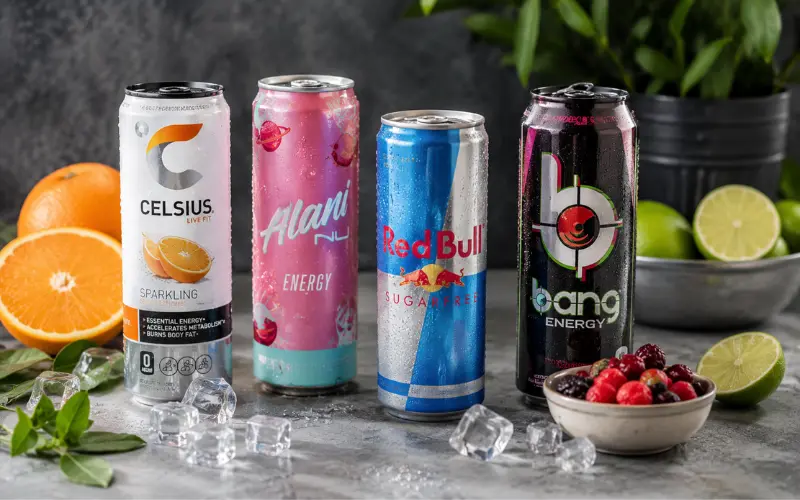
Mostly, but check the flavor. Standard Celsius Sparkling flavors run 0-2g net carbs with 200mg of natural caffeine from green tea and guarana. A few flavors (Orange Burst, Peach Mango, Sparkling Grapefruit) use maltodextrin and land closer to 6g net carbs. Read the can, not just the brand name.
Is Alani Nu keto-friendly?
Yes, for most practical purposes. It has 0g sugar and typically 3-5g total carbs per can, largely from erythritol, which most keto trackers count at a fraction of its listed value. The sweetener blend (sucralose plus acesulfame potassium) is fine for ketosis but worth limiting if you’re sensitive to artificial sweeteners.
Is Red Bull okay on keto?
The Sugarfree version is fine. It uses aspartame instead of sugar, carries only 80mg of caffeine (lighter than most competitors), and runs 2-3g carbs per can. It’s a reasonable pick if you want a smaller lift than Celsius or Bang without the intensity.
Is Bang Energy keto-safe?
Carb-wise, yes, at 0g. Caffeine-wise, treat it with respect. At 300mg per can, roughly three cups of coffee worth, it’s not a casual afternoon drink for most people.
Matching the Drink to the Moment
Not every Keto Energy Drinks fits every situation. A few practical pairings that work in real life:
Fasted morning workout:
Something low-carb with moderate natural caffeine (Yerbaé, Celsius) so you’re not adding digestive load before training.
2 PM slump at a desk:
A lower-caffeine option (Red Bull Sugarfree, GURU Lite) so it doesn’t wreck your sleep eight hours later.
Heavy lifting or endurance day:
Higher caffeine plus electrolytes (Celsius, Kill Cliff) since you’re sweating out sodium anyway.
Caffeine-sensitive but need a lift:
Natural sources with L-theanine (Jocko GO, matcha-based drinks) for a smoother curve.
Genuinely fat-adapted and training fasted often:
An exogenous ketone drink as an occasional tool, not a daily staple.
Energy Drinks Won’t Fix Keto Flu, Electrolytes Will
This mix-up trips people up constantly in the first two weeks of keto. The fatigue, brain fog, and headaches of “keto flu” come from your body flushing out sodium, potassium, and magnesium as insulin drops, not from a lack of caffeine.
Reaching for an energy drink during that window often makes things feel worse, not better. Caffeine is a mild diuretic, which pushes out more of the electrolytes you’re already short on. If you’re three days into keto and dragging, a glass of water with a pinch of salt and some potassium (or an actual electrolyte supplement) will do more than another can of anything caffeinated.
Once you’re past that adaptation window, typically 1-3 weeks in, energy drinks go back to being about focus and stimulation rather than compensating for a mineral deficit.
The Caffeine Ceiling Nobody Personalizes
The standard guidance is 400mg of caffeine a day for most healthy adults. That number gets repeated everywhere, but it’s rarely applied the way it should be: cumulatively, and adjusted for your own tolerance.
A morning coffee (95mg), a Celsius before the gym (200mg), and an afternoon Red Bull (80mg) adds up to 375mg before dinner, close to the ceiling from three separate sources most people don’t mentally stack together.
A few signs your personal ceiling is lower than 400mg, regardless of what the guideline says:
- You feel your heart rate spike within minutes of drinking, not just “more awake.”
- Sleep quality drops even when you stop caffeine by early afternoon.
- You notice digestive urgency or jitteriness at doses that don’t bother other people.
Track total caffeine across everything you drink for a week, not just energy drinks in isolation. Most people are surprised by the real number once coffee, tea, and pre-workout are added in.
Make Your Own Keto Energy Drink
Store-bought works fine, but a homemade version skips the artificial sweeteners entirely and costs a fraction of the price.
Simple version:
- 8 oz brewed green tea, cooled
- 1 tbsp MCT oil
- Pinch of sea salt
- Juice of half a lemon
- A few drops of liquid stevia if you want it sweeter
Blend or shake well since MCT oil doesn’t dissolve on its own. The green tea gives you natural caffeine with L-theanine already built in, the MCT oil adds a fast fuel source, and the salt covers part of your electrolyte need in the same glass. This works particularly well as a pre-workout replacement if you’re avoiding artificial sweeteners altogether.
Cost Per Serving: The Math Most Guides Skip
Price differences between keto energy drinks are bigger than people expect once you break it down per can instead of per case:
- Mainstream cans (Celsius, Monster, Red Bull, Alani Nu): roughly $2-3 per serving
- Powdered options (Jocko GO, EBOOST): roughly $1.50-2.50 per serving once mixed, cheaper if bought in bulk
- Exogenous ketone drinks: often $4-6 per serving, sometimes more
If you’re drinking one a day, that’s the difference between roughly $700 a year and over $1,800 a year depending on which category you default to. Worth factoring in if you’re building this into a daily habit rather than an occasional grab.
FAQs
Is Alani keto?
Yes, for most flavors. Alani Nu energy drinks have 0g sugar and typically 3-5g total carbs per can, mostly from erythritol, which most keto trackers count as a small fraction of net carbs. It fits within a standard keto carb budget for one can a day.
Is Red Bull ok on keto?
The Sugarfree version is. It uses aspartame instead of sugar and runs about 2-3g carbs and 80mg caffeine per can. The original sugared Red Bull is not keto-friendly, since it contains around 27g of sugar per can.
What can I take for energy on keto?
Beyond energy drinks, black coffee with MCT oil, unsweetened green or black tea, and electrolyte-boosted water all provide a clean lift without carbs. For sustained energy rather than a quick spike, adequate sodium and magnesium intake matters more than most people realize once you’re a few weeks into keto.
Do keto energy drinks break a fast?
Zero-calorie versions generally don’t disrupt a fast for most intermittent fasting protocols, since there’s no meaningful insulin response from caffeine or non-nutritive sweeteners. If you’re doing a strict water-only fast for a medical reason, check with your provider first, since individual protocols vary.
What’s the best keto energy drink powder?
Jocko GO and EBOOST Super Fuel are the two most established powdered options, both landing under 5g carbs per serving with natural caffeine sources. Powders also travel better than cans and let you control dilution strength.
Can I drink energy drinks every day on keto?
Occasionally is fine for most healthy adults, but daily reliance on any energy drink, keto-friendly or not, tends to build tolerance over time, meaning you need more caffeine for the same effect. Cycling between energy drinks, coffee, and caffeine-free days keeps your sensitivity from flattening out.
Is there a difference between “zero carb” and “keto-friendly” energy drinks?
Yes. Zero carb means the label lists 0g total carbs, full stop. Keto-friendly is a broader claim that accounts for net carbs, sweetener type, and overall ingredient quality, so a drink with 3-4g total carbs from erythritol can still be marketed as keto-friendly even though it isn’t technically zero carb.
Are ketone ester drinks better than caffeinated energy drinks for keto?
They’re different tools, not a direct upgrade. Caffeinated drinks work through stimulation, ketone esters work by supplying usable fuel directly. Someone deep in fat-adaptation training fasted might benefit more from a ketone ester, while someone who just needs to stay alert through a workday is better served by a standard low-carb caffeinated option.