If you have ever stood in the tea aisle wondering whether that vibrant green tin will knock you out of ketosis, you are not alone. Keto matcha powder has become one of the most searched terms among low-carb dieters, and for good reason. It promises the calm, steady energy of matcha without the sugar spikes that come with flavored lattes and bottled green tea drinks.
This guide covers everything you actually need to know: what keto matcha powder is, how it differs from regular matcha, which brands are worth your money, where to buy it, and how to make it at home. No fluff, no filler, just the details that matter before you spend your grocery budget.
What Is Keto Matcha Powder, Exactly?
Keto matcha powder is finely ground Japanese green tea leaf that has been formulated, or naturally suited, to fit a low-carb, high-fat eating pattern. Some brands sell pure, unsweetened matcha and call it keto-friendly because it is naturally low in carbs. Others go a step further and blend matcha with keto-specific additions like MCT oil powder, butter powder, or stevia, creating a ready-to-mix latte that supports ketosis instead of working against it.
The distinction matters. Not every green matcha product on a shelf is automatically keto. Many popular matcha lattes and instant mixes are loaded with cane sugar, maltodextrin, or dairy creamers that can quietly add 15 to 20 grams of carbs per serving. That is enough to derail a full day of careful eating.
Is Matcha Naturally Keto-Friendly?
Yes, in its pure form. A single gram of plain matcha powder contains roughly 1 gram of total carbohydrate, and that carbohydrate comes almost entirely from fiber. On keto, you count net carbs, which means subtracting fiber from total carbs. That leaves matcha with close to zero net carbs per serving.
This is why plain, unsweetened matcha has always technically fit a ketogenic diet. What changed recently is the rise of purpose-built keto matcha products that add fat sources directly into the mix, so you get sustained energy instead of a quick caffeine spike followed by a crash.
Keto Matcha Powder Benefits
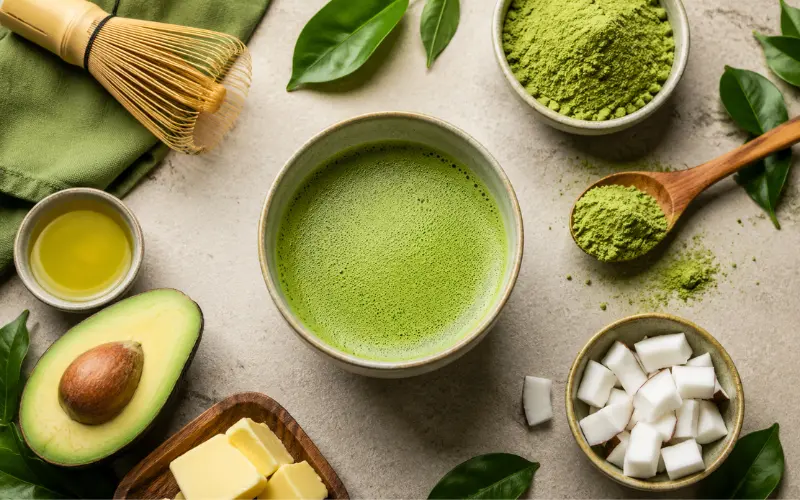
Here is what separates matcha from a plain cup of black coffee when you are following a low-carb lifestyle.
Steady, Jitter-Free Energy
Matcha contains both caffeine and L-theanine, an amino acid that slows the release of caffeine into your bloodstream. The result is alertness without the jittery crash many people get from coffee. This pairing is especially useful on keto, when blood sugar is already more stable and you do not want caffeine spikes fighting against that stability.
Support for Fat Metabolism
Matcha is rich in catechins, particularly EGCG, a compound that has been studied for its role in supporting the body’s use of fat for fuel. When you combine matcha with added MCT oil, which converts quickly into ketones, you get a beverage that lines up naturally with how a ketogenic body prefers to generate energy.
A Genuine Antioxidant Boost
Because matcha involves consuming the whole tea leaf rather than steeping and discarding it, you get a much higher concentration of antioxidants than you would from a standard cup of green tea. This includes catechins, chlorophyll, and small amounts of vitamin C.
Blood Sugar Friendliness
Several studies on green tea catechins point to modest improvements in insulin sensitivity. That makes matcha a smart pairing for keto, since one of the diet’s core goals is also reducing blood sugar volatility.
Zero Guilt, Zero Sugar Crash
Because well-formulated keto matcha powder skips added sugar, you avoid the mid-morning energy dip that comes from sweetened lattes. This is arguably the single biggest reason people search for keto matcha powder benefits in the first place.
My Experience
After trying both plain ceremonial matcha and keto matcha blends, I found that the biggest difference was convenience rather than results. Pure matcha with added MCT oil gave me the same steady energy as pre-mixed keto versions, while making it easier to control the sweetness and ingredient quality.
Keto Matcha Powder vs Plain Matcha: What’s the Difference?
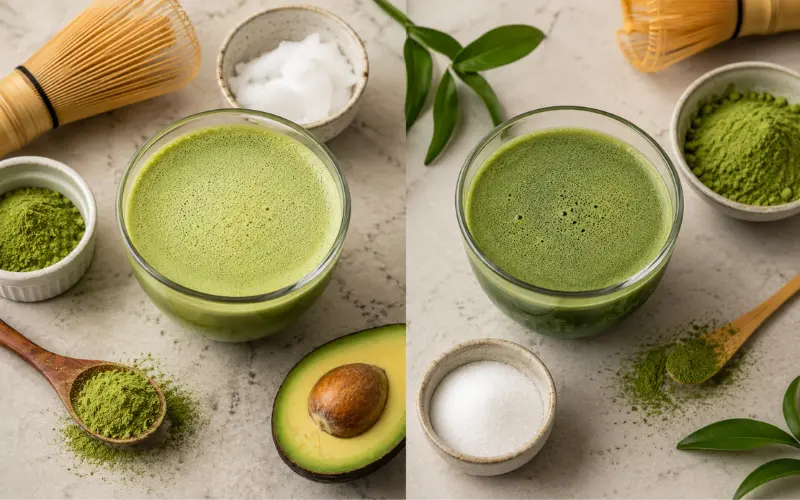
| Feature | Plain Ceremonial Matcha | Keto Matcha Powder (Blended) |
|---|---|---|
| Added fats (MCT, butter powder) | No | Often yes |
| Sweetener | None | Usually stevia or monk fruit |
| Net carbs per serving | Close to 0g | Typically 0 to 1g |
| Ready-to-drink convenience | Requires whisking and your own milk | Often single-serve, just add water |
| Best for | Purists, culinary use, ceremonial prep | Busy mornings, travel, meal replacement style drinks |
Both fit a ketogenic diet. The choice comes down to convenience versus control. Plain matcha lets you pick your own fats and sweeteners. Blended keto matcha powder does the formulation for you.
Comparing the Top Keto Matcha Powder Brands
Two names come up constantly when people search for the best keto matcha powder: Harmony Keto Matcha and Frozen Bean Keto Matcha. Here is an honest side-by-side.
| Brand | Format | Net Carbs | Fat Source | Notable Detail |
|---|---|---|---|---|
| Harmony Keto Matcha | Single-serve stick packets | About 1g net carb | Real butter powder plus MCT oil powder | Stevia-sweetened, no sucralose or artificial sweeteners |
| Frozen Bean Keto Matcha | Single-serve stick packets, 20 count | Zero to low net carbs | MCT oils | Marketed for energy, focus, and metabolism support |
| Pure ceremonial matcha plus DIY MCT oil | Loose powder, you build the drink | Under 1g net carb | Whatever you add yourself | Cheapest per serving if you already own MCT oil |
If you want convenience and do not mind paying a premium for pre-measured sticks, either Harmony or Frozen Bean will work well. If you already keep MCT oil and unsweetened milk alternatives on hand, buying plain high-quality matcha and building your own latte is the more cost-effective route long term, often by half the price per serving.
Where to Buy Keto Matcha Powder
Availability varies more than people expect, so here is where shoppers are actually finding these products.
- Direct from brand websites. Harmony and Frozen Bean both sell through their own online stores, which usually means the freshest stock and access to bundle discounts.
- Amazon. Both single-serve stick formats and loose powder options are widely available, often with subscription discounts for repeat buyers.
- Walmart. Keto matcha powder at Walmart has expanded in the last year, mostly in the tea and supplement aisles, though selection varies by store and region. Checking Walmart’s website before an in-store trip will save you a wasted drive.
- Sprouts Farmers Market. Sprouts carries a rotating selection of clean-label matcha products, including some keto-formulated options, particularly in its supplement and specialty tea sections.
- Specialty tea retailers. Smaller Japanese tea importers sometimes carry ceremonial-grade ungraded matcha that is naturally keto-friendly, even without a “keto” label on the package.
A quick tip: always check the ingredient label rather than relying on the word “keto” on the front of the box. Some products use that word loosely while still containing small amounts of added sugar.
How to Make a Keto Matcha Latte at Home
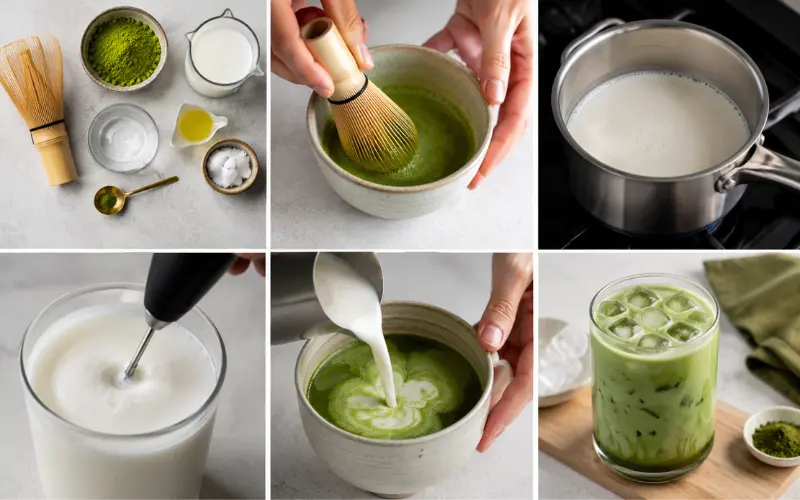
This keto matcha powder recipe takes under three minutes and costs a fraction of a coffee shop version.
What you need:
- 1 teaspoon (about 1 to 2 grams) of pure matcha powder, or one stick of a pre-blended keto matcha mix
- 2 ounces of hot water, kept below 185°F so the matcha does not turn bitter
- 6 ounces of unsweetened almond, coconut, or macadamia milk
- 1 teaspoon MCT oil (skip this if your matcha already contains added fat)
- Stevia or monk fruit drops, to taste
Steps:
- Whisk the matcha powder into the hot water using a bamboo whisk or a small frother until it turns smooth and slightly foamy.
- Warm your milk of choice, either on the stove or in the microwave.
- Add the MCT oil to the warm milk and blend briefly with a handheld frother.
- Pour the milk mixture over the whisked matcha.
- Sweeten to taste and enjoy hot, or pour over ice for a cold version.
This drink comes in at roughly 1 gram of net carbs and delivers steady energy that typically lasts three to four hours without a crash.
How to Choose the Best Keto Matcha Powder
Not all products marketed as keto actually deserve the label. Use this checklist before buying.
- Check net carbs, not just total carbs. Fiber does not count against you on keto, so look at the net carb number specifically.
- Scan for hidden sugars. Maltodextrin, dextrose, and cane sugar are common in matcha blends that are not truly low-carb.
- Look for real fat sources. MCT oil powder and grass-fed butter powder are better indicators of a genuinely keto-formulated product than a “keto-friendly” label alone.
- Confirm the sweetener. Stevia and monk fruit are keto-appropriate. Some sucralose-sweetened products are technically low-carb but less favored by strict keto followers.
- Consider the grade. Ceremonial-grade matcha has a smoother, less bitter taste and higher antioxidant density than culinary-grade, which is better suited for baking or blending into recipes.
- Check the origin. Japanese-grown matcha, particularly from regions like Uji or Nishio, tends to have stricter quality standards than lower-cost alternatives grown elsewhere.
Common Mistakes to Avoid
- Using boiling water. It scorches the delicate leaf and creates a bitter, grassy taste.
- Assuming all matcha lattes are keto. Coffee shop versions almost always contain simple syrup or sweetened milk.
- Skipping the fat. Matcha alone provides energy, but pairing it with a fat source is what makes it satisfying enough to work as a light meal replacement on keto.
- Buying based on color alone. A vivid green color is a good sign, but it does not guarantee the product is free of added sugar. Always read the label.
Frequently Asked Questions
1. Is keto matcha powder actually keto-friendly?
Yes, when it is unsweetened or sweetened only with stevia or monk fruit, keto matcha powder typically contains 0 to 1 gram of net carbs per serving, which fits easily within a ketogenic diet.
2. What is the difference between keto matcha powder and regular matcha?
Regular matcha is just ground green tea leaf. Keto matcha powder is often the same base ingredient blended with MCT oil powder, butter powder, or a keto-safe sweetener to create a ready-to-drink latte mix.
3. Does keto matcha powder help with weight loss?
It may support weight management indirectly. The catechins in matcha, especially EGCG, have been studied for their role in fat oxidation, and the added MCT oil can promote satiety, which may help reduce overall calorie intake.
4. Can I drink keto matcha powder every day?
Most people can enjoy one to two servings daily without issue, since matcha contains less caffeine than coffee. If you are sensitive to caffeine, start with a smaller amount and see how your body responds.
5. Where can I buy keto matcha powder near me?
Walmart and Sprouts Farmers Market both carry keto matcha powder in select locations, and availability is expanding. Brand websites and Amazon remain the most reliable options if your local store is out of stock.
6. Is Harmony Keto Matcha or Frozen Bean Keto Matcha better?
Both are solid choices. Harmony leans on real butter powder plus MCT oil for its fat source, while Frozen Bean focuses on MCT oils alone. The better pick often comes down to taste preference and whether you want a buttery or a lighter latte texture.
7. How many carbs are in a serving of keto matcha powder?
Most single-serve keto matcha sticks contain around 1 gram of net carbs, though this varies slightly by brand, so it is worth checking the nutrition label directly.
8. Can I make my own keto matcha powder at home?
Yes. Buy pure, unsweetened ceremonial-grade matcha and add your own MCT oil, unsweetened milk alternative, and stevia. This is usually the cheapest way to enjoy a keto matcha latte.
9. Does keto matcha powder taste different from regular matcha?
Blended versions often taste creamier and slightly sweeter due to the added fat and stevia, while pure matcha has a more traditional, earthy, umami flavor.
10. Is keto matcha powder good for beginners on a ketogenic diet?
Yes. It is one of the easier ways to add a low-carb, functional beverage to a keto routine without needing to measure or calculate carbs from scratch, since most reputable brands do that work for you.
Final Thoughts
Keto matcha powder earns its popularity honestly. It delivers the antioxidant density and calm energy of traditional matcha while staying aligned with a low-carb lifestyle, especially when brands add real fat sources like MCT oil or butter powder instead of sugar. Whether you reach for a convenient single-serve stick from Harmony or Frozen Bean, or you prefer to build your own latte from pure ceremonial-grade matcha, the key is reading the label rather than trusting the packaging alone. Do that, and you will have a reliable, sugar-free ritual that fits your goals instead of working against them.