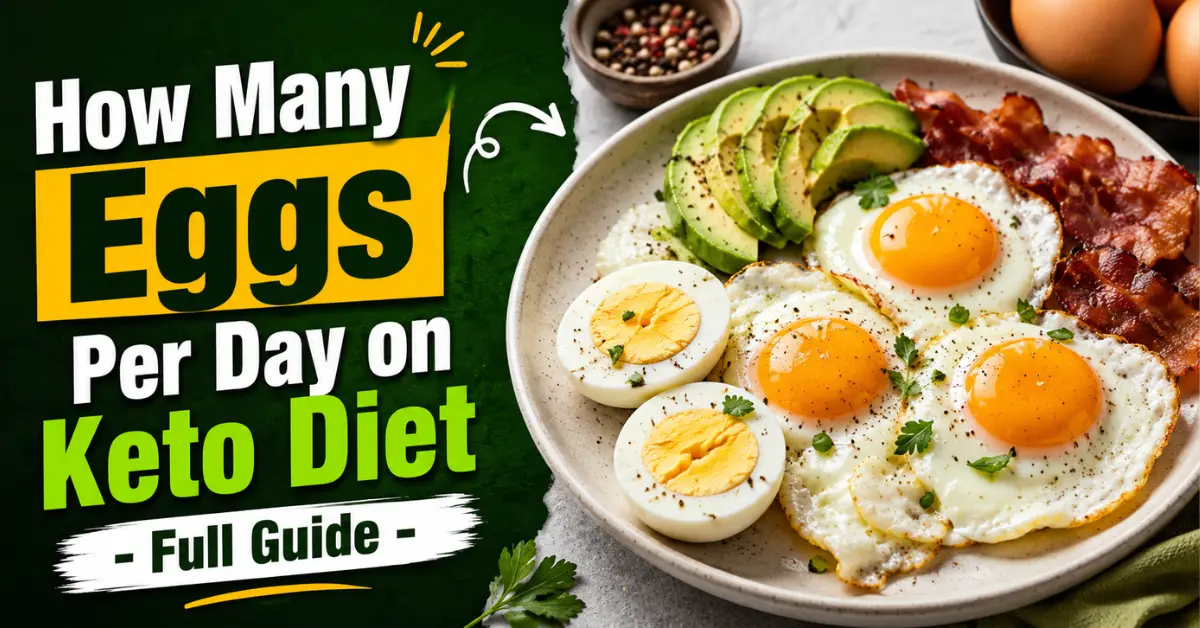
If you’ve just started a ketogenic diet, one question probably shows up faster than ketosis itself: How Many Eggs Per Day on Keto Diet is actually okay? It’s one of the most Googled questions in the keto world, and yet most answers either give you a vague “it depends” or a suspiciously round number with no real explanation behind it.
So let’s fix that. This article gives you a direct, practical answer — backed by nutrition science, not guesswork.
For most healthy adults, eating 2 to 4 eggs per day on keto is a solid, sustainable target. Some people eat more — 5 or 6 — without any issue. The actual ceiling depends on your total calorie goal, protein targets, and individual health status. There is no universal hard limit, but context matters, and we’ll walk through all of it below.
Why Eggs Are a Near-Perfect Keto Food
Before answering how many eggs per day on keto you should eat, it helps to understand why eggs belong on this diet in the first place.
A standard large egg contains roughly:
- 70 calories
- 5 grams of fat
- 6.3 grams of protein
- Less than 1 gram of carbohydrates (around 0.6g)
That macronutrient split — near-zero carbs, moderate fat, solid protein — maps almost perfectly onto what the ketogenic diet requires. Most keto eating plans target 60–75% of calories from fat, 20–30% from protein, and under 10% from carbs. Eggs fit that ratio naturally without any mental math required.
Beyond macros, eggs deliver vitamins A, D, E, K, B12, riboflavin, and folate, plus minerals like iron, zinc, phosphorus, calcium, and potassium. The yolk holds most of this nutritional wealth, which is why skipping it to “save calories” often does more harm than good.
How Many Eggs Per Day on Keto Diet: A Practical Breakdown
Rather than one number, think in tiers:
- 2–3 eggs per day — The baseline. This works well for people who are combining eggs with other protein sources like chicken, beef, or fish. It keeps variety in your diet and covers your protein needs without over-relying on a single food.
- 4–6 eggs per day — Common among dedicated keto dieters, particularly those doing meal prep or keeping meals simple. At this level, you’re pulling in roughly 25–38g of protein from eggs alone. Still well within healthy range for most people.
- 6+ eggs per day — Not uncommon, particularly for people doing an egg fast or following a carnivore-adjacent keto approach. There’s no clear evidence that this harms healthy individuals, but variety in your diet is always worth prioritizing.
The bottom line: How Many Eggs Per Day on Keto Diet is “right” for you comes down to how eggs fit into your total daily macros — not some arbitrary ceiling.
What Actually Limits Your Egg Intake on Keto
This is where most competitor articles fall short. The question isn’t really about eggs — it’s about your overall macro budget.
- Calorie cap — Eggs are calorically dense. Three eggs is already around 210 calories. If you’re on a 1,600-calorie keto plan for weight loss, a 6-egg breakfast takes up nearly half your day’s budget before you’ve added butter, cheese, or avocado.
- Protein ceiling — On keto, too much protein can theoretically trigger gluconeogenesis — a process where the body converts excess amino acids into glucose. Whether this kicks you out of ketosis is debated, but most keto experts suggest keeping protein moderate, not sky-high.
- Digestive comfort — Some people simply don’t feel great eating large quantities of eggs daily. Variety in fat and protein sources — fatty fish, red meat, full-fat dairy — keeps the diet more sustainable and nutritionally complete.
- Cholesterol concerns — More on this below, because the science here is more nuanced than most articles admit.
The Cholesterol Question: What the Science Actually Says
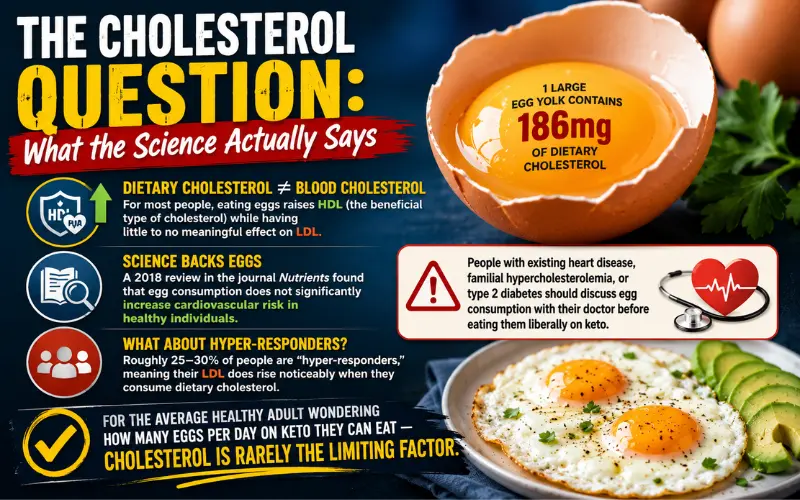
One large egg yolk contains around 186mg of dietary cholesterol. For decades, that number scared people into egg-white-only omelets. But the nutrition landscape has shifted significantly.
Current research distinguishes between dietary cholesterol and blood cholesterol. For most people, eating eggs raises HDL (the beneficial type of cholesterol) while having little to no meaningful effect on LDL. A 2018 review in the journal Nutrients found that egg consumption does not significantly increase cardiovascular risk in healthy individuals.
However, a subgroup of people — roughly 25–30% of the population — are classified as “hyper-responders,” meaning their LDL does rise noticeably when they consume dietary cholesterol. People with existing heart disease, familial hypercholesterolemia, or type 2 diabetes should discuss egg consumption with their doctor before eating them liberally on keto.
For the average healthy adult wondering how many eggs per day on keto they can eat — cholesterol is rarely the limiting factor.
Whole Egg vs. Egg White: Which Is Better on Keto?
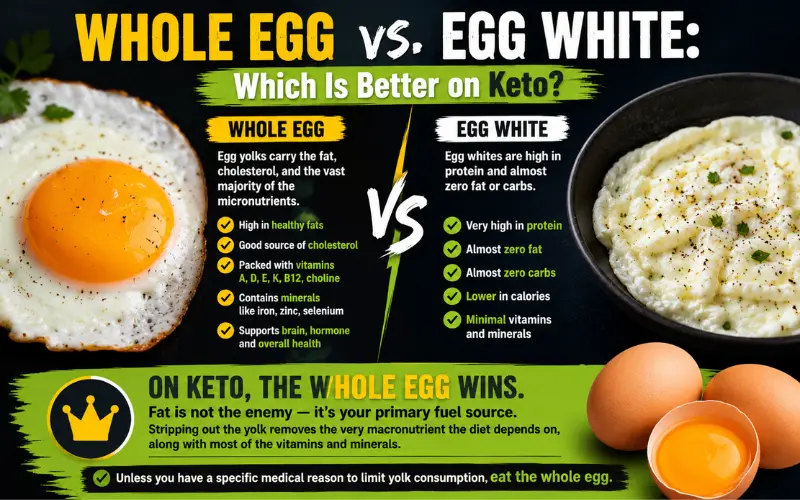
Egg whites are high in protein and almost zero fat or carbs. Egg yolks carry the fat, cholesterol, and the vast majority of the micronutrients.
On keto, the whole egg wins. Fat is not the enemy — it’s your primary fuel source. Stripping out the yolk removes the very macronutrient the diet depends on, along with most of the vitamins and minerals. Unless you have a specific medical reason to limit yolk consumption, eat the whole egg.
What Competitors Miss: The Cooking Method Matters
Most articles on How Many Eggs Per Day on Keto Diet focus entirely on egg count. What they rarely address is that how you cook your eggs affects the overall nutritional quality of your meal.
Scrambling eggs in seed oils (like vegetable or canola oil) introduces inflammatory fats that work against the anti-inflammatory goals many people have when starting keto. Instead:
- Cook eggs in butter, ghee, or avocado oil
- Add full-fat cheese for extra fat and satiety
- Pair with non-starchy vegetables (spinach, mushrooms, capsicum) to add micronutrients without meaningful carbs
- Use olive oil in egg salads rather than commercial mayonnaise with added sugars
How Many Eggs Per Day on Keto Diet The total nutritional picture of your egg-based meal — not just the egg count — is what determines how well it supports your keto goals.
What Is the Keto Egg Fast?
If you’ve landed on this article while researching aggressive keto strategies, you’ve probably seen the term “egg fast” floating around. It’s a short-term (3–5 day) protocol where you eat primarily eggs, butter, and full-fat cheese — typically a minimum of 6 eggs per day — with the goal of breaking through a weight loss plateau or re-entering ketosis after a slip.
How Many Eggs Per Day on Keto Diet Rules typically include eating an egg within 30 minutes of waking, consuming one tablespoon of butter or healthy fat per egg, and eating every 3–5 hours. It’s effective for some people but extremely restrictive and not nutritionally balanced for long-term use. Always consult a healthcare professional before attempting one.
Practical Tips for Eating Eggs on Keto
- Hard-boil a batch at the start of the week for quick grab-and-go protein
- Make egg cups in a muffin tin — fill with cheese, bacon, and vegetables for easy portion-controlled meals
- Use eggs as a base for frittatas that incorporate leafy greens and avocado
- Try deviled eggs as a satisfying keto snack with built-in healthy fat from mayo
- Rotate between soft-boiled, poached, scrambled, and baked preparations to avoid taste fatigue
FAQs: How Many Eggs Per Day on Keto
Q1: How Many Eggs Per Day on Keto Diet is considered safe?
For healthy adults, 2–6 eggs per day is generally well-tolerated. Most people do well in the 3–4 egg range. There’s no established medical maximum for healthy individuals, but your total calorie and macro targets should guide your intake.
Q2: Can eating too How Many Eggs Per Day on Keto Diet kick you out of ketosis?
Eggs themselves are very low in carbs and won’t kick you out of ketosis. However, if eggs push your protein intake significantly over your target, excessive gluconeogenesis could theoretically reduce ketone production. This is more of a theoretical concern than a common real-world problem.
Q3: Is it okay to eat eggs every single day on keto?
Yes, for most people. Eggs are one of the most nutrient-dense, keto-compatible foods available. Daily egg consumption is safe and common for keto dieters. Rotating cooking styles and pairing eggs with varied fat sources keeps the diet enjoyable and nutritionally complete.
Q4: Should I eat egg yolks or just egg whites on keto?
Whole eggs — including yolks — are preferred on keto. The yolk provides the healthy fats your body needs for ketosis, as well as the majority of the egg’s vitamins and minerals. Egg whites alone are high in protein but low in fat, which isn’t ideal for a high-fat diet.
Q5: Does eating eggs raise cholesterol dangerously on keto?
For most people, egg consumption raises HDL (good cholesterol) without significantly increasing LDL. A minority of people are “hyper-responders” who may see LDL rise. If you have cardiovascular concerns, diabetes, or a family history of high cholesterol, consult your doctor about your specific situation.
Q6: What’s the best way to cook eggs on keto?
Cook eggs in butter, ghee, or avocado oil rather than seed oils. Pair with full-fat cheese, leafy greens, or avocado to round out your macros. Avoid commercial sauces or condiments with hidden sugars.
Q7: What happens if I eat 10+ eggs a day on keto?
While some people in keto communities report eating very high quantities of eggs, eating 10 or more per day isn’t recommended for most people. It can push protein too high, create nutritional monotony, and crowd out other important food sources like leafy vegetables and varied fats.
Q8: Can eggs help with weight loss on keto?
Yes. Protein and fat from eggs both contribute to satiety. Research shows that eating eggs at breakfast reduces overall calorie consumption throughout the day compared to high-carb alternatives. On keto, this appetite-suppressing effect supports a consistent calorie deficit.
Q9: Are free-range or pasture-raised eggs better for keto?
Pasture-raised eggs have slightly higher omega-3 fatty acid content and more vitamin D than conventional eggs. They’re a better nutritional choice if your budget allows, but conventional eggs are still highly keto-compatible and beneficial.
Q10: What if I’m allergic to eggs — what can I eat instead on keto?
Good high-fat, low-carb protein alternatives include fatty fish (salmon, sardines, mackerel), full-fat cheese, cream cheese, meat, poultry, and tofu or tempeh for plant-based keto dieters.
Final Thoughts
So, How Many Eggs Per Day on Keto Diet? For most people: 2 to 4 eggs daily is a practical, sustainable, and nutritionally smart target. If your macros allow for more and you feel good eating them, 5 or 6 per day is perfectly reasonable. The key isn’t a rigid number — it’s understanding how eggs fit into your total daily calorie and macro picture.
How Many Eggs Per Day on Keto Diet are one of the rare foods that were tailor-made for the ketogenic diet. They’re cheap, fast to prepare, packed with fat and protein, nearly zero in carbs, and loaded with micronutrients. Whether you’re scrambling them in butter at breakfast or hard-boiling them for a mid-afternoon snack, they deserve a permanent place in your keto kitchen. Use them wisely, vary your cooking methods, pair them with quality fats and vegetables, and let your overall macro targets — not fear — guide how many you put on your plate each day.