It’s 3 p.m. Your lunch has worn off, your energy is dipping, and the vending machine is calling your name. This is the moment that can make or break a keto diet. Choosing the right keto friendly snacks at this point in the day often determines whether you stay in ketosis or reach for something that quietly knocks you out of it.
This guide goes beyond a simple list of keto friendly snacks. You’ll learn how to evaluate any snack in seconds, when snacking actually supports your health and weight-loss goals, and which common mistakes cause people to fall out of ketosis without even realizing it.
What Actually Makes a Snack Keto-Friendly?
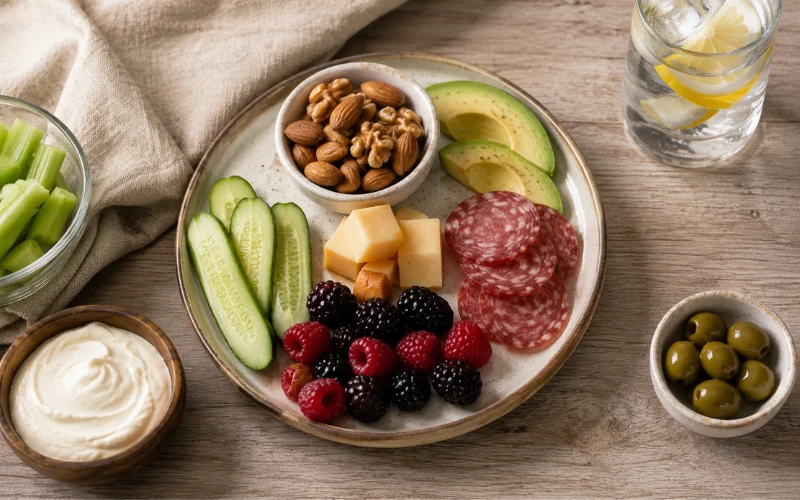
Not every “low-carb” option qualifies as one of the best keto friendly snacks. To stay in ketosis, most people need to keep their daily net carb intake between 20 and 50 grams, and keto friendly snacks can quickly use up that allowance if you aren’t paying close attention to ingredients and portion sizes.
Here’s the formula that matters most when choosing keto friendly snacks:
Net carbs = Total carbs − Fiber − Sugar alcohols
A snack with 10 grams of total carbs but 8 grams of fiber only costs you 2 net carbs. That’s why a handful of raspberries can fit into a keto day while a “diet” granola bar with 3 grams of fiber and 18 grams of total carbs cannot.
When you’re choosing keto friendly snacks, look for:
- 5 grams of net carbs or fewer per serving: ideally closer to 2 to 3 grams for something you snack on daily
- At least 5 to 7 grams of protein or healthy fat: so the snack actually satisfies you
- Minimal added sugar: including “natural” sweeteners like honey or agave, which still raise blood sugar
- Whole or minimally processed ingredients: since heavily processed low-carb products often use fillers that spike insulin anyway
The 30-Second Keto Snack Test
Before you buy or make any snack, run it through these three quick questions. This is the fastest way to filter out marketing gimmicks and find options that genuinely fit your day.
What’s the net carb count per actual serving I’ll eat?
Not the serving size on the label. If you’ll eat the whole bag, calculate for the whole bag.
Does it have protein or fat to go with those carbs?
Carbs alone, even low ones, spike hunger again within an hour.
Would I recognize the first three ingredients?
If the label reads like a chemistry set, your body has to work harder to process it, and blood sugar stability often suffers.
If a snack passes all three, it earns a spot in your rotation. If it fails even one, it’s worth a second look before you commit to it regularly.
The Best Keto friendly Snacks, Organized by Craving
Most people don’t crave “a keto snack.” They crave something crunchy, something sweet, or something they can eat with one hand while working. Here’s how to satisfy each craving without derailing your progress.
When You Want Something Crunchy
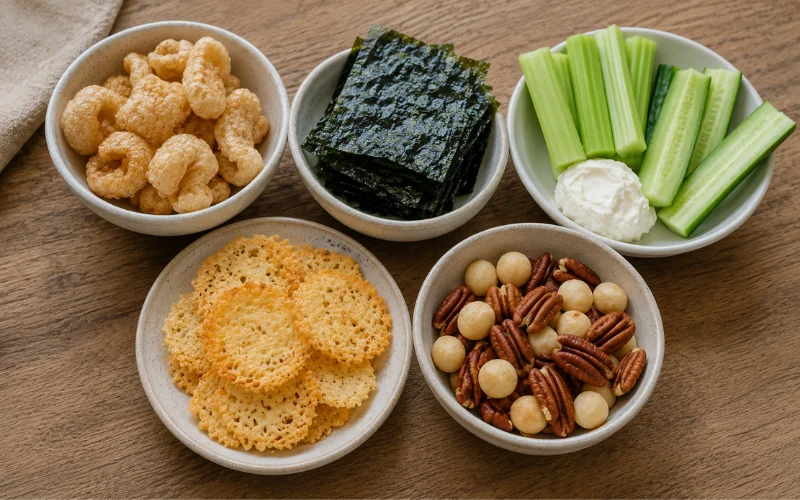
- Pork rinds (zero carbs, high protein)
- Roasted seaweed snacks
- Celery or cucumber slices with cream cheese
- Parmesan crisps, baked until crunchy
- Macadamia nuts or pecans, measured out ahead of time
When You Want Something Sweet
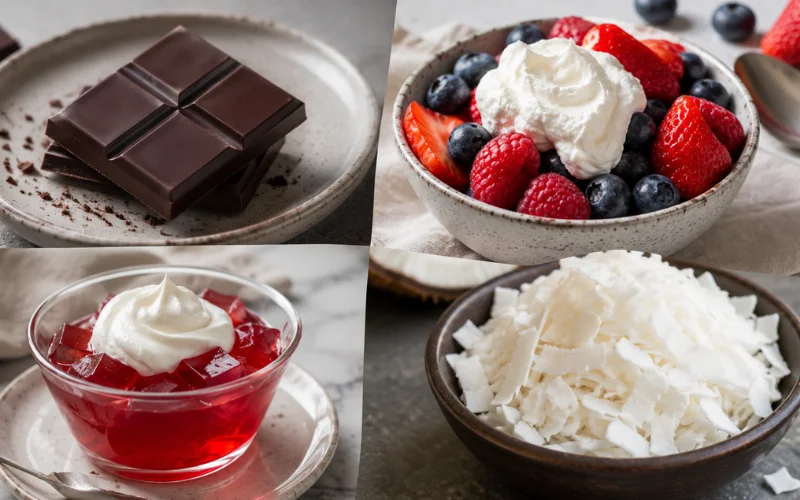
- Dark chocolate, 85% cacao or higher, two squares
- Fresh berries with a dollop of unsweetened whipped cream
- Sugar-free gelatin with a splash of heavy cream
- A small handful of coconut flakes, unsweetened
When You Want Something Salty and Savory
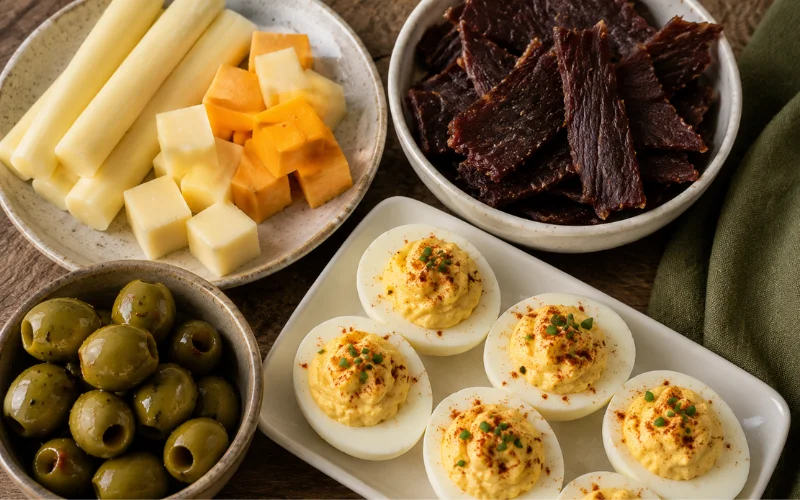
- String cheese or cheese cubes
- Beef or salmon jerky without added sugar
- Olives, especially briny green ones
- Deviled eggs made in advance
When You Need Something Fast and Portable
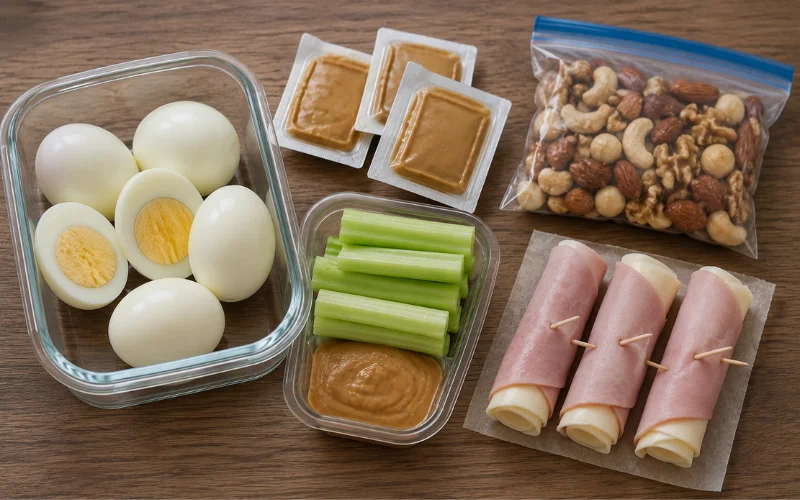
- Hard-boiled eggs, prepped in batches
- Single-serve nut butter packets with celery
- Pre-portioned nut mixes
- Meat and cheese roll-ups
Keeping two or three options from each category ready in your fridge or bag means you’re never one hungry moment away from grabbing whatever’s easiest, even when it isn’t keto-friendly.
Keto friendly Snacks and GLP-1 Medications: What Changes
If you’re using a GLP-1 medication like semaglutide alongside a keto approach, your snacking needs look different from the general keto population, and this is something most guides on this topic don’t mention at all.
GLP-1 medications slow digestion and reduce appetite significantly, which means:
Smaller portions matter more than usual.
A serving that once felt small may now be more than enough, so pay attention to actual hunger rather than habit.
Protein becomes the priority.
Reduced appetite makes it easy to under-eat protein, which can lead to muscle loss over time. Choose options built around protein first, like jerky, cheese, or eggs, rather than fat-heavy choices alone.
Nausea can make crunchy or dry snacks harder to tolerate.
Softer options like cottage cheese or smoothies with MCT oil are often easier on the stomach during this adjustment period.
Talk to your prescribing doctor about how your snacking should evolve as your appetite changes. This isn’t something a food label can tell you.
When Should You Actually Snack on Keto?
This question matters as much as what you eat. Snacking isn’t inherently good or bad. It depends on why you’re reaching for food.
Snacking helps when:
- There’s a genuine gap of five or more hours between meals
- You’re training or physically active and need sustained energy
- Blood sugar dips are causing real symptoms like shakiness or brain fog
Snacking works against you when:
- You’re eating out of boredom, stress, or habit rather than hunger
- You’re grazing throughout the day instead of eating structured meals
- You’re using snacks to avoid preparing an actual meal
A helpful habit is pausing for ten seconds before reaching for a snack and asking, “Am I actually hungry, or am I just used to eating right now?” This single habit does more for consistency than any specific food choice.
Common Mistakes That Quietly Wreck Keto Snacking
Even careful eaters fall into these traps:
- Trusting “keto” on the front of the package: These claims aren’t regulated the way you’d expect. Always flip to the nutrition label and check net carbs yourself.
- Overdoing nuts: They’re keto-friendly, but easy to overeat. A quarter cup of almonds has roughly 3 grams of net carbs and 200 calories, and it’s easy to eat triple that without noticing.
- Forgetting hidden carbs in drinks: A flavored coffee creamer or a “sugar-free” latte syrup can add more carbs than an actual snack would.
- Assuming sugar alcohols are free: Maltitol, in particular, affects blood sugar more than people expect and can also cause digestive discomfort in larger amounts.
- Skipping protein at snack time: A purely fatty snack, like a spoonful of coconut oil, won’t keep you satisfied the way a protein-fat combination will.
Simple Keto friendly Snacks You Can Make in Minutes
Store-bought options are convenient, but homemade snacks are often cheaper and let you control every ingredient.
- Baked cheese crisps: Small mounds of shredded cheddar or parmesan, baked at 400°F for 5 to 6 minutes until golden and crisp.
- Egg salad lettuce cups: Classic egg salad spooned into butter lettuce leaves instead of bread.
- No-bake fat bombs: Coconut oil, almond butter, and a pinch of cocoa powder, frozen in small silicone molds.
- Cucumber and tuna bites: Thick cucumber slices topped with a spoonful of tuna salad.
Each of these takes fifteen minutes or less and stores well in the fridge for a few days, so you can prep a batch once and stay stocked all week.
Frequently Asked Questions
How many net carbs should a keto snack have?
Aim for 5 grams of net carbs or fewer per snack, ideally closer to 2 to 3 grams if you’re snacking more than once a day. This leaves room in your daily carb budget for actual meals.
Are keto friendly snacks the same as low-carb snacks?
Not always. Low-carb snacks can still contain enough carbs to slow or stop ketosis, especially if they rely on sugar alcohols or hidden starches. True keto-friendly options are built specifically to stay within a strict net carb limit.
Can I eat fruit as a keto snack?
Yes, in small amounts. Berries, especially raspberries and blackberries, are lower in sugar and higher in fiber than most fruits, making them one of the few fruit-based options that fit comfortably into a low-carb day.
What’s the best keto snack for weight loss specifically?
Protein-forward snacks like jerky, hard-boiled eggs, or cheese tend to support weight loss best, since protein keeps you fuller for longer and requires more energy to digest than fat or carbs alone.
Is it bad to snack too often on keto?
It can be, if snacking becomes a habit rather than a response to real hunger. Frequent grazing can also make it harder to gauge your true daily carb intake accurately.
Do keto friendly snacks expire faster than regular snacks?
Homemade options made with fresh dairy or eggs typically last 3 to 5 days refrigerated. Store-bought options like jerky or nut-based bars often have a longer shelf life due to lower moisture content.
Can I have keto friendly snacks if I’m on a GLP-1 medication?
Yes, but portion sizes and priorities shift. Focus on smaller, protein-rich snacks and check in with your doctor about how your needs may change as your appetite decreases.
What should I avoid when buying packaged keto friendly snacks?
Watch for maltitol, added sugars disguised under other names, and inflated serving sizes that make the carb count look lower than what you’d realistically eat in one sitting.
Final Thoughts
Choosing keto friendly snacks isn’t about memorizing a perfect list of foods. It’s about understanding a few simple principles, keeping net carbs low, balancing protein and healthy fats, and snacking only when you’re genuinely hungry. Once those habits become second nature, picking the right keto friendly snacks gets much easier, whether you’re walking through the grocery store or reaching into your fridge at 3 p.m. for something satisfying that keeps you in ketosis.