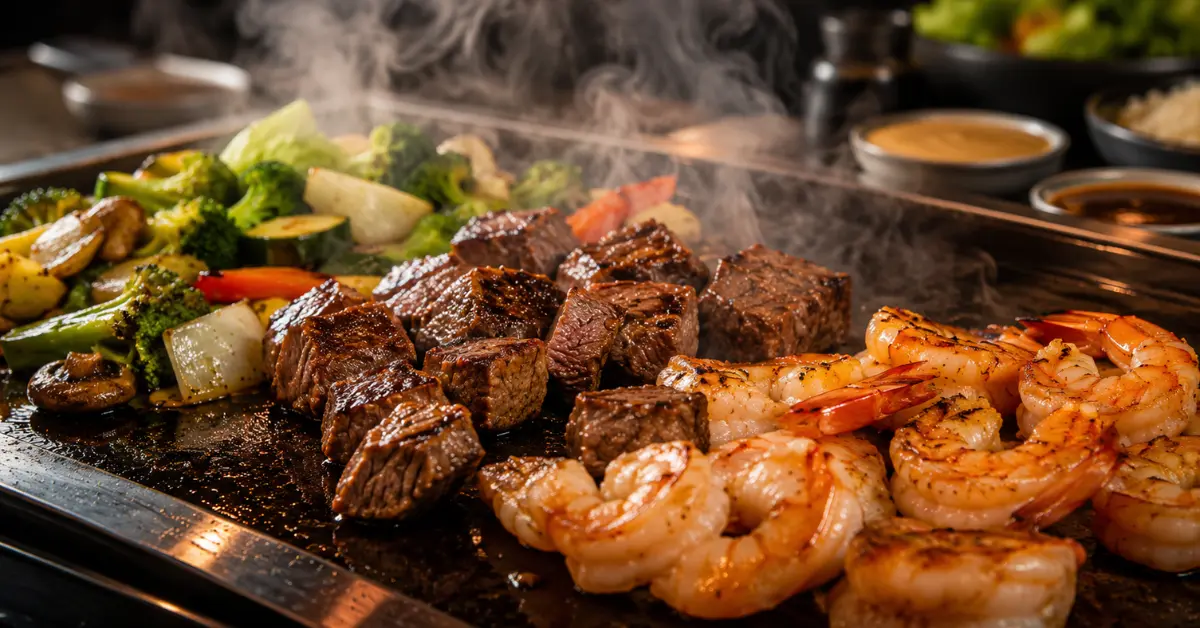
Yes, you can absolutely eat keto hibachi but only if you control three things: the sauce, the fried rice, and the protein marinade. Traditional hibachi at a restaurant is built around sugar-heavy teriyaki, white rice, and sauces loaded with hidden carbs, which is exactly why most keto eaters get burned ordering it out. Made at home with the right swaps, a full keto hibachi dinner (protein, veggies, and yum yum sauce) lands around 400–450 calories and just 5–7g net carbs per serving.
The good news is that keto hibachi isn’t a compromise it’s arguably better than the restaurant version, because you control exactly what goes into the soy sauce, the butter, and the “rice.” Below, you’ll find the direct breakdown of what makes hibachi keto-friendly or not, a full recipe with real nutrition numbers, and the long-tail variations (chicken, steak, shrimp, fried rice, sauces) people search for most.
| Hibachi Component | Restaurant Version | Keto Hibachi Swap |
|---|---|---|
| Rice | White rice, ~45g carbs | Cauliflower rice, ~5g carbs |
| Sauce | Teriyaki (sugar-based) | Coconut aminos + allulose |
| Protein | Often pre-marinated w/ sugar | Steak, chicken, shrimp marinated in keto sauce |
| Veggies | Onions, carrots, zucchini | Zucchini, mushrooms, broccoli (skip carrots) |
Keto hibachi made simple: skip the carb traps in restaurant sauce and rice, and make a steakhouse-quality dinner at home
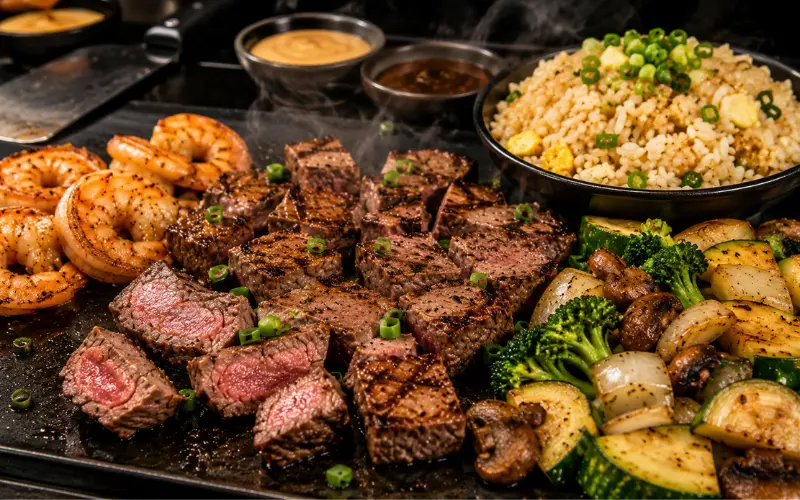
Keto hibachi done right:
skip the sugary teriyaki, swap white rice for cauliflower, and get a full recipe with real macros — under 7g net carbs per serving.
Wondering if hibachi is keto-friendly?
It can be once you fix the rice, sauce, and marinade. Full recipe, swaps, and macros inside, no guesswork.
Keto hibachi isn’t a compromise:
Ditch the sugar-loaded sauce and white rice, follow this exact recipe, and get a steakhouse-quality dinner at ~430 calories.
Why Regular Hibachi Isn’t Keto-Friendly
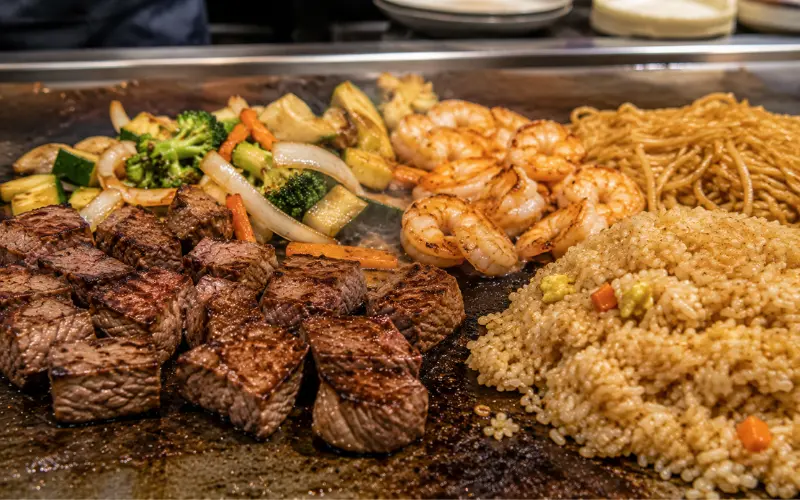
Hibachi gets its signature flavor from three carb-heavy sources, and understanding why each one is a problem is what lets you fix it without losing the taste you actually want.
The first issue is the rice. A standard hibachi fried rice serving at a restaurant carries 40–50g of carbs before you’ve eaten a single bite of protein. The second issue is the sauce. Classic teriyaki and the ginger sauce served at most hibachi grills both rely on sugar or honey for that glossy, sweet-savory finish and restaurant chefs rarely measure it lightly. The third issue is hidden in the marinade: many hibachi proteins are pre-marinated in sugar-based sauces before they ever hit the grill, which means even a “plain” steak or chicken order can carry carbs you didn’t ask for.
This is why keto hibachi has to be made or carefully customized rather than ordered blind. The technique (high heat, quick searing, butter finish) is naturally keto-compatible. It’s the ingredients riding along with it that need adjusting.
How to Make Keto Hibachi (Step-by-Step)
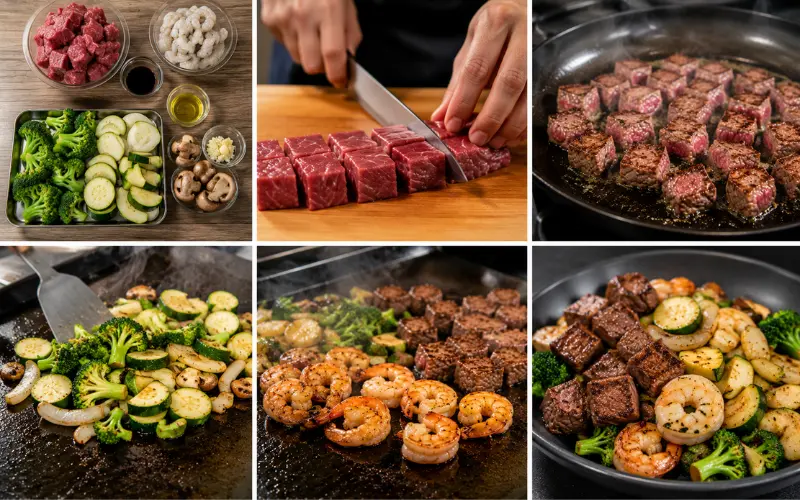
This recipe makes a complete keto hibachi dinner for 4, using a steak-and-shrimp combo, though chicken works identically.
Ingredients:
- 1 lb steak (ribeye or sirloin), cut into 1-inch cubes
- 1 lb shrimp, peeled and deveined
- 1 medium zucchini, sliced into half-moons
- 8 oz mushrooms, sliced
- 2 cups cauliflower rice
- ¼ cup coconut aminos (or low-sugar soy sauce)
- 2 tbsp avocado oil
- 3 tbsp butter, divided
- 1 tsp grated ginger
- 2 cloves garlic, minced
- 1 tbsp allulose or monk fruit sweetener
- Sesame seeds, optional
Yum Yum Sauce:
- ½ cup mayo
- 1 tbsp melted butter
- 1 tsp tomato paste
- ½ tsp garlic powder
- ½ tsp paprika
- 2 tbsp water
Directions:
Marinate
Combine coconut aminos, ginger, garlic, and sweetener in a bowl. Split the marinade between the steak and shrimp, and let both sit for at least 10 minutes (overnight develops more flavor if you’re prepping ahead).
Sear the steak
Heat avocado oil in a cast-iron skillet or wok over high heat until it’s just starting to smoke. Add the steak and sear for 2–3 minutes per side, then remove and set aside it’ll finish cooking later.
Cook the veggies
In the same pan, add 1 tbsp butter, zucchini, and mushrooms. Stir-fry for 4–5 minutes until just tender, then push to one side of the pan.
Add the shrimp
Cook shrimp for 1–2 minutes per side until opaque and curled, then return the steak to the pan along with the remaining butter to finish everything together.
Make the cauliflower rice
In a separate pan, sauté cauliflower rice in 1 tbsp butter for 5–6 minutes until tender but not mushy. This is your low-carb stand-in for the traditional fried rice.
Whisk the yum yum sauce
Combine all sauce ingredients in a small bowl until smooth — no cooking required.
Plate and serve
Serve everything family-style with yum yum sauce on the side, exactly like you’d get at the restaurant.
Macros per serving (1 of 4):
~430 calories, 32g fat, 34g protein, 6g net carbs.
Alternative Keto Hibachi Variations
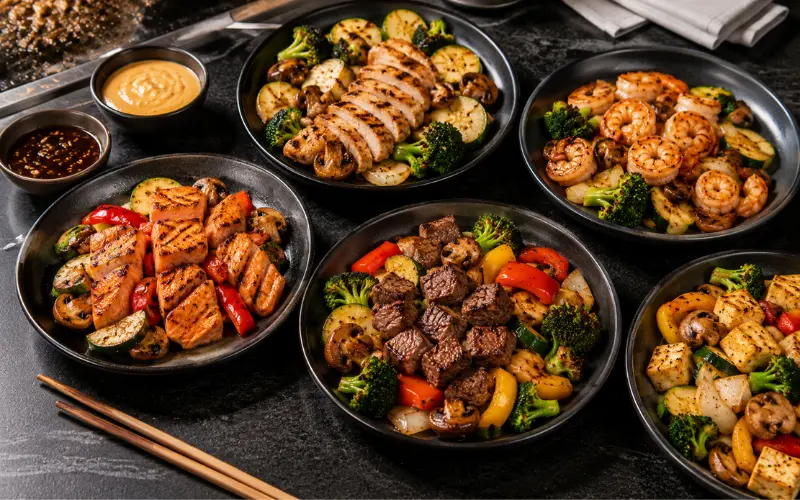
Not everyone wants steak and shrimp, and not every keto plan looks the same — here are the most common swaps people search for, and how each one changes the math.
Keto hibachi chicken:
Swap steak for boneless chicken thighs, cubed before marinating. Thighs hold up better to high heat than breast and won’t dry out, plus the slightly higher fat content fits keto macros more comfortably than lean chicken breast.
Dairy-free keto hibachi:
Replace butter with ghee or additional avocado oil at every step, and use an egg-free mayo alternative or skip the yum yum sauce in favor of a sesame-ginger dressing.
Keto hibachi fried rice only:
If you just want the side dish, double the cauliflower rice portion above and add a scrambled egg and a splash of coconut aminos for a more authentic fried-rice texture.
Vegetarian keto hibachi:
Use extra-firm tofu, pressed and pan-seared in the same marinade, alongside extra mushrooms and zucchini for protein and bulk but in Vegetarian keto hibachi.
Hibachi noodles, keto-style:
Swap noodles for shirataki (konjac) noodles, rinsed well and dry-fried for 2–3 minutes before adding to the stir-fry to remove excess moisture.
Frequently Asked Questions
1. Is hibachi keto-friendly?
Hibachi can be keto-friendly, but only when you remove the white rice and sugar-based sauces. The cooking method high-heat searing with butter and oil is naturally low-carb; it’s the traditional sides and marinades that need adjusting.
2. Can I order keto hibachi at a restaurant?
Yes, with modifications. Ask for no rice (or a double order of vegetables instead), request the protein grilled plain without pre-marinade, and ask if the ginger sauce is sugar-free many restaurants will substitute or skip it on request.
3. How many carbs are in keto hibachi chicken?
A homemade serving of keto hibachi chicken with cauliflower rice and vegetables typically runs 5–7g net carbs, depending on the sauce used and portion size.
4. What sauce is keto-friendly for hibachi?
Coconut aminos or a low-sugar soy sauce works as a base, and a homemade yum yum sauce made with mayo, butter, and spices (instead of ketchup-heavy versions) keeps things keto without sacrificing flavor.
5. What vegetables should I avoid in keto hibachi?
Skip carrots and corn, since both carry noticeably more carbs per serving than other hibachi vegetables. Zucchini, mushrooms, broccoli, and onions (in moderation) are better keto choices.
6. Can I make keto hibachi ahead of time?
Yes. The proteins can marinate up to 24 hours in advance, and the cauliflower rice and sauce both keep well in the fridge for 3–4 days, making this an easy meal-prep option.
7. Is yum yum sauce keto?
Traditional yum yum sauce often contains ketchup and sugar, which adds carbs. A keto version swaps in a small amount of tomato paste instead of ketchup, keeping the sauce under 1g net carb per tablespoon.
8. What’s the best protein for keto hibachi?
Steak, chicken thighs, and shrimp all work well because they’re naturally low-carb and high-fat or high-protein, which fits keto macros without needing any substitutions.
9. Can I use regular rice instead of cauliflower rice?
You can, but it will significantly raise the carb count roughly 45g of carbs per cup of white rice versus 5g for the same volume of cauliflower rice so it’s not recommended for a strict keto meal.
10. Is hibachi healthier than other Japanese steakhouse dishes?
When made keto-style, hibachi is one of the healthier options on a Japanese steakhouse menu, since it relies on lean protein and vegetables rather than breaded or fried components like tempura or katsu.
Final Thoughts
Keto hibachi isn’t a watered-down version of the original it’s the same bold, savory flavors built on a smarter foundation. Once you understand that the rice, sauce, and marinade are the only real obstacles, making it at home becomes simple, repeatable, and genuinely satisfying. Whether you’re cooking steak and shrimp together or keeping it simple with chicken, the formula above gives you a complete, macro-friendly dinner that holds up against any version you’d order out.