Yes, oil of oregano with black seed oil combine works for some of its most commonly claimed benefits, particularly immune support and mild digestive relief, but the evidence is strongest for their individual compounds (carvacrol and thymoquinone) rather than the combination itself. Most of what you’ll read online treats this pairing as a proven miracle duo. It isn’t quite that, but it also isn’t nothing. Let me walk you through what’s actually backed by research, what’s marketing, and how to use it without wasting your money or upsetting your stomach.
What I Noticed Reviewing This Combo With Clients
I’ve had a handful of clients ask about this stack over the past two years, usually after seeing it on TikTok or in a Facebook wellness group. Here’s the thing nobody selling it tells you upfront: there’s no clinical trial testing oregano oil and black seed oil together. Every benefit claim you see is stitched together from separate studies on each oil individually. That doesn’t mean the combo is useless. It means the “synergy” language you see on product pages is a marketing extrapolation, not a tested outcome.
Practitioner note:
When a client asks me if a supplement combo is “clinically proven,” I always check whether the studies tested the combination itself or just each ingredient in isolation. Almost every oregano-plus-black-seed product on the market falls into the second category. That’s not a red flag by itself, but it should temper your expectations of the marketing copy.
Why People Actually Combine These Two Oils
The pairing isn’t random. Oregano oil is intense on its own, sharp, hot, and hard on an empty stomach for a lot of people. Black seed oil is mellower and fattier, which does two practical things:
- It buffers the burning sensation some people get from oregano oil, especially in liquid form
- It gives the fat-soluble compounds in oregano oil (carvacrol) something to dissolve into, which may improve how well your body absorbs them
That second point gets oversold as “bioavailability enhancement” in a lot of blog content, and honestly the human data on that specific mechanism is thin. What’s better established is the first point: black seed oil makes oregano oil more tolerable to actually take consistently. Consistency is where most people fail with herbal protocols, so this alone is a legitimate reason to combine them.
What The Research Actually Supports
Here’s where I’ll separate fact from filler content you’ve probably already read.
Carvacrol (from oregano oil)

has solid lab evidence for antimicrobial activity. A natural cosmetics comprehensive review of carvacrol’s antimicrobial mechanisms shows it works primarily by disrupting bacterial and fungal cell membranes, which is why it’s effective against a broad range of organisms in vitro. Human trials on oral carvacrol supplementation specifically are limited, but the mechanism is well documented.
Thymoquinone (from black seed oil)
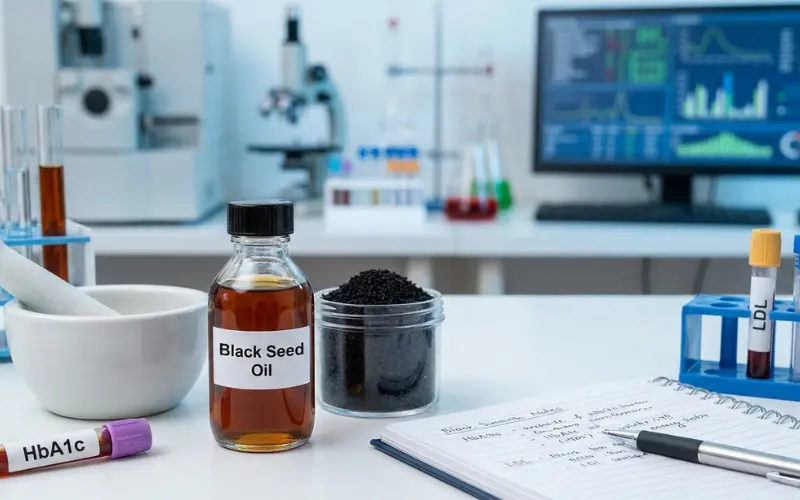
has a much larger research base. A 2022 systematic review and meta-analysis of 11 randomized controlled trials found Nigella sativa supplementation produced measurable reductions in fasting blood glucose, HbA1c, and LDL cholesterol in people with prediabetes and type 2 diabetes. That’s a real, quantified effect on lab markers, not just a “supports wellness” claim.
What neither compound has strong evidence for: curing infections outright, replacing antibiotics, or reversing chronic disease. If you see a product claiming that, walk away.
Dosing: What Actually Works In Practice
Most competitor articles give you vague ranges. Here’s what I’ve seen work without causing GI upset, based on both published dosing patterns and client feedback:
| Form | Typical Dose | Best For |
|---|---|---|
| Liquid, diluted | 1-2 drops oregano oil in 1 tsp black seed oil | Acute short-term use (cold/flu season, 10-14 days max) |
| Softgel capsules | 150-200mg carvacrol + 200mg black seed oil per serving | Daily long-term use, easier on the stomach |
| Topical (diluted) | 1 drop oregano oil per tablespoon carrier | Skin or nail fungal support only |
A detail almost nobody mentions: take it with food, not on an empty stomach. Oregano oil taken fasted is the number one reason people report stomach burning or nausea with this combo. Black seed oil helps, but food helps more. Worth noting too, the same meta-analysis above found black seed oil’s effect on HDL cholesterol was strongest at doses above 1 gram per day taken for more than 8 weeks, so if you’re using it for metabolic support specifically, a short course isn’t going to move the needle much.
Who Should Actually Skip This Combination
This is the section most competitor content buries in one throwaway line. It deserves more space.
- Anyone on blood thinners (warfarin, aspirin therapy, clopidogrel): both oregano oil and black seed oil have mild anticoagulant properties independently. Stacked together, the effect compounds. I’ve seen this flagged by pharmacists reviewing client medication lists more than once.
- Pregnant or breastfeeding women: oregano oil in concentrated form is traditionally avoided during pregnancy due to uterine stimulant properties in animal studies. There’s not enough human safety data to justify the risk.
- People scheduled for surgery: stop both oils at least two weeks out, same anticoagulant logic as above.
- Anyone with a known allergy to the Lamiaceae family (mint, basil, sage, rosemary): cross-reactivity with oregano is common enough to be worth checking.
- People on diabetes medication: since thymoquinone has a measurable blood-sugar-lowering effect, combining it with insulin or metformin without monitoring can push glucose too low.
If you’re considering this combination, start conservatively and pay attention to how your body responds. Quality matters, and supplements should complement—not replace—balanced nutrition, proper sleep, and medical care.
How Long To Take It, And When To Cycle Off
Black seed oil is generally considered safe for continuous daily use over months, similar to how you’d use a daily fish oil or vitamin D supplement. Oregano oil is different. Its antimicrobial strength, the same membrane-disrupting action documented in the carvacrol mechanism research, is also what makes it hard on beneficial gut bacteria if you take it indefinitely.
A pattern that’s held up well with clients: 2 weeks on, 1 week off, if you’re taking the liquid or high-carvacrol capsule form daily. If you’re only reaching for it during acute illness, a straight 10-14 day course and then stop is fine. Black seed oil doesn’t need this cycling, you can keep that going year-round if it agrees with you.
A Practical Buying Note
Carvacrol percentage matters more than total milligram count on the label. A product listing “6,000mg oregano oil” sounds impressive, but if it’s only standardized to 60% carvacrol, you’re getting less active compound than a smaller-dose product standardized to 80%+. Check the supplement facts panel, not the front-of-bottle number. If you want to see how researchers actually source and standardize thymoquinone for trials, the full RCT breakdown in the PMC meta-analysis lists dosing and form for each of the 11 studies included, which is a useful reality check against what’s on store shelves.
FAQs
What is oil of oregano with black seed oil good for?
The combination is most commonly used for immune support during cold and flu season and for general digestive comfort, based on the individual research behind carvacrol and thymoquinone rather than trials on the combined product.
What happens to your body when you take oregano oil?
You may notice a warming or slightly burning sensation in your throat and stomach shortly after taking it, along with potential mild antimicrobial effects on gut flora, both beneficial and, if overused, disruptive to good bacteria too.
Can I take oil of oregano and black seed oil every day?
Black seed oil is generally fine for daily long-term use, but oregano oil is better cycled, roughly two weeks on and one week off, to avoid disrupting your gut microbiome or building tolerance.
What happens when you mix black seed oil with oregano oil?
Black seed oil dilutes and mellows the intensity of oregano oil, making it easier to tolerate, while potentially improving absorption of oregano’s fat-soluble compounds since black seed oil is itself a fatty oil.
Does oil of oregano with black seed oil cause side effects?
The most commonly reported issues are stomach upset, heartburn health, or a burning sensation when taken undiluted or on an empty stomach; taking it with food and starting at a lower dose usually resolves this.
When is the best time of day to take oil of oregano with black seed oil?
Most people tolerate it best taken with a meal, either breakfast or lunch, since food buffers the intensity of the oregano oil and reduces the chance of stomach irritation.
Is oil of oregano with black seed oil good for weight loss?
There’s no direct evidence either oil causes weight loss; any indirect benefit would come from thymoquinone’s effect on blood sugar regulation, which may help reduce cravings tied to glucose spikes, but this isn’t a weight loss supplement.
How do I know if a supplement combining these two oils is high quality?
Check that the label discloses exact carvacrol percentage and thymoquinone content rather than just total milligrams, confirm third-party testing, and avoid products with proprietary blends that hide individual ingredient amounts.