Walk down any beauty aisle and you will see the word natural printed on almost every bottle. Yet very few of those products actually deserve the label. A natural cosmetic is not defined by a green leaf on the packaging. It is defined by what is inside the formula and how those ingredients interact with your skin.
This guide cuts through the marketing noise. You will learn what a natural cosmetic really is, how to read a label like a chemist, and which ingredients offer genuine benefits instead of just a pleasant scent. By the end, you will be able to walk into a store or browse online with real confidence instead of guessing.
What Is a Natural Cosmetic, Really?
A natural cosmetic is a product formulated mainly from ingredients derived from plants, minerals, or other naturally occurring sources, with minimal chemical processing. This does not mean the product is free of all synthetic elements. Many natural formulas still include a small percentage of lab-created preservatives or stabilizers to keep the product safe and effective over time.
The key difference between a natural cosmetic and a conventional one lies in the sourcing and processing of raw materials, not in whether every single molecule came from a plant. A shea butter moisturizer processed with minimal refinement counts as natural. A moisturizer built primarily from petroleum-derived silicones and synthetic fragrance does not, even if it contains a trace of aloe vera.
Why the Word Natural Is So Easy to Misuse
Here is something most articles will not tell you: in the United States, the term natural cosmetic has no strict legal definition enforced by the FDA. Brands can print it on packaging with very few consequences, as long as they avoid outright false claims. This gap is exactly why so many products marketed as natural still contain synthetic fragrance, parabens, or mineral oil derived from petroleum.
Look past the word natural on the front label and turn the product over. The ingredient list tells the real story, and it is listed in descending order by quantity. If water sits at the top followed by a long string of unrecognizable chemical names, the natural claim is doing more marketing work than actual formulation work.
How to Read a Natural Cosmetic Label Like a Pro
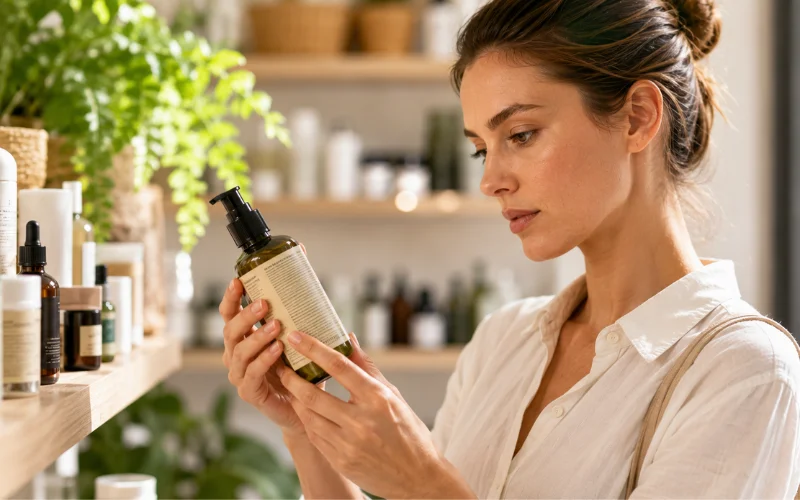
Reading a label does not require a chemistry degree, just a bit of practice.
Ingredients are listed by concentration, so the first five items make up the bulk of the product. Scientific names can look intimidating, but many are simply the botanical names for common plants. For example, Helianthus annuus seed oil is just sunflower oil, and Cocos nucifera oil is coconut oil.
Watch for these red flags that often hide behind a natural label:
- Fragrance or parfum listed without further detail, since this term can legally conceal dozens of undisclosed synthetic chemicals.
- Ingredients ending in “-paraben,” which are preservatives linked to hormone disruption concerns.
- Petrolatum or mineral oil, which are petroleum byproducts rather than plant-derived materials.
- Sodium lauryl sulfate, a harsh foaming agent that can strip the skin barrier.
None of these ingredients are automatically dangerous in small amounts, but their presence contradicts a genuine natural positioning.
Certifications That Actually Mean Something
Since the word natural is unregulated, third-party certifications carry far more weight than marketing copy.
Look for seals such as USDA Organic, COSMOS Organic, Ecocert, or the Natural Products Association seal. Each of these certifications requires independent auditing of the ingredient sourcing, manufacturing process, and packaging. A product carrying one of these seals has been verified by an outside body, not just by the brand’s own marketing team.
Certification is not the only path to a trustworthy natural cosmetic, but it removes the guesswork. Smaller indie brands sometimes use genuinely clean formulas without paying for certification, so do not dismiss a product just because it lacks a seal. Instead, treat certification as a strong positive signal and pair it with your own label reading.
The Skin Science Behind Natural Ingredients
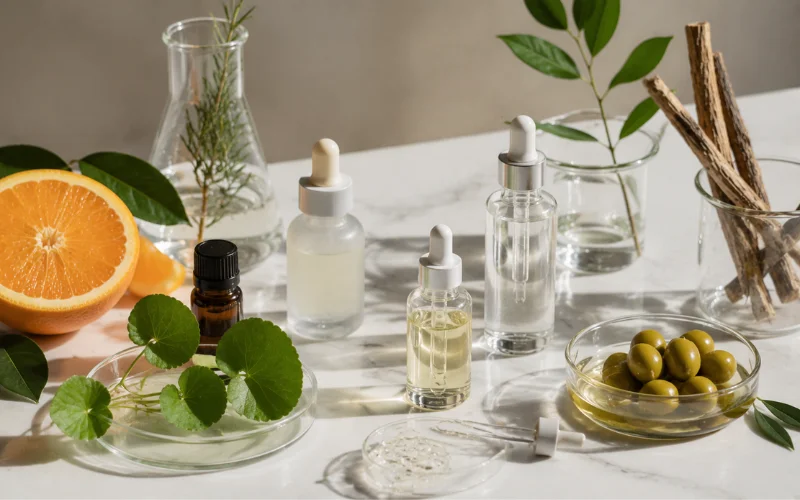
Natural does not automatically mean gentle, and this is a point most beauty articles skip entirely.
Essential oils such as citrus, peppermint, and cinnamon are completely plant-derived, yet they can trigger irritation, photosensitivity, or allergic reactions in sensitive skin. Poison ivy is also entirely natural, and nobody would rub that on their face. The real goal is not choosing natural over synthetic in every case. It is choosing ingredients that are proven safe and effective for your specific skin type, whatever their origin.
Some of the most well-researched natural ingredients include:
- Niacinamide derived from natural fermentation, which supports the skin barrier and evens tone.
- Squalane from olives or sugarcane, which mimics the skin’s own natural oils without clogging pores.
- Centella asiatica, commonly called cica, which calms redness and supports healing.
- Hyaluronic acid produced through natural fermentation, which draws moisture into the skin.
Pairing these ingredients with a basic understanding of your skin type will do more for your results than any label claim ever could.
Natural Cosmetic Products Worth Understanding by Category
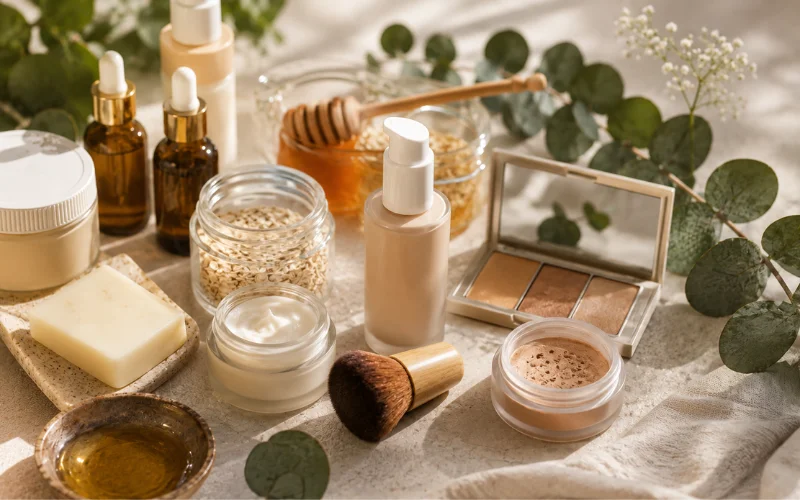
Different product categories carry different natural formulation challenges.
Foundation and other natural cosmetic makeup often rely on mineral pigments like iron oxides and zinc oxide instead of synthetic dyes. These minerals also provide gentle sun protection, though they should not replace a dedicated sunscreen. Natural skin care, including homemade options using ingredients like honey, oatmeal, and plant oils, can work well for basic hydration and gentle exfoliation, but homemade formulas lack the preservative systems that prevent bacterial growth, so they should be made in small batches and used within a week.
A natural cosmetic store, whether physical or online, often curates products more carefully than a general beauty retailer, but curation still varies widely between retailers, so apply the same label-reading habits everywhere you shop.
Building a Natural Skin Care Routine That Works
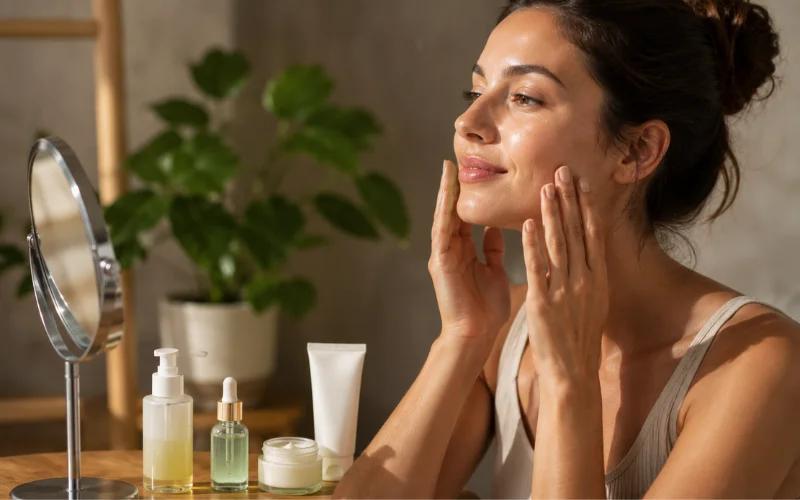
A good routine does not need ten products. It needs the right few, used consistently.
Start with a gentle cleanser free of sulfates, followed by a plant-based serum targeted to your main concern, whether that is hydration, tone, or texture. Finish with a natural moisturizer containing barrier-supporting ingredients like squalane or ceramides derived from plant sources. Mineral sunscreen during the day rounds out a routine that protects as much as it treats.
Introduce one new product at a time and wait a week before adding another. This makes it far easier to identify what is actually working, and what might be causing irritation.
FAQs About Natural Cosmetics
What are examples of natural cosmetics?
Examples include mineral-based foundations made with iron oxides and zinc oxide, cold-pressed plant oil moisturizers, shea butter body balms, clay-based cleansers, and lip products colored with beet or fruit extracts instead of synthetic dyes.
What makeup is 100% natural?
True 100 percent natural makeup is rare, since most formulas need at least a small amount of preservative or stabilizer to remain safe over time. The closest options are mineral makeup lines that use only crushed minerals and natural oils, along with certified organic brands that disclose every ingredient source.
What is a natural cosmetic?
A natural cosmetic is a beauty or skin care product formulated primarily with ingredients derived from plants, minerals, or other naturally occurring sources, processed with minimal chemical alteration, and generally free of synthetic fragrance, parabens, and petroleum-based fillers.
What is the most natural skin care brand?
No single brand holds this title, since natural formulation exists on a spectrum. The most reliable way to judge a brand is to check for third-party certifications like COSMOS Organic or Ecocert, then read the ingredient list yourself rather than relying on brand reputation alone.
Are natural cosmetics safer than synthetic ones?
Not automatically. Natural ingredients can still cause irritation or allergic reactions, and some synthetic ingredients are rigorously tested and perfectly safe. Safety depends on the specific ingredient and your individual skin, not on whether it came from a plant or a lab.
How can I tell if a natural cosmetic claim is misleading?
Check the ingredient list for vague terms like fragrance, along with parabens or mineral oil near the top of the list. A genuinely natural product will typically list recognizable plant-derived ingredients early and disclose fragrance sources clearly.
Do natural cosmetics have a shorter shelf life?
Many do, since they often use fewer synthetic preservatives. Store natural products away from heat and moisture, check for changes in smell or texture, and follow the expiration guidance on the packaging closely.
Can I make effective natural skin care at home?
Yes, for basic needs like gentle exfoliation or hydration using ingredients such as oats, honey, or plant oils. Homemade products lack a proper preservative system though, so make small batches and store them in the refrigerator to reduce bacterial growth.
Final Thoughts
Choosing a natural cosmetic comes down to curiosity rather than blind trust in a label. The word natural on its own tells you almost nothing, but a quick scan of the ingredient list tells you everything. Look for recognizable, plant-derived ingredients near the top, watch for vague terms like fragrance, and treat third-party certifications as a helpful shortcut rather than a final answer.
Your skin does not care about marketing language. It responds to what is actually in the formula and how well that formula suits your unique needs. Start reading labels the next time you shop, and you will find that choosing genuinely beneficial products becomes second nature within just a few tries.