Traveling should feel like a break, not a threat to your progress. Yet anyone who has stood in a crowded airport terminal scanning a rack of candy bars and pretzels knows the truth: staying on track away from home is hard. The good news is that with the right keto travel snacks packed ahead of time, you can walk past every vending machine without a second thought.
This guide goes beyond the usual “pack some nuts and jerky” advice. You’ll discover the best keto travel snacks for every type of trip, with ideas organized by travel scenario, the TSA and customs rules most articles skip, the science behind which sweeteners actually work well on keto, and a simple plan for getting back on track if you slip up while traveling. By the end, you’ll know exactly how to build a collection of keto travel snacks that keeps you prepared whether you’re driving cross-country or flying overseas.
Why Planning Your Snacks Matters
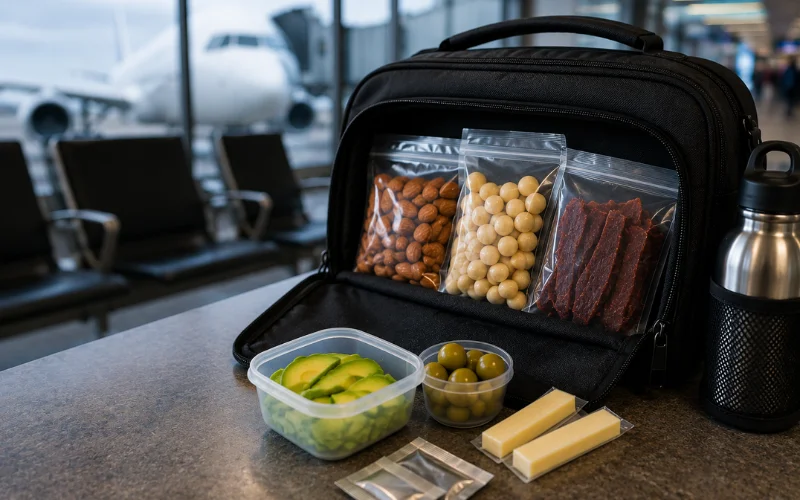
Airports, gas stations, and hotel lobbies are built around convenience, not nutrition. Most grab-and-go options are loaded with sugar, refined starch, or seed oils that can knock you out of ketosis within a single meal.
Packing your own keto travel snacks solves three problems at once:
- You avoid decision fatigue: When hunger hits at 30,000 feet, you grab what is already in your bag instead of settling for whatever is available.
- You control your macros: Pre-portioned snacks let you stick to your fat and protein targets without guesswork.
- You save money: Airport and highway markups are steep, and a stocked bag pays for itself after one trip.
A little prep the night before you leave saves you a lot of stress once you are on the move.
Best Options for Road Trips
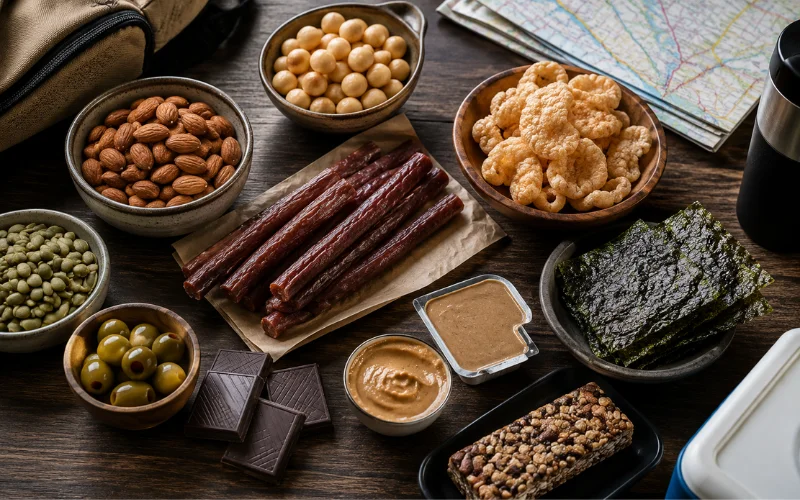
Road trips give you the most flexibility, since you have a car, a cooler, and often a hotel mini-fridge at your disposal. Split your snacks into two categories: shelf-stable and cooler-dependent.
Shelf-stable picks (no refrigeration needed):
- Beef, turkey, or venison meat sticks
- Roasted, unsweetened nuts and seeds (macadamias, almonds, pumpkin seeds)
- Pork rinds or pork rind “chips”
- Individual nut butter packets
- Low-carb protein bars with under 5 grams of net carbs
- Seaweed snacks
- Olives in shelf-stable pouches
- Dark chocolate (85% or higher), broken into single squares
Cooler-dependent picks (best for stops under 24 hours):
- Hard-boiled eggs, peeled and stored in a sealed container
- Cheese cubes, string cheese, or cheese crisps
- Guacamole cups
- Deli meat and cheese roll-ups
- Full-fat Greek yogurt with a splash of vanilla and a low-carb sweetener
Pack a small insulated bag with a couple of ice packs, and rotate the cooler items to the front so you are not digging through luggage at every stop.
Best Options for Flights (TSA Rules to Know)
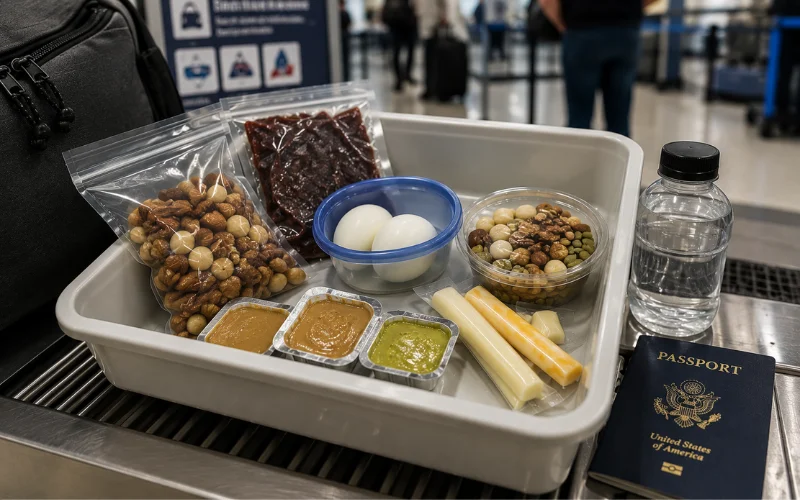
Flying is the scenario most guides gloss over, and it is where travelers get caught off guard most often. Before you pack keto travel snacks for a flight, keep these rules in mind:
- Solid snacks are fine: Jerky, nuts, cheese, and nut butter packets under 3.4 ounces can go straight through security in your carry-on.
- Liquids and gels follow the 3-1-1 rule: Guacamole, yogurt, and larger nut butter containers count as liquids or gels and must fit the standard size limit.
- Hard-boiled eggs are allowed: in a carry-on, but pack them in a sealed container to avoid a mess if your bag gets jostled.
- International flights vary by destination: Some countries restrict bringing in meat or dairy, so check the customs rules for your arrival country, not just the departure airport.
For a flight under five hours, meat sticks, a small bag of nuts, and a couple of cheese crisps are enough. For longer international flights, add a low-carb protein bar and a small container of olives for more staying power.
Best Options for International Trips
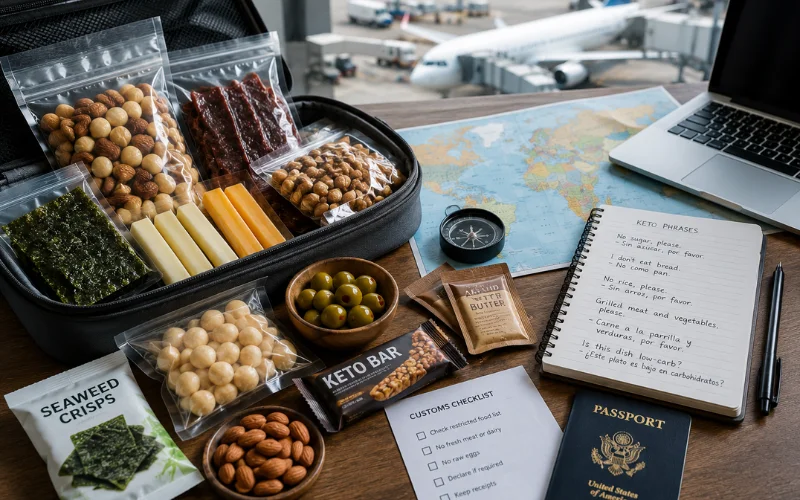
International travel adds a layer most articles skip entirely: customs restrictions. Many countries limit or ban travelers from bringing in fresh meat, unpasteurized dairy, or raw eggs across borders. Before you pack for an overseas trip:
- Check the customs website of your destination country for restricted food items.
- Favor shelf-stable, commercially packaged snacks over homemade items, since sealed packaging is less likely to raise questions at customs.
- Research keto-friendly grocery staples available at your destination, such as local cheese, olives, or nuts, so you can restock once you land instead of overpacking.
- Keep a short list of low-carb phrases in the local language, which makes ordering keto-friendly meals at restaurants much easier.
The Sweetener Science Most Guides Ignore
Not every “sugar-free” snack behaves the same way in your body, and this is where a lot of travelers get tripped up without realizing why.
- Maltitol, common in cheap sugar-free candy and some protein bars, spikes blood sugar more than most people expect and often causes digestive discomfort, which is the last thing you want mid-flight.
- Erythritol has minimal impact on blood sugar for most people, though some notice mild bloating in larger amounts.
- Allulose and monk fruit are generally the gentlest options for both blood sugar and digestion, making them a safer bet for snacks you will eat on the move.
Reading the ingredient label, not just the “keto-friendly” claim on the front of the package, is the single best habit you can build before a trip.
Quick DIY Snacks You Can Make at Home
Store-bought options are convenient, but homemade keto travel snacks are often cheaper and let you control every ingredient.
- Fat bombs: Blend coconut oil, cream cheese, and a low-carb sweetener, then freeze in small silicone molds.
- Trail mix: Combine macadamias, pumpkin seeds, unsweetened coconut flakes, and a few dark chocolate chips.
- Cheese crisps: Bake small mounds of shredded cheese at 400°F for six to eight minutes until crisp.
- Jerky: Marinate thin strips of lean meat in a sugar-free marinade, then dehydrate or bake low and slow.
- Deviled egg cups: Pack hard-boiled egg halves with a mayo and mustard filling in small, sealed containers.
Make a double batch before you leave, and freeze half so your next trip is already half-packed.
What to Do If You Fall Off Track
Almost no other guide addresses this, yet it happens to nearly everyone at some point: you eat something off-plan and worry you have undone your progress. Here is how to reset without spiraling:
- Do not panic-restrict. One meal will not undo weeks of progress, and skipping meals afterward often backfires.
- Get back to your next planned meal. Do not wait for “Monday” or a new week. The very next meal is your reset point.
- Hydrate and replace electrolytes. Travel days already dehydrate you, and a carb-heavy meal can make water retention worse temporarily. Sodium, potassium, and magnesium help you feel normal again faster.
- Move if you can. A short walk through the terminal or around the hotel block helps regulate blood sugar after a higher-carb meal.
Keeping a few electrolyte packets in your travel kit makes this recovery step effortless instead of one more thing to figure out on the road.
Build a Simple Packing Checklist
Before your next trip, jot down a simple checklist and tape it to your suitcase or save it in your notes app:
- Shelf-stable proteins (meat sticks, nuts)
- Cooler items if driving (cheese, eggs, guacamole cups)
- Electrolyte packets
- A reusable water bottle
- A short list of local keto-friendly menu phrases if traveling abroad
A repeatable checklist turns packing keto travel snacks into a five-minute task instead of a last-minute scramble.
FAQs
1. What are the best keto travel snacks for a long flight?
Meat sticks, nuts, cheese crisps, and a low-carb protein bar hold up well without refrigeration and pass through airport security without issue.
2. Can I bring keto travel snacks through TSA security?
Yes. Solid foods like jerky, nuts, and cheese are allowed in your carry-on. Liquid or gel items such as guacamole or yogurt must follow the standard 3.4-ounce liquid rule.
3. Are keto snacks allowed on international flights?
It depends on your destination. Many countries restrict bringing in fresh meat or dairy, so check your arrival country’s customs rules before packing homemade items.
4. How do I keep snacks fresh on a road trip?
Use a small insulated cooler with ice packs for perishable items like cheese and hard-boiled eggs, and stick to shelf-stable options like nuts and meat sticks for the rest of the trip.
5. What sweeteners should I avoid in travel snacks?
Maltitol is the biggest offender, since it can spike blood sugar and cause digestive discomfort. Allulose and monk fruit are generally gentler choices.
6. What should I do if I go off keto while traveling?
Do not restrict your next meal. Get back to your normal way of eating right away, stay hydrated, replace electrolytes, and take a short walk if you can.
7. Can I make keto travel snacks ahead of time?
Yes. Fat bombs, cheese crisps, jerky, and trail mix all store well and can be made in batches days before your trip.
8. Are homemade snacks more affordable than airport food?
Yes. Packing your own snacks is almost always cheaper than buying packaged food at airports or gas stations, and it gives you far more control over ingredients.
Final Thoughts
Staying keto while traveling does not require willpower alone—it comes down to preparation. Once you know which keto travel snacks travel well, which TSA and customs rules apply, and how to recover quickly if you slip, the whole process becomes much less stressful and far more routine.
Build your travel kit with a mix of shelf-stable and cooler-friendly keto travel snacks, check ingredient labels for sweeteners that work well with your body, and keep a simple packing checklist so you’re ready to go in minutes instead of hours. With a little planning, the right keto travel snacks can help you stay on track whether you’re taking a weekend road trip, catching a flight, or traveling internationally.