Starting a low carb kitchen sounds simple until you actually open the fridge and realize half your usual staples are off the table. Bread, pasta, rice, and sugary snacks disappear, and suddenly the question becomes: what do you actually eat instead?
This guide answers that question with real detail, not just a list of forbidden foods. It covers how to stock a kitchen properly, how to read nutrition labels the right way, and a few details most articles skip entirely, like why homemade meals often beat store-bought “low carb” products and what to do when eating out.
What a Low Carb Kitchen Actually Means
A low carb kitchen is not about starving yourself of flavor or variety. It simply means building meals around protein, healthy fats, and non-starchy vegetables while limiting bread, sugar, grains, and starchy vegetables like potatoes.
Most people aim for somewhere between 20 and 100 grams of net carbs per day, depending on their goals. Net carbs mean total carbohydrates minus fiber, since fiber does not raise blood sugar the way other carbs do.
Building the Foundation: Low Carb Kitchen Staples

Before cooking a single meal, it helps to stock the right ingredients. A well-organized low carb kitchen starts with these categories.
Proteins
- Eggs, chicken thighs, ground beef, and turkey
- Fatty fish like salmon and sardines
- Full-fat cheese and Greek yogurt
- Tofu and tempeh for plant-based options
Healthy Fats
- Olive oil, avocado oil, and butter
- Avocados and nuts
- Nut butters without added sugar
Low Carb Vegetables
- Leafy greens, broccoli, cauliflower, and zucchini
- Bell peppers, mushrooms, and green beans
- Cauliflower rice and zucchini noodles as pasta substitutes
Pantry Staples
- Almond flour and coconut flour for baking
- Sugar-free sweeteners like erythritol or monk fruit
- Canned tomatoes, broth, and spices without hidden sugar
Reading Labels the Right Way
This is where many guides fall short, and it matters more than people realize.
Manufacturers can legally round down small amounts of sugar and carbs per serving, so a product labeled “0g sugar” can still contain traces that add up across a full meal. Always check the ingredient list, not just the nutrition panel, since maltodextrin, dextrose, and rice syrup all raise blood sugar despite sounding harmless.
Watch for these common label tricks:
- Serving size manipulation: A bag might list four servings when most people eat two in one sitting
- Sugar alcohols: Some, like maltitol, still spike blood sugar in larger amounts despite being marketed as “carb-free”
- Hidden starches: Cornstarch and modified food starch appear in sauces, dressings, and even deli meats
Why Homemade Beats Store-Bought
Packaged “low carb” products often rely on gums, fillers, and artificial sweeteners to mimic texture, which can upset digestion for some people. A home-cooked low carb kitchen gives you full control over every ingredient, portion, and cooking method.
Meal prep services that write out exact macros for each dish solve a real problem here. Instead of guessing whether a frozen “keto” meal actually fits your goals, a clearly labeled homemade or locally prepared meal removes the mystery entirely. This detail rarely appears in general low carb kitchen guides, yet it matters enormously to anyone managing diabetes or tracking macros closely.
Setting Up Your Kitchen for Success
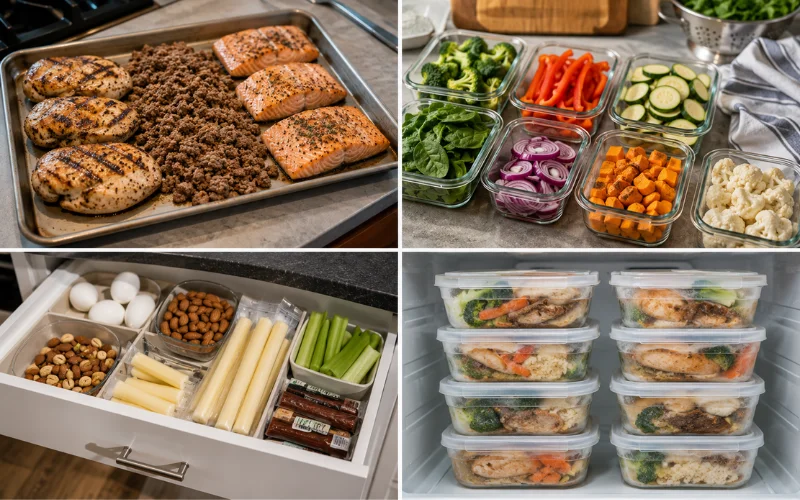
A few practical habits make this way of eating far easier to maintain long term.
- Batch cook proteins on one day: Grilling or baking a large batch of chicken, ground beef, or salmon at once saves time during the week and prevents the temptation to grab quick carb-heavy takeout.
- Keep a rotating vegetable prep station: Wash and chop vegetables right after grocery shopping so they are ready to toss into any meal without extra effort mid-week.
- Stock a “safe snack” drawer: Nuts, cheese sticks, and hard-boiled eggs prevent hunger-driven decisions that lead back to bread or chips.
- Freeze in single portions: Freezing meals in individual containers, rather than one large batch, makes grabbing a quick, portioned meal simple on busy days.
What Most Guides Miss About a Low Carb Kitchen

Beyond the basics, a few details make a real difference but rarely get mentioned.
Fiber counts as much as carb totals
Two meals can share the same total carbs yet affect blood sugar completely differently if one contains far more fiber. Always calculate net carbs rather than looking at total carbohydrates alone.
Restaurant and takeout strategy matters
Most advice on this topic assumes every meal happens at home. In reality, ordering grilled protein with a double side of vegetables instead of rice or fries, and asking for sauces on the side, keeps most restaurant meals reasonably in line.
Social eating needs a plan not willpower
Holidays, parties, and family dinners derail more low carb efforts than any single food choice. Eating a small protein-rich snack before an event reduces the temptation to overeat carb-heavy appetizers.
Blood sugar response varies by person
Two people eating the identical meal can see different blood sugar responses due to sleep, stress, and activity levels. A food journal paired with a glucose monitor, even for a few weeks, reveals patterns that generic carb counts cannot show.
Local, fresh meals outperform frozen aisles nutritionally
Store shelf-stable “low carb” products often need preservatives and stabilizers to survive months in a warehouse. Fresh, locally prepared meals typically use fewer additives and higher-quality ingredients simply because they do not need the same shelf life.
Sample Low Carb Meal Ideas
- Breakfast: Scrambled eggs with spinach and cheese, or Greek yogurt with berries and nuts
- Lunch: Grilled chicken over mixed greens with olive oil and feta
- Dinner: Baked salmon with roasted broccoli and cauliflower rice
- Snacks: Celery with almond butter, or a handful of macadamia nuts
Frequently Asked Questions
1. What foods should I avoid in a low carb kitchen?
Limit bread, pasta, rice, sugary drinks, and starchy vegetables like potatoes and corn. Focus instead on protein, healthy fats, and non-starchy vegetables.
2. How many carbs count as low carb?
Most people aim for 20 to 100 grams of net carbs per day, though the right number depends on individual goals, activity level, and any medical conditions.
3. What is the difference between net carbs and total carbs?
Net carbs equal total carbohydrates minus fiber, since fiber does not raise blood sugar the way starches and sugars do. Tracking net carbs gives a more accurate picture of a meal’s actual impact.
4. Are store-bought low carb products a good option?
They can help in a pinch, but many rely on fillers, gums, and sugar alcohols to mimic texture. Homemade or freshly prepared meals typically use fewer additives and give better control over ingredients.
5. Can I eat out and still stay low carb?
Yes. Choose grilled or roasted protein, ask for a double portion of vegetables instead of starch, and request sauces on the side, since many restaurant sauces contain hidden sugar or starch.
6. Why do sugar alcohols sometimes still affect blood sugar?
Some sugar alcohols, like maltitol, are absorbed more than others and can raise blood sugar in larger amounts, despite being marketed as carb-free. Erythritol and monk fruit tend to have a smaller effect for most people.
7. How do I stock this kind of kitchen on a budget?
Buy proteins in bulk when on sale, choose frozen vegetables over fresh when needed, and stick to simple pantry staples like eggs, canned tomatoes, and olive oil rather than expensive specialty products.
8. Does a low carb kitchen work for people with diabetes?
Many people managing diabetes find that reducing carbs helps stabilize blood sugar, though any significant dietary change should be discussed with a doctor or dietitian first, especially if taking insulin or other medications.
9. What is the easiest way to start a low carb kitchen?
Start by removing the biggest sources of refined carbs, like bread and sugary snacks, then gradually stock proteins, healthy fats, and vegetables. Small, sustainable changes tend to last longer than an all-at-once overhaul.
10. How can I tell if a packaged meal is truly low carb?
Check the ingredient list for hidden starches like maltodextrin or modified food starch, and calculate net carbs by subtracting fiber from total carbohydrates rather than trusting the front label alone.
Final Thoughts
A low carb kitchen works best when it feels sustainable rather than restrictive. Stocking the right staples, learning to read labels properly, and planning ahead for restaurants and social events all matter far more than chasing perfection every single day.
Whether you cook everything from scratch or rely on fresh, clearly labeled prepared meals, the goal stays the same: knowing exactly what goes into your food so you can make choices that actually fit your life. A low carb kitchen, done well, becomes less of a diet and more of a habit that simply feels normal.