Of all three meals, keto breakfast trips up more people than lunch and dinner combined. Lunch and dinner are easy to picture: a protein, a vegetable, maybe a sauce. Breakfast is the one meal almost every culture built around carbs. Cereal, toast, pancakes, oatmeal, a bagel on the way to work. Pull all of that off the table and a lot of people freeze in front of the fridge at seven in the morning.
This guide is meant to solve that problem properly. It covers what actually makes a breakfast keto-friendly, why this particular meal matters more than people realize, practical ideas that go well beyond eggs, and the mistakes that quietly stall results for people who think they are doing everything right.
What Makes a Breakfast Keto-Friendly?
A ketogenic diet generally limits carbohydrates to roughly 20 to 50 grams a day, while increasing fat intake and keeping protein moderate. The goal is to shift the body’s primary fuel source from glucose to ketones, a state called ketosis.
For breakfast specifically, that means avoiding the usual suspects: bread, cereal, oatmeal, fruit juice, and most fruit aside from small portions of berries. In their place, a keto breakfast typically includes:
- A solid protein source, like eggs, sausage, or smoked salmon
- A healthy fat, such as butter, avocado, olive oil, or full-fat dairy
- A low-carb vegetable, if you want fiber and micronutrients without the carb load
- Little to no added sugar, including hidden sugar in flavored yogurts and some sauces
That said, keto breakfast does not have to mean eggs every single day. That assumption is actually one of the biggest reasons people abandon the diet within the first month, and it deserves more attention than most articles give it.
Why Breakfast Matters More on Keto Than People Think
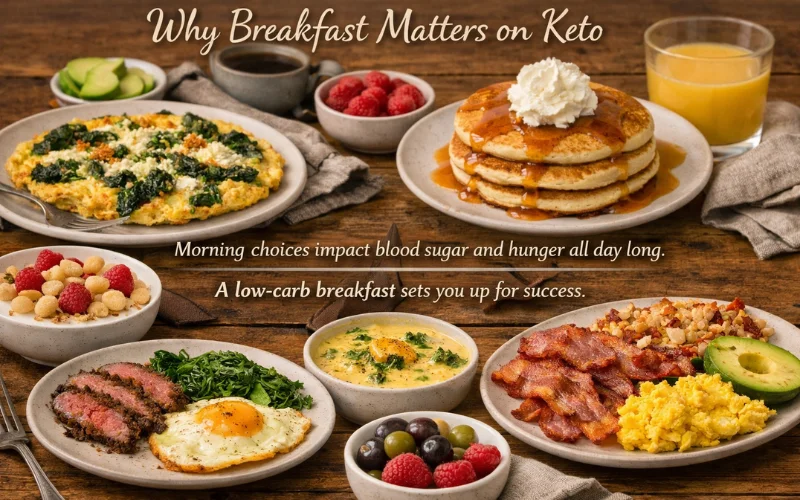
Here is something that rarely gets explained clearly: what you eat in the morning has an outsized effect on your blood sugar and hunger for the rest of the day, more so than at other meals.
Overnight, your body has been fasting for hours, and insulin sensitivity tends to be at its sharpest first thing in the morning. A high-carb breakfast spikes blood sugar quickly, triggers an insulin response, and often leads to a mid-morning crash and hunger spike. A low-carb, higher-fat breakfast avoids that spike entirely, which is part of why so many people on keto report feeling steady and clear-headed by mid-morning instead of reaching for a snack at 10 a.m.
There is also a practical, often overlooked reason breakfast matters on keto: it sets your carb budget for the day. If you are working with roughly 25 grams of net carbs daily, a carb-heavy breakfast can eat up half that allowance before lunch even starts. Getting breakfast right gives you far more flexibility with the rest of your meals.
Keto Breakfast Ideas Beyond Eggs
Eggs are genuinely useful on keto: cheap, versatile, and nutrient-dense. But relying on them every single morning is the fastest way to get bored and quit. Here are real alternatives, organized by how much time you actually have.
For mornings with zero time
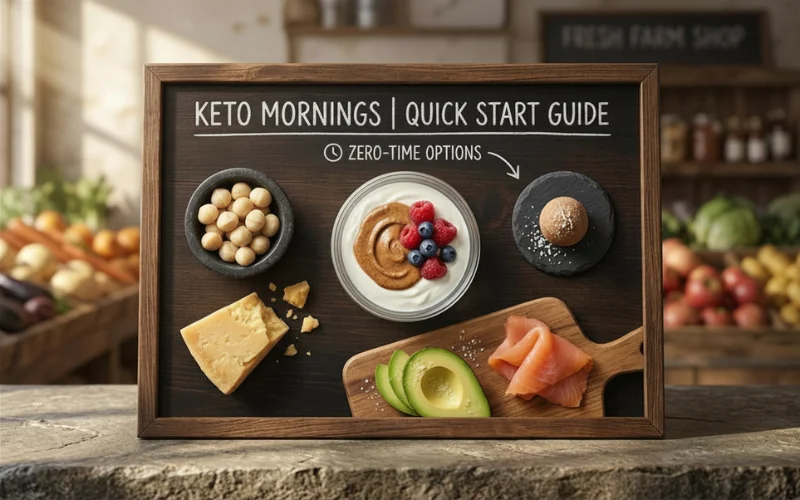
- A handful of macadamia nuts with a piece of full-fat cheese
- Plain Greek yogurt with a spoonful of nut butter and a few berries
- A pre-made fat bomb, like a small portion of chilled coconut and nut butter mix
- Sliced avocado with a sprinkle of salt and a piece of smoked salmon
For a 10-minute breakfast
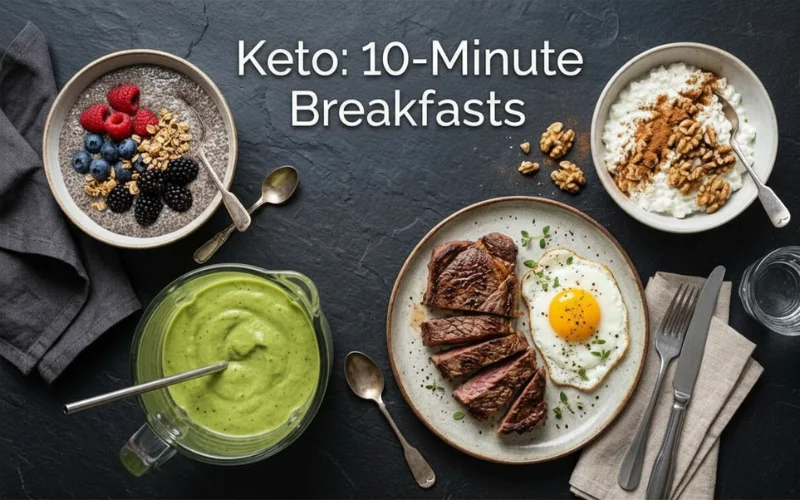
- A smoothie made with unsweetened almond milk, avocado, a low-carb protein powder, and a small handful of frozen berries
- Cottage cheese mixed with cinnamon and a few crushed walnuts
- Leftover dinner protein, like grilled chicken or steak, with a fried egg on top
- Chia pudding made the night before with coconut milk and a low-carb sweetener
For a slower weekend morning

- A crustless quiche with spinach, mushrooms, and gruyere
- Almond flour pancakes topped with sugar-free syrup and a dollop of whipped cream
- A breakfast hash made with cauliflower rice, sausage, and bell peppers
- A full cooked breakfast: eggs, bacon, sautéed greens, and half an avocado
Savory, non-egg options worth trying
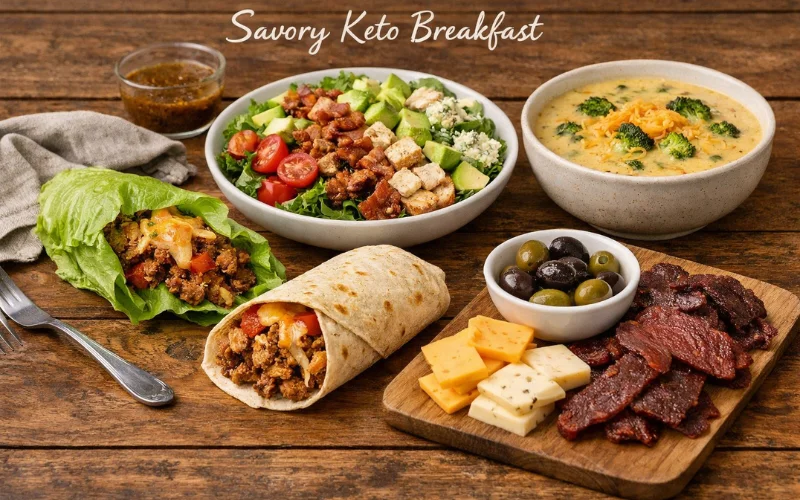
This is the category most keto breakfast lists skip entirely, but it solves the “I’m sick of eggs” problem better than anything else.
- Leftover taco meat wrapped in lettuce or a low-carb tortilla
- A small Cobb-style salad with chicken, bacon, blue cheese, and a vinaigrette
- Reheated soup from the night before, especially something cream-based like a broccoli cheddar
- Beef or turkey jerky paired with cheese and a few olives
There is no rule that breakfast food has to look like breakfast food. Once you let go of that idea, the options multiply.
A Sample Keto Breakfast Week
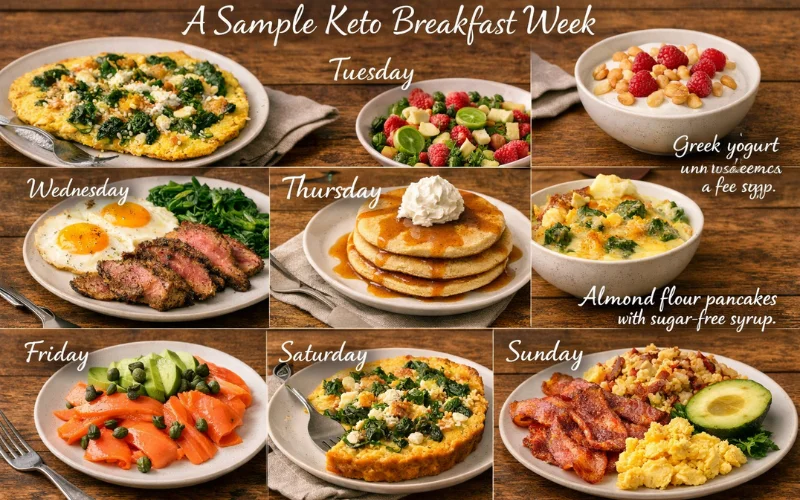
Variety is the single biggest factor in whether people stick with keto long term. Here is a realistic seven-day rotation that avoids eating the same thing twice.
- Monday: Veggie omelet with spinach, mushrooms, and feta
- Tuesday: Greek yogurt with macadamia nuts and a few raspberries
- Wednesday: Leftover steak with a fried egg and sautéed greens
- Thursday: Almond flour pancakes with sugar-free syrup
- Friday: Smoked salmon with avocado and capers
- Saturday: Crustless quiche, made ahead and reheated
- Sunday: A full cooked breakfast with bacon, eggs, and roasted cauliflower hash
Batch-cooking two or three of these ahead of time, especially the quiche and the hash, removes most of the daily decision fatigue that causes people to fall back on convenient, carb-heavy options.
Common Keto Breakfast Mistakes
A few patterns show up again and again with people new to keto, and most of them are fixable in a day once you know what to look for.
- Relying on “keto” packaged products without checking labels: Many products marketed as keto-friendly, like certain granolas or protein bars, still carry 10 to 15 grams of net carbs per serving once sugar alcohols and fillers are accounted for. Always check the label, not just the front-of-box claim.
- Underestimating hidden carbs in coffee add-ins: Flavored creamers, oat milk, and pre-made coffee drinks are common culprits. A splash of heavy cream or unsweetened almond milk keeps coffee keto-friendly without the surprise carbs.
- Skipping breakfast entirely and calling it intentional fasting: Intermittent fasting can work well alongside keto for some people, but skipping breakfast simply because nothing sounds appealing is different from a planned fasting strategy. If you are skipping meals out of frustration rather than intention, it is worth addressing the root issue: usually a lack of variety or meal prep.
- Not eating enough fat early on: In the first few weeks of keto, many people unconsciously keep their meals too lean, which leaves them hungry by mid-morning. A keto breakfast genuinely needs a real fat source, not just a token pat of butter, to keep you satisfied for four to five hours.
- Forgetting electrolytes: This one rarely shows up in breakfast articles, but it matters. As your body adjusts to keto, it sheds water weight and electrolytes faster than usual, which is a major contributor to the early fatigue and headaches sometimes called the “keto flu.” A morning routine that includes a pinch of salt in your water, or a cup of bone broth alongside breakfast, can meaningfully reduce those symptoms during the first one to two weeks.
Frequently Asked Questions
1. Can I eat fruit for keto breakfast?
Most fruit is too high in carbs for a keto breakfast, but small portions of berries, like raspberries or blackberries, can fit within a daily carb budget when eaten in moderation.
2. Is oatmeal ever keto-friendly?
Traditional oatmeal is not suitable for a keto breakfast, but a low-carb alternative made from riced cauliflower, flaxseed, or hemp hearts, combined with cinnamon and a low-carb sweetener, closely mimics the texture.
3. How many carbs should a keto breakfast have?
Most people aim to keep a keto breakfast under 10 grams of net carbs, leaving room in their daily carb budget for lunch and dinner.
4. What can I drink with a keto breakfast besides black coffee?
Unsweetened almond or coconut milk, bone broth, herbal tea, and coffee with heavy cream are all excellent drinks to pair with a keto breakfast. Watch out for flavored creamers and oat milk, which often contain hidden sugar.
5. Is it okay to skip keto breakfast on keto?
Yes, skipping keto breakfast as part of an intentional intermittent fasting approach works well for many people. It becomes a problem only when meals are skipped out of frustration rather than a deliberate strategy.
6. Why do I feel hungry shortly after a keto breakfast?
This usually means your keto breakfast did not include enough fat or protein. A breakfast built mostly around vegetables without a real fat or protein source will not keep you full for long.
7. Can I meal prep keto breakfast for the week?
Yes, many keto breakfast recipes, such as crustless quiche, egg muffins, and breakfast casseroles, hold up well in the fridge for four to five days and reheat easily, making meal prep simple.
8. What is keto flu and does it affect keto breakfast choices?
Keto flu refers to fatigue, headaches, and brain fog that can occur in the first one to two weeks of starting keto, largely due to electrolyte loss. Adding a pinch of salt to water or having bone broth with your keto breakfast can help reduce these symptoms.
9. Are keto pancakes actually healthy for keto breakfast?
Keto pancakes made with almond or coconut flour are lower in carbs than traditional pancakes, making them a great keto breakfast option. However, they are still calorie-dense due to their fat content.
10. What is the easiest keto breakfast for beginners?
A simple keto breakfast of eggs, a fatty protein like bacon or sausage, and a small portion of avocado is one of the easiest starting points, requiring no special ingredients and taking less than 10 minutes to prepare.
Final Thoughts
Keto breakfast does not have to mean eggs on repeat, and it should not feel like a daily negotiation with yourself. The people who stay consistent with keto long term are usually the ones who built a real rotation of breakfast options, paid attention to hidden carbs in coffee and packaged foods, and treated the first meal of the day as the one that actually sets the tone for their blood sugar and hunger levels for hours afterward. Start with two or three recipes from this guide, get comfortable with them, and expand from there. Small, repeatable habits beat an ambitious meal plan you abandon after a week.