A keto Greek chicken bowl is a low carb dinner or lunch built from seasoned grilled chicken, cauliflower rice, and classic Greek toppings like feta, olives, cucumber, and tzatziki, all served in one bowl instead of wrapped in pita. It usually runs under 12 grams of net carbs and delivers 25 to 45 grams of protein per serving depending on your chicken cut and portion size. Done right, it’s one of the few keto meals that tastes just as good oyn day four of meal prep as it does the night you make it.
I’ve made some version of this bowl every week for the better part of two years. Not because it’s trendy. Because it’s the one lunch I don’t dread eating cold out of a container at my desk.
My Experience
One reason this recipe has become a meal-prep favorite is its balance of convenience and nutrition. It delivers plenty of protein, healthy fats, and fresh Mediterranean flavors without relying on processed low-carb products. Because each ingredient can be stored separately and assembled in minutes, it’s easy to customize portions, adjust macros, or swap toppings to keep lunches interesting throughout the week.
Why This Bowl Works Better Than a Wrap or Salad
Most people default to a Greek salad or a chicken gyro wrap when they want this flavor profile on keto. Both have problems a bowl solves.
A wrap needs a low carb tortilla, which usually means added fiber that can upset your stomach if you eat it daily. A straight salad wilts. Lettuce sitting under warm chicken and dressing for six hours in a lunch bag turns into a soggy mess by 1pm.
The bowl format separates components by design. You’re not obligated to dress it until you’re ready to eat, and the base (cauliflower rice, not lettuce) holds texture in the fridge far better than greens do.
- Portability: stacks flat in a meal prep container, no leakage risk like a wrap
- Reheat flexibility: you can warm the chicken and rice without wilting anything
- Portion control: it’s visually obvious when you’ve under- or over-filled a bowl, which isn’t true with a mixed salad
The Protein Question Nobody Answers Clearly
Here’s something I noticed digging through other Greek chicken bowl recipes: protein counts swing from 21 grams a serving to 50 grams, and almost nobody explains why.
The answer comes down to two things, cut and portion.
Chicken thighs
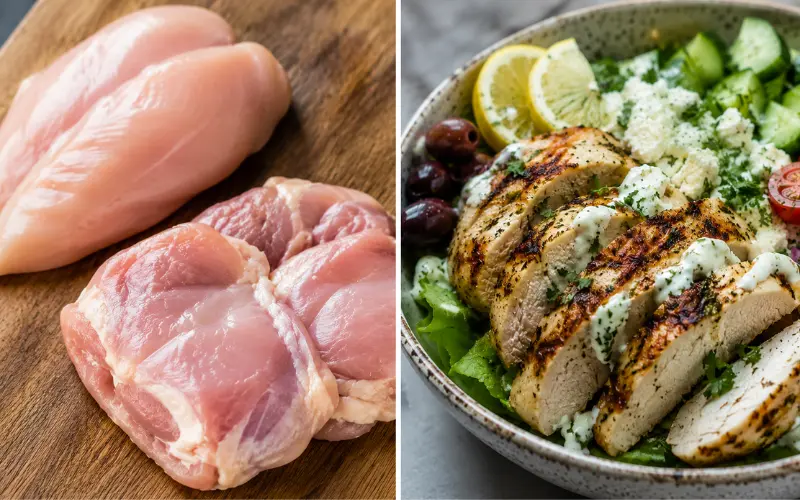
Run higher in fat and slightly lower in protein per ounce than breast, but they’re far more forgiving if you overcook them by a minute or two. Thighs stay juicy through reheating, which matters if you’re eating this cold or microwaved three days later.
Chicken breast
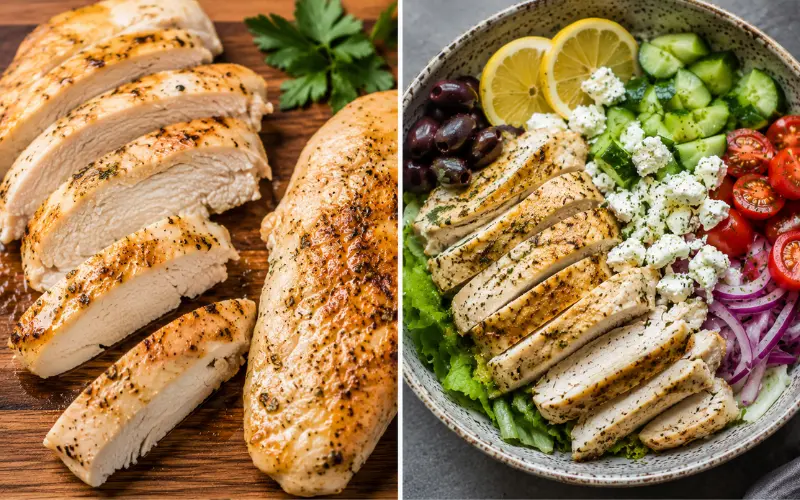
Gives you a cleaner protein-to-fat ratio, useful if you’re tracking macros tightly, but it dries out fast on reheat unless you slice it thin and warm it gently, not on high power in 90-second blasts.
If a recipe serves 5 ounces of chicken per bowl, you’re in the 40+ gram protein range. If it’s using 3 to 4 ounces split across more servings, you’ll land closer to 20 to 25 grams. Neither is wrong. Just know which one you’re building before you shop.
The Storage Problem Most Recipes Ignore
This is the part that actually matters if you’re making this bowl for the week, not just for dinner tonight.
- Tzatziki weeps. Cucumber releases water as it sits, even after straining, and that water pools at the bottom of your container and soaks into whatever it touches. Keep tzatziki in its own small container, always. Don’t ladle it over the bowl until you’re ready to eat.
- Tomatoes go first. Diced tomatoes sitting against warm rice or chicken start breaking down within a day. If you’re prepping four or five days out, add tomatoes fresh each morning instead of batching them in.
- Feta absorbs moisture and gets mushy by day three if it’s touching anything wet. Crumble it on top, last, right before eating, rather than mixing it through the bowl in advance.
- Cauliflower rice reheats unevenly. Microwaving it straight from cold spikes moisture and turns mushy in spots. A quick 60 to 90 seconds in a dry, hot pan brings back texture that the microwave kills.
None of this is complicated. It’s just the difference between a bowl that’s good on Monday and one that’s still good on Thursday.
Building Your Bowl: Base, Protein, Toppings
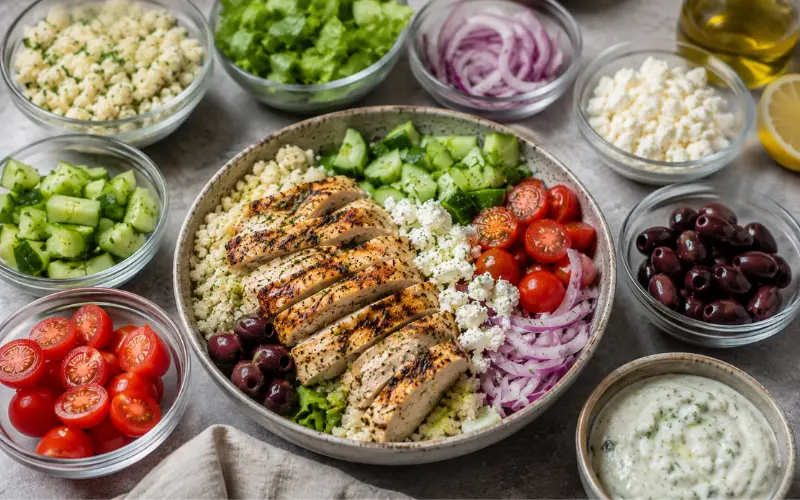
You don’t need a rigid recipe here. You need a formula you can rebuild from memory.
Base (pick one):
- Cauliflower rice, sautéed dry in a hot pan for 3 to 4 minutes to cook off moisture
- Cauliflower couscous, if you want a slightly firmer bite
- Chopped romaine, if you’re eating same-day and skipping meal prep entirely
Protein (4 to 6 oz per bowl):
- Marinated grilled or pan-seared chicken breast or thighs
- Seasoning base: olive oil, lemon juice, dried oregano, garlic, salt, pepper
- Optional: red wine vinegar in the marinade for extra brightness
Toppings:
- Diced cucumber (English or Persian, less watery than standard slicing cucumbers)
- Halved cherry tomatoes
- Pitted Kalamata olives
- Thinly sliced red onion
- Crumbled feta
- Tzatziki, on the side or drizzled just before eating
Cooking chicken correctly:
pull it at 160°F if you’re pan-searing thick breasts, since carryover heat gets you to a safe 165°F while it rests. Pulling too late is the single biggest reason home cooks end up with dry, rubbery bowls. An instant-read thermometer is worth the eight dollars.
Add Rice Without Breaking Keto (For Mixed Households)
If you’re cooking for a family where not everyone is low carb, you don’t need two separate dinners.
Cook a small batch of white or brown rice separately and let each person build their own bowl. The chicken, toppings, and tzatziki stay identical. Only the base changes. This is the easiest way to serve a “keto Greek chicken bowl with rice” version alongside the cauliflower rice version without doubling your prep work.
A half cup of cooked white rice adds roughly 22 grams of carbs, so if you’re keto but want a small amount of real rice mixed in, start with 2 to 3 tablespoons folded into the cauliflower rice rather than swapping it entirely.
Quick Comparison: Base Options at a Glance
| Base | Net Carbs (1 cup) | Texture After 3 Days in Fridge | Best For |
|---|---|---|---|
| Cauliflower rice | ~3g | Holds up well if reheated dry in a pan | Strict keto, daily meal prep |
| Cauliflower couscous | ~4g | Slightly firmer, holds shape longer | Texture-sensitive eaters |
| Chopped romaine | ~1g | Wilts by day 2, best fresh | Same-day meals only |
| White rice (non-keto mix) | ~22g | Reheats fine, dries slightly | Mixed keto/non-keto households |
Making It Dairy-Free Without Losing the Greek Flavor
Feta and traditional tzatziki are both dairy. If that’s off the table for you, here’s what actually works, not just a generic “use a substitute” note.
- Swap tzatziki’s Greek yogurt base for a plain, unsweetened coconut or almond milk yogurt. The tang is milder, so add an extra teaspoon of lemon juice to compensate.
- Skip feta and add extra olives and a drizzle of good olive oil for richness instead. It’s not a one-to-one flavor match, but it keeps the salt and fat balance similar.
- Nutritional yeast, a small pinch, can round out a savory note that feta usually provides, though use it sparingly since it has a distinct flavor of its own.
Frequently Asked Questions
Can I make a keto Greek chicken bowl with rice instead of cauliflower rice?
Yes, but it stops being strict keto. A half cup of cooked white rice adds about 22 grams of carbs. If you want the flavor of rice without the carb load, try a 50/50 mix of cauliflower rice and a small amount of real rice.
How long does this stay good in the fridge?
The chicken and cauliflower rice hold for 4 to 5 days if stored separately from tzatziki and tomatoes. Assemble those two components fresh each day rather than mixing everything together in advance.
Is a keto Greek chicken bowl good for weight loss?
It can fit well into a weight loss plan because it’s high in protein and low in refined carbs, which tends to keep people fuller longer. Total calories still depend on your oil amounts and feta portion, so measure those if you’re tracking closely.
What’s the best keto Greek chicken marinade?
A simple mix of olive oil, lemon juice, dried oregano, minced garlic, salt, and pepper covers most of what you need. Marinate for 30 minutes up to 4 hours. Longer than that and the acid starts to affect the chicken’s texture, making it slightly mushy instead of tender.
Can I meal prep this for five days straight?
Yes, with one adjustment: prep the chicken and cauliflower rice in bulk, but chop fresh tomatoes and crumble feta each morning instead of batching them in on day one.
What can I use instead of chicken breast?
Chicken thighs work well and are more forgiving on reheat since they carry more fat. Shrimp is another quick swap if you want a lighter, faster-cooking protein for this same bowl format.
Is this recipe good for a low carb Greek chicken diet beyond keto?
Yes. Even if you’re not counting macros strictly, this bowl works for anyone eating low carb, high protein, or just trying to eat fewer processed carbs at lunch.
Why does my tzatziki turn watery in the fridge?
Cucumber releases water as it sits, even if you strained it beforehand. Store tzatziki separately from your bowl and stir it before serving. If it’s thinned out after a few days, a spoonful of extra Greek yogurt brings it back.
Final Thoughts
A keto Greek chicken bowl succeeds because it’s practical, not just healthy. With juicy chicken, a sturdy cauliflower rice base, and fresh toppings added at the right time, you get a meal that’s satisfying on day one and still worth eating several days later. Paying attention to small details like storing tzatziki separately, reheating cauliflower rice correctly, and choosing the right cut of chicken makes a bigger difference than any fancy ingredient.
Whether you’re meal prepping for the workweek, following a strict ketogenic diet, or simply looking for a high-protein, low-carb lunch that doesn’t get boring, this bowl is easy to customize without sacrificing flavor. Once you know the simple base-protein-toppings formula, you can recreate it with different proteins and vegetables while keeping the same Mediterranean flavors that make this recipe a reliable favorite.