Yes, you can eat sushi on keto you just have to know which keto sushi options actually work and which ones quietly torpedo your carb count. The short version: skip the rice, lean on sashimi, nigiri made with cauliflower rice, or naked rolls wrapped in cucumber, soy paper, or just nori, and watch out for two sneaky carb traps that almost every “low carb sushi” guide forgets to mention.
The biggest mistake people make isn’t ordering a roll with rice. It’s assuming a “skinny roll” or a “naked roll” is automatically safe. Sweet sauces, imitation crab, and tempura bits hiding inside a roll can add 15-20g of carbs to a dish that looks completely Keto Sushi Options on the menu. Below, you’ll find the rolls and restaurant orders that actually work, the ones you can make at home in under 20 minutes, and a comparison table so you can see the carb difference at a glance.
Quick Comparison: Low-Carb Sushi Styles by Carb Count
| Sushi Style | Net Carbs (per roll/serving) | Keto-Friendly? |
|---|---|---|
| Traditional rice roll (8 pieces) | 35-45g | No |
| Sashimi (6 pieces, no rice) | 0-1g | Yes |
| Nigiri with cauliflower rice (6 pieces) | 4-6g | Yes |
| Cucumber-wrapped roll, no rice | 2-4g | Yes |
| Soy paper roll, no rice | 3-5g | Yes |
| Roll with imitation crab | 10-14g | Usually no |
| Roll with sweet eel/spicy mayo sauce | 8-15g | Usually no |
This is the part most competing articles skip: the table above isn’t just about rice. Two of the biggest carb sources in “low carb” sushi have nothing to do with rice at all, and that’s exactly why so many people think they’re eating Keto Sushi Options and aren’t.
Why Regular Sushi Isn’t Keto (And Where the Carbs Actually Hide)
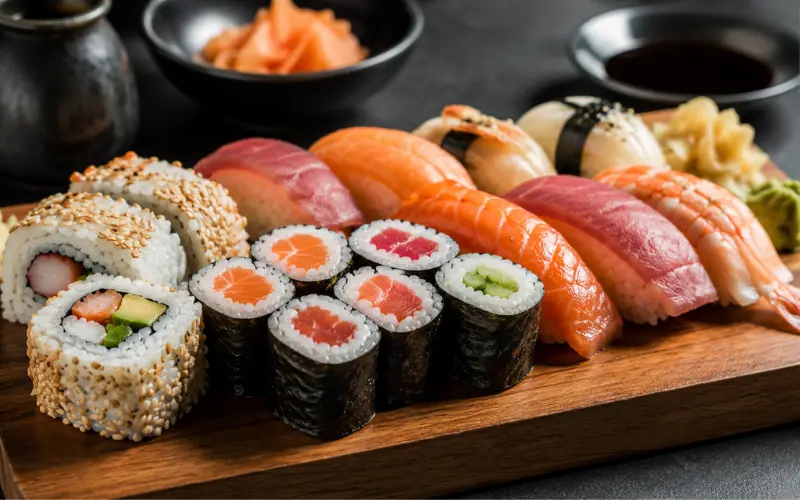
A single cup of seasoned sushi rice runs close to 45g of carbs, which is why every Keto Sushi Options guide tells you to skip it. That part’s obvious. What’s less obvious is that even rice-free orders can sneak carbs back in through two ingredients restaurants use constantly: imitation crab and sauce.
Imitation crab (often labeled “krab” or “kani”) is made from white fish bound together with starch, sugar, and other fillers, and a half-cup serving can carry up to 12g of carbs. Real crab, by contrast, has effectively zero carbs. Since imitation crab shows up in California rolls, spider rolls, and most “crunch” rolls, it’s worth asking your server directly most sushi restaurants will sub in real crab for an extra dollar or two.
The second hidden carb source is sauce. Unagi sauce, spicy mayo, sweet chili glaze, and teriyaki drizzle are all sugar-based, and a generously sauced roll can add 8-15g of carbs you never see listed on the menu. The fix is simple: order sauce on the side, or skip it entirely and dip in tamari (gluten-free soy sauce) and wasabi instead.
How to Order Keto Sushi Options at a Restaurant
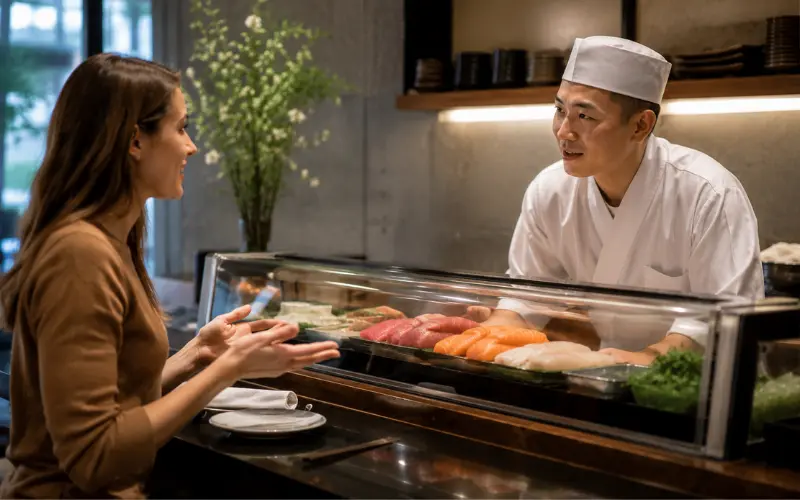
Here’s the ordering script that actually works, building on what most guides only mention in passing:
Start with sashimi
It’s raw fish with zero rice and zero carbs, and it’s the single safest order on any sushi menu.
Ask for a “naked roll” or “skinny roll.”
Many sushi restaurants will wrap your filling in cucumber or soy paper instead of rice and nori just ask if they offer it, since it’s rarely printed on the menu.
Confirm real crab, not imitation
If a roll lists crab, ask whether it’s real or imitation before ordering.
Request sauce on the side or ask for it left off
This single habit removes more hidden carbs than almost any other change you can make.
Round out the meal with miso soup, edamame, or a seaweed salad
All naturally low in carbs and commonly available as sides.
Watch for tempura
Anything battered and fried (shrimp tempura rolls, “crunch” rolls with tempura flakes) adds 10g+ of carbs per roll just from the breading.
Best Low-Carb Sushi to Make at Home
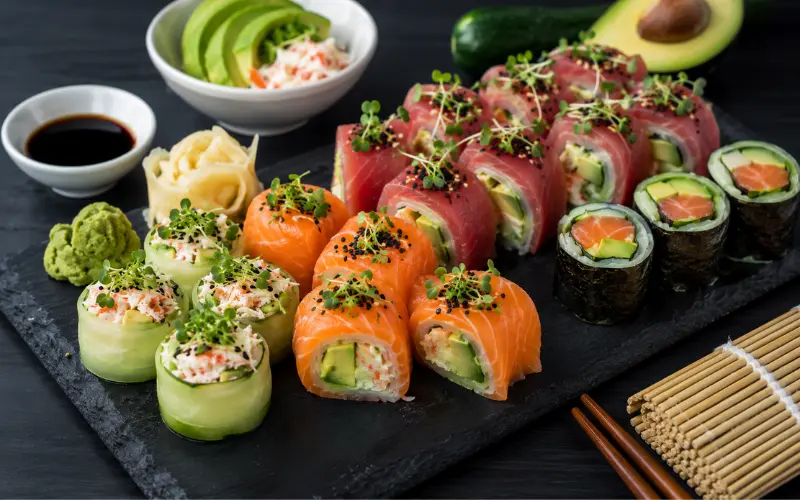
Making your own sushi keto-friendly is mostly a matter of swapping the rice and watching your fillings. Here are the methods that hold up best in practice.
Cauliflower rice sushi
Pulse raw cauliflower florets in a food processor until they resemble rice grains, then microwave or sauté them for 5-7 minutes to soften and dry them out. Mix in a small amount of rice vinegar and a spoonful of softened cream cheese, which helps the “rice” hold together when you roll it plain cauliflower rice tends to fall apart on its own. This is the closest texture match to real sushi rice, and it’s the base for nigiri and inside-out rolls alike.
No-rice rolls
Skip the rice substitute entirely and layer your fillings smoked salmon, avocado, cucumber, thin strips of bell pepper directly onto a nori sheet, then roll tightly. This is the fastest option and works well if you’re not fussy about replicating the classic mouthfeel.
Cucumber-wrapped rolls
Use a vegetable peeler or mandoline to cut an English cucumber into long, thin ribbons, then use those in place of nori to wrap your filling. The crunch actually improves the texture compared to rice-based rolls, since the filling itself tends to be soft.
Sashimi or poke bowls
If rolling sushi isn’t your thing, sashimi-grade fish over a bed of shredded cabbage or cucumber “noodles,” dressed with sesame oil, tamari, and chili flakes, gives you all the flavor of a poke bowl with almost none of the carbs.
A quick note on the fish itself: “sushi-grade” isn’t an official USDA grading term, but it generally means the fish was flash-frozen to kill parasites and handled with the cold chain raw consumption requires. If you’re making sashimi or nigiri at home, buy fish labeled sushi- or sashimi-grade from a reputable fish counter rather than standard grocery fillets.
Alternative Keto Sushi Options and Variations
If the rolls above don’t fit what you’re craving, these variations cover most of the remaining ground:
Spicy tuna or salmon, no rice:
Dice raw sushi-grade tuna or salmon and mix with a small amount of mayo and sriracha, then serve over cucumber slices or in a lettuce cup.
Keto sushi bake:
Layer seasoned salmon or crab, cream cheese, and cauliflower rice in a baking dish, bake until warm, and scoop onto nori sheets at the table a popular potluck-style alternative to individual rolls.
Nigiri with cauliflower rice:
Form small ovals of seasoned cauliflower rice and top each with a slice of raw or seared fish, held together with a thin strip of nori.
Temaki (hand rolls):
Cone-shaped nori filled with fish, avocado, and cucumber naturally easier to portion without rice than a rolled maki.
Frequently Asked Questions
1. Is sushi keto-friendly?
Traditional sushi is not keto-friendly because of the rice, which can add 35-45g of carbs per roll. Rice-free versions sashimi, naked rolls, or rolls made with cauliflower rice are keto-friendly.
2. What sushi has the least carbs?
Sashimi has the fewest carbs of any sushi style, typically 0-1g per serving, since it’s just raw fish with no rice or wrapper at all.
3. Can I eat California rolls on keto?
A standard California roll usually isn’t keto, mainly because of the rice and the imitation crab, which together can run 25-30g of carbs per roll. Ask for a version made with real crab, cauliflower rice, and no eel sauce to make it keto-compatible.
4. Is soy sauce keto-friendly?
Regular soy sauce is low in carbs (about 1g per tablespoon) and generally fits a Keto Sushi Options diet, but it isn’t gluten-free unless labeled tamari. Check labels if you’re also avoiding gluten.
5. Is imitation crab keto?
No. Imitation crab (krab) contains starch and sugar fillers and can carry up to 12g of carbs per half-cup serving, compared to zero carbs in real crab.
6. What can I use instead of rice in keto sushi?
Cauliflower rice is the most common substitute, mixed with a little cream cheese or rice vinegar to help it hold together. Cucumber ribbons, shredded cabbage, and plain nori-wrapped fillings (no rice at all) are other common swaps.
7. Is wasabi keto-friendly?
Yes, wasabi is naturally low in carbs and fits easily into a Keto Sushi Options diet. Just check that powdered wasabi mixes don’t include added sugar or starch fillers.
8. How many carbs are in a typical sushi roll?
A standard 8-piece rice-based roll generally contains 35-45g of total carbs, mostly from the rice. A rice-free version of the same roll typically drops to under 5g.
9. Can I eat tempura on keto?
Tempura is breaded and deep-fried, so it’s not keto-friendly two pieces of shrimp tempura alone can carry around 11g of carbs. Skip tempura rolls and stick to sashimi, nigiri, or naked rolls instead.
10. What sides can I order with keto sushi at a restaurant?
Miso soup, edamame (in moderation, since it does have some carbs), seaweed salad, and a side of sashimi are all solid keto-compatible additions to a sushi meal.
Final Thoughts
The real skill in finding good keto sushi options isn’t memorizing a list of “safe” rolls it’s knowing where the hidden carbs actually come from. Rice is the obvious one. Imitation crab and sweet sauces are the ones that catch people off guard. Once you know to ask about real crab, request sauce on the side, and reach for sashimi or cauliflower-rice rolls as your defaults, sushi night stops being something you have to plan around and becomes just another meal that fits your day. Whether you’re ordering out or rolling your own at home, the same three rules apply every time: skip the rice, watch the sauce, and check what’s actually in the filling.