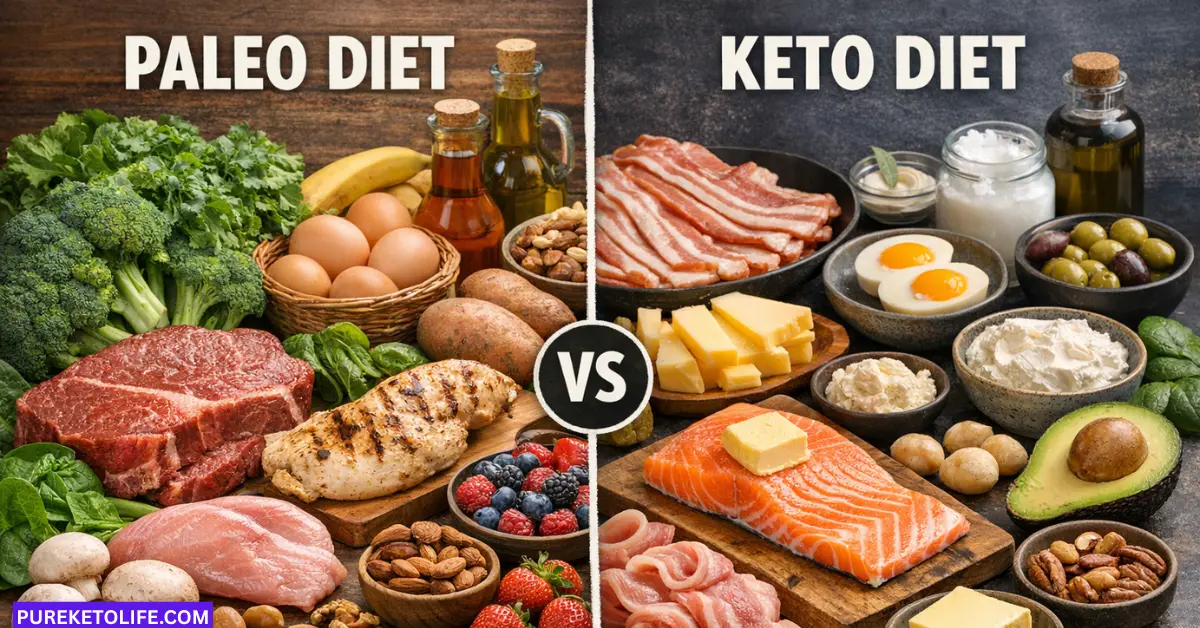
In today’s world of weight loss trends and low-carb eating styles, the debate around paleo vs keto is everywhere—from gyms to social media to health blogs. Both diets promise better health, fat loss, and improved energy, but they follow very different paths to get there.
If you’re confused about which one actually works better for your body, you’re not alone. Many people compare the ketogenic diet vs paleo diet without fully understanding how they differ in real-life results, sustainability, and long-term health impact.
This guide breaks everything down in simple, human-friendly language so you can finally understand which diet fits your lifestyle better.
Paleo vs Keto Video Guide
What is the Keto Diet? (Simple Explanation)
The keto diet is a very low-carb, high-fat eating plan designed to push your body into a metabolic state called ketosis. In ketosis, your body stops relying on carbs and starts burning fat for energy instead.
A typical ketogenic diet focuses on:
- High fat intake
- Moderate protein
- Very low carbohydrates
This strict low-carb diet forces your body to use fat as its primary fuel source. That’s why many people associate keto with fast weight loss results.
However, keto is not just about cutting carbs—it is about maintaining a very specific macronutrient balance that consistently keeps your body in ketosis.
Paleo vs Keto Comparison Table
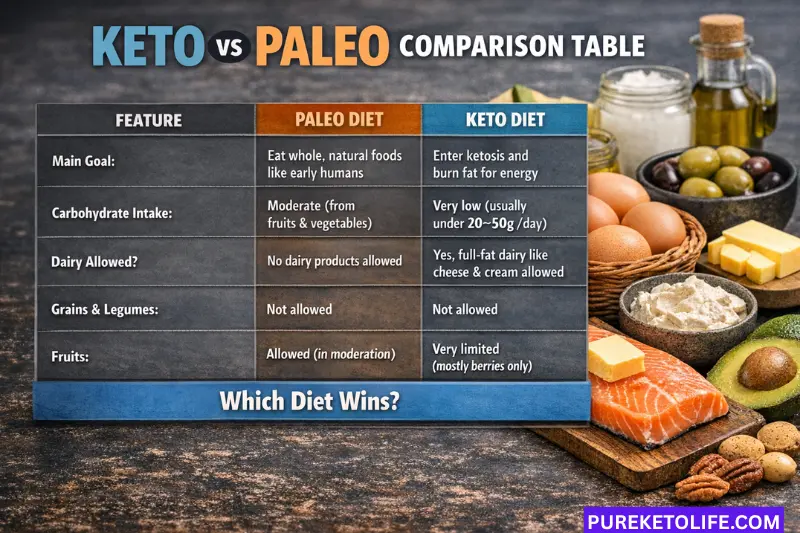
To make the paleo vs keto difference even clearer, here is a simple comparison table that highlights the most important factors people actually care about when choosing a diet.
| Feature | Paleo Diet | Keto Diet |
| Main Goal | Eat whole, natural foods like early humans | Enter ketosis and burn fat for energy |
| Carbohydrate Intake | Moderate (from fruits & vegetables) | Very low (usually under 20–50g/day) |
| Dairy Allowed? | No dairy products allowed | Yes, full-fat dairy like cheese & cream allowed |
| Grains & Legumes | Not allowed | Not allowed |
| Fruits | Allowed (in moderation) | Very limited (mostly berries only) |
| Fat Intake | Moderate, from natural sources | Very high (70%+ of daily calories) |
| Protein Intake | Moderate to high | Moderate |
| Diet Difficulty | Easy to moderate (more flexible) | Hard (strict tracking required) |
| Weight Loss Speed | Gradual and steady | Faster initial weight loss |
| Sustainability | Easier long-term lifestyle | Difficult for long-term adherence |
What is the Paleo Diet? (Natural Eating Approach)

The paleo diet, also known as the “caveman diet,” is based on eating whole foods that resemble what early humans consumed. Instead of focusing on strict macros, paleo focuses on food quality.
A typical paleo lifestyle diet includes:
- Lean meats and fish
- Fruits and vegetables
- Nuts and seeds
- Natural fats like olive oil and avocado
At the same time, it removes:
- Processed foods
- Grains and legumes
- Refined sugar
- Most dairy products
Unlike keto, paleo does not aim to put your body into ketosis. Instead, it focuses on reducing processed foods and improving overall eating habits.
Paleo vs Keto: Core Differences You Must Know

When comparing paleo vs keto diet difference, the biggest misunderstanding is that they are similar because both are “low-carb.” In reality, their goals are completely different.
The keto diet is structured around metabolic change (ketosis), while paleo is centered on natural food quality and ancestral eating patterns.
Keto strictly limits carbohydrates to keep the body in fat-burning mode. Paleo allows more natural carbs from fruits and vegetables, making it less restrictive.
Another major difference is dairy. Keto allows full-fat dairy like cheese and cream, while paleo removes dairy completely.
In simple terms, keto is a science-driven metabolic diet, while paleo is a natural eating lifestyle approach.
Paleo vs Keto: Similarities Between Both Diets
Even though they are different, both diets share some common ground, especially in promoting healthier food choices.
Both low carb diets encourage:
- Avoiding processed foods and sugar
- Eating whole, nutrient-dense foods
- Increasing healthy fat intake
- Reducing dependency on junk food and fast food
Both diets can also support weight loss, especially in the early stages, because they reduce calorie-dense processed foods.
Paleo vs Keto for Weight Loss: Which Works Faster?

When it comes to paleo vs keto for weight loss, keto usually shows faster results in the beginning. This is mainly because the body loses water weight quickly when carbs are reduced drastically.
However, paleo offers a more balanced and sustainable approach. People often find it easier to maintain over time because it does not require strict carb counting.
So while keto may give faster short-term results, paleo is often easier for long-term lifestyle change.
Health Benefits of Paleo vs Keto Diet
Both diets come with potential health benefits, but they work differently inside the body.
The keto diet may help:
- Rapid fat loss
- Improved blood sugar control
- Reduced appetite due to ketosis
On the other hand, the paleo diet may help:
- Better digestion due to whole foods
- Reduced processed food intake
- Improved nutrient variety from fruits and vegetables
However, neither diet is perfect for everyone. Your results depend on consistency, food quality, and overall lifestyle.
Side Effects and Challenges (Often Ignored by Competitors)
One area most competitors don’t explain deeply is the real-life difficulty of maintaining these diets.
With keto, some people experience:
- “Keto flu” in the early phase
- Low energy during adaptation
- Strict food tracking requirements
With paleo, common challenges include:
- Lack of dairy may reduce calcium intake
- Higher carb flexibility may slow fat loss for some
- Limited food variety in strict versions
This is why understanding your lifestyle is more important than just choosing a trending diet.
Which Diet is Easier to Follow Long-Term?
When comparing paleo vs keto lifestyle, paleo is generally easier to maintain for most people. It allows more food flexibility and does not require strict macro tracking.
Keto, while effective, demands discipline and consistent carb control, which can be difficult in social situations or long-term routines.
If your goal is sustainability, paleo often wins. If your goal is rapid transformation, keto may feel more effective initially.
Paleo vs Keto: Which One Should You Choose?
The truth is simple—there is no universal winner in the paleo vs keto comparison.
Choose keto if:
- You want fast weight loss
- You can follow strict rules
- You are comfortable tracking macros
Choose paleo if:
- You prefer natural whole foods
- You want a flexible lifestyle diet
- You aim for long-term health habits
Your body, routine, and goals should decide the best option—not trends.
Real Experience: What People Struggle With in Real Life (Paleo vs Keto)
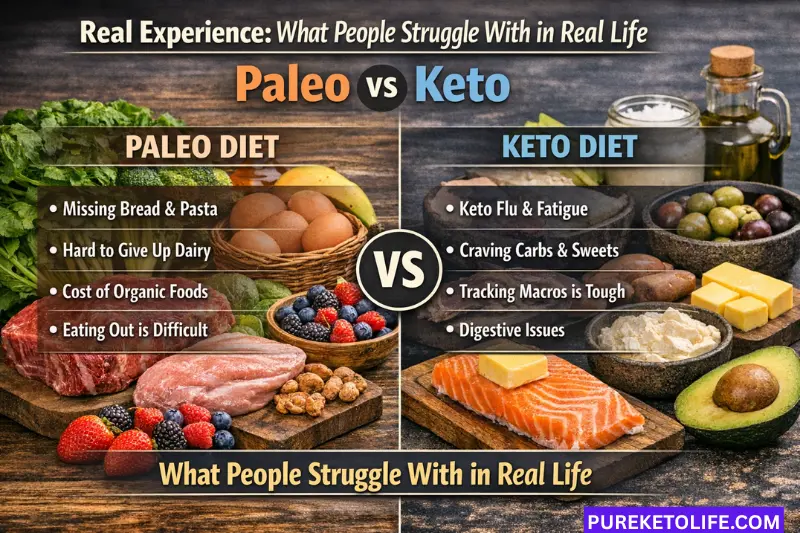
When it comes to paleo vs keto, most articles explain the theory perfectly—but real people don’t struggle with theory, they struggle with daily life. And that’s where the real difference between these two diets becomes much clearer.
In real-world situations, both diets sound great on paper, but the experience changes once you actually start following them.
Keto Diet Real-Life Struggles
Many people starting the ketogenic diet are surprised that the hardest part is not food choice—it’s consistency.
The biggest challenge is staying in ketosis. Even a small mistake, like eating a hidden carb in a sauce or snack, can temporarily kick you out of fat-burning mode. This makes beginners feel like they are “starting over” again and again.
Another common issue is the early adaptation phase, often called the keto flu. During this time, people may feel low energy, headaches, or irritability because their body is switching from carbs to fat as its main fuel source.
Social situations also become tricky. Eating out or attending gatherings often requires planning ahead, because many regular foods don’t fit into keto rules. Over time, this can feel restrictive for some people.
Paleo Diet Real-Life Struggles
The paleo diet feels more natural and flexible at first, but it comes with its own hidden challenges.
One of the biggest issues people face is confusion about “what counts as truly paleo.” While fruits and natural foods are allowed, people sometimes overconsume higher-calorie foods like nuts, honey, or dried fruits, which can slow down weight loss.
Another struggle is nutrient balance. Since dairy is not allowed, some people unintentionally reduce their calcium intake. Without proper planning, this can become a long-term concern.
Also, because paleo allows more carbs than keto, weight loss can feel slower, especially for people expecting fast results like those seen in keto. This sometimes leads to frustration or early quitting.
The Reality Most People Don’t Expect
What most beginners don’t realize is that both diets require more than just “eating differently”—they require a mindset shift.
- With keto, the challenge is discipline and precision.
- With paleo, the challenge is balance and consistency.
In real life, many people end up mixing both approaches over time because strict rules don’t always match modern lifestyles.
That’s why the most successful approach is usually not perfection—but sustainability. The diet you can actually maintain in your normal routine is the one that delivers real long-term results.
Suggested Guide
Clean Keto vs Dirty Keto (Which Diet Works Best for Weight Loss?)
Keto for Diabetics – Low-Carb Meal Plans to Control Blood Sugar
FAQ: Paleo vs Keto Diet
Final Verdict on Paleo vs Keto
Both paleo and keto diets can improve health when done correctly. Keto focuses on metabolic change through ketosis, while paleo focuses on eating cleaner, more natural foods.
Instead of asking which diet is “best,” the better question is: which one fits your life better?
Because the best diet is always the one you can actually follow consistently.