If you have spent any time researching ways to protect your memory or support long-term brain health, you have probably run into the keto flex diet. It gets mentioned a lot, but rarely explained well. Most articles either drown you in biochemistry or skip the details you actually need to start.
This guide fixes that. You will learn exactly what the keto flex diet is, how it works, what to eat, what to avoid, and how to handle the parts nobody talks about: the cost, the social awkwardness, and the honest timeline for seeing results.
What Is the Keto Flex Diet?
The keto flex diet, often written as KetoFLEX 12/3, is an eating pattern developed by neurologist Dr. Dale Bredesen as part of his broader approach to reducing cognitive decline. The name breaks down into three parts:
- Keto: your body shifts toward burning fat for fuel instead of relying only on carbohydrates, producing ketones as a backup energy source for your brain
- Flex: short for flexitarian, meaning the diet is mostly plant based but allows moderate amounts of clean animal protein
- 12/3: you fast for at least 12 hours overnight and stop eating at least 3 hours before bed
Unlike standard keto, which often leans heavily on red meat, cheese, and processed low-carb snacks, the keto flex diet asks you to fill most of your plate with vegetables first, then add healthy fats and modest protein around that base. It is less about strict macros and more about giving your body a stable, low-inflammation fuel source.
How the Keto Flex Diet Actually Works
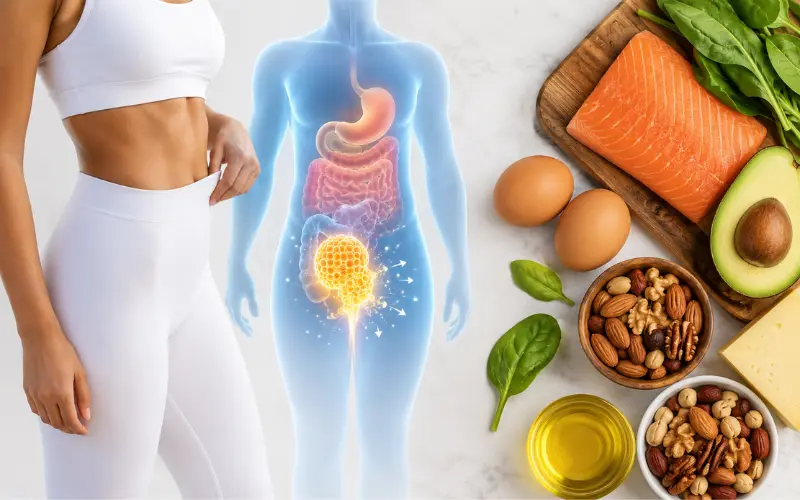
The keto flex diet runs on a few connected principles, and understanding them makes the daily choices much easier.
Mild, sustainable ketosis
The goal is not deep, aggressive ketosis. A mild state is enough to give your brain access to ketones as an alternative fuel, especially useful if your cells have become less efficient at using glucose.
A meaningful fasting window
Going 12 to 16 hours without food, and finishing dinner early, gives your body time to clear out and repair cells through a process called autophagy. This window matters more than most dieters realize.
Food quality over food quantity
Instead of counting every gram of fat, the focus shifts to eating whole, unprocessed foods: real vegetables, healthy fats, and clean protein sources rather than packaged “keto” products.
Blood sugar stability
Keeping blood sugar steady throughout the day is a core goal, since sharp spikes and crashes are linked to inflammation and energy dips.
Foods to Eat on the Keto Flex Diet
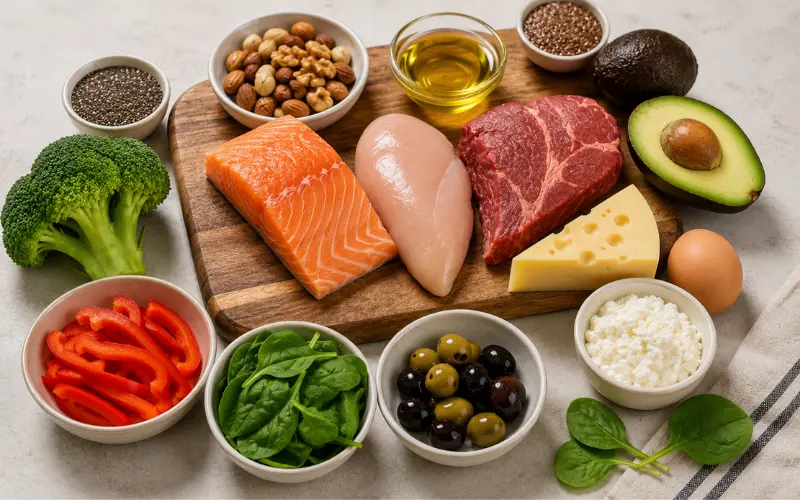
Building a keto flex plate is simpler than it sounds. Aim for this general structure:
- Non-starchy vegetables: leafy greens, broccoli, cauliflower, zucchini, peppers, aim for several cups spread across the day
- Healthy fats: extra virgin olive oil, avocado, MCT oil, nuts, and seeds
- Low-glycemic fruit: berries in moderate portions
- Low-mercury wild fish: sardines, wild salmon, and anchovies a few times a week
- Pasture-raised eggs and moderate clean meat: used as a side, not the main event
- Fermented foods: sauerkraut, kimchi, and unsweetened coconut yogurt for gut support
Foods to Limit or Avoid
To keep blood sugar and inflammation in check, the keto flex diet asks you to scale back on:
- Refined sugar and anything with added syrups
- Grains and grain-based flours, including whole grains in the early phase
- Conventional dairy, particularly milk and soft cheeses
- Farmed or high-mercury fish
- Highly processed “low-carb” packaged snacks
- Alcohol, especially on a regular basis
A Sample Day of Eating
Most guides stop at food lists and leave you guessing how it fits into a real day. Here is a practical example:
- 10:00 a.m., first meal: scrambled eggs with sautéed spinach, avocado, and a drizzle of olive oil
- 1:30 p.m., lunch: a large salad with mixed greens, grilled wild salmon, walnuts, and an olive oil vinaigrette
- 4:00 p.m., optional snack: a small handful of macadamia nuts or a few berries with coconut yogurt
- 6:30 p.m., dinner: roasted vegetables, a small portion of pasture-raised chicken, and a side of fermented vegetables
- 7:00 p.m. onward: no more food, water and herbal tea only, until the next day’s first meal
This gives you roughly a 15-hour overnight fast while still allowing three satisfying meals.
Who Benefits Most, and Who Should Be Cautious

The keto flex diet was originally designed for people concerned about memory and cognitive decline, including those with early signs of impairment or a family history of Alzheimer’s. It also tends to suit people dealing with insulin resistance or ongoing energy crashes.
That said, it is not automatically right for everyone. You should talk to a doctor before starting if you:
- Are pregnant or breastfeeding
- Have a history of disordered eating
- Are underweight or have difficulty maintaining weight
- Take medication for diabetes or blood pressure, since dosages may need adjusting
- Have a medical condition affecting fat digestion, such as gallbladder issues
Common Challenges Nobody Warns You About
The cost
Wild fish, avocado, and MCT oil add up fast. Buy frozen wild salmon and sardines in bulk, choose seasonal vegetables, and treat fresh berries as an occasional add-on rather than a daily staple.
Eating out and social situations
Restaurant menus are not built for this way of eating. Scan the menu ahead of time, ask for extra vegetables in place of grains, and do not be afraid to request modifications. Most kitchens will swap a starchy side for a salad without issue.
Early hunger and fatigue
Your body needs one to three weeks to adjust to burning fat more efficiently. Mild headaches, tiredness, or hunger in the first week or two are common and usually fade as your metabolism adapts.
Realistic timing for results
Energy and digestion often improve within two to four weeks. Cognitive or memory-related benefits, if they occur, tend to take longer, often several months of consistent effort combined with sleep, exercise, and stress management.
Keto Flex Diet vs. Standard Keto
| Factor | Keto Flex Diet | Standard Keto |
|---|---|---|
| Protein source | Mostly plant based, moderate clean animal protein | Often heavy on meat and cheese |
| Fasting window | Structured 12 to 16 hour overnight fast | Not typically emphasized |
| Vegetable intake | High, forms the base of most meals | Often lower, limited to low-carb options |
| Main goal | Brain support and metabolic flexibility | Primarily weight loss |
Frequently Asked Questions
1. What does the “12/3” in KetoFLEX 12/3 mean?
It refers to fasting for at least 12 hours overnight and finishing your last meal at least 3 hours before bedtime.
2. Is the keto flex diet the same as regular keto?
No. Regular keto often centers on meat and cheese, while the keto flex diet is mostly plant based with moderate clean protein and a structured fasting window.
3. How long does it take to see results on the keto flex diet?
Energy and digestion often improve within two to four weeks. Cognitive benefits, when they occur, generally take several months of consistent effort.
4. Can I drink coffee during the fasting window?
Black coffee and herbal tea are generally fine during the fast, since they contain minimal to no calories. Avoid adding cream, sugar, or milk until your eating window opens.
5. Do I have to eat meat on the keto flex diet?
No. The diet is flexible by design. Many people follow it with fish and eggs only, or in a fully plant-based form using plant proteins.
6. Is the keto flex diet safe for weight loss as well?
Many people do lose weight on this plan due to reduced processed food and sugar intake, though it was primarily designed for brain and metabolic health rather than weight loss alone.
7. What if I feel tired or foggy in the first week?
This is common as your body shifts fuel sources. Stay hydrated, add extra electrolytes, and give it one to two weeks before judging how you feel.
8. Can I follow the keto flex diet if I have diabetes?
Possibly, but you should work with your doctor first, since the diet can affect blood sugar and may require adjusting medication doses.
9. What is the easiest way to start the keto flex diet?
Begin by moving dinner earlier and adding one extra serving of vegetables per meal. Introduce the fasting window gradually rather than jumping straight to 16 hours.
10. Are cheat days allowed on the keto flex diet?
Occasional flexibility is fine, but frequent high-sugar or high-grain meals can undo the blood sugar stability the diet is built around. Consistency matters more than perfection.
Final Thoughts
The keto flex diet is not a quick fix, and it is not meant to be followed for a few weeks and abandoned. It works best as a long-term shift toward whole foods, stable blood sugar, and a consistent overnight fast. Start with small changes, an earlier dinner, one more vegetable-heavy meal, one less processed snack, and build from there. Give your body time to adjust, keep your doctor in the loop if you have any underlying health conditions, and judge the results over months rather than days.